

Europe Holds ‘Extraordinary’ Meeting on Trump Greenland Threats: Allies Rally Against Coercion as NATO Faces Its Greatest Strain in Decades
As U.S. President Donald Trump’s aggressive campaign to acquire Greenland intensifies, European leaders have convened an unprecedented series of emergency
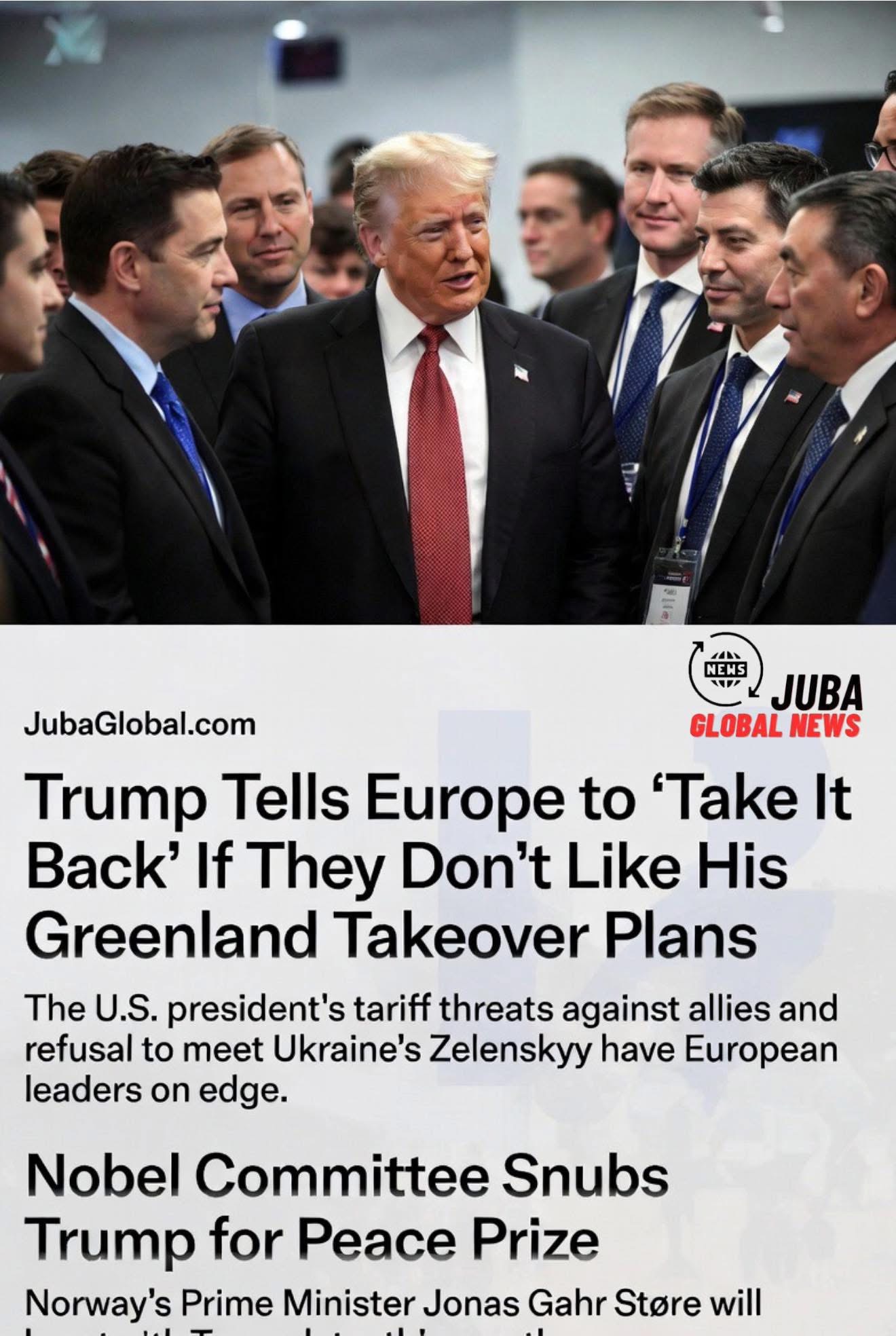
As U.S. President Donald Trump’s aggressive campaign to acquire Greenland intensifies, European leaders have convened an unprecedented series of emergency consultations to forge a unified response. On January 19, 2026, the European Union’s 27 ambassadors held a tense closed-door session in Brussels, followed by European Council President António Costa’s announcement of an extraordinary summit of EU heads of state and government set for Thursday, January 22. The gatherings underscore the depth of alarm across the continent: Trump’s threats of escalating tariffs on eight NATO allies—Denmark, Norway, Sweden, Finland, France, Germany, the Netherlands, and the United Kingdom—unless they facilitate U.S. control of the Danish territory have been labeled “blackmail,” “economic coercion,” and a direct challenge to transatlantic solidarity after 80 years of post-World War II alliance-building.
The Trigger: Trump’s Tariff Ultimatum and Greenland Push
The crisis exploded over the weekend of January 17–18 when Trump declared on Truth Social that he would impose an immediate 10% additional tariff on “any and all goods” from the targeted nations starting February 1, escalating to 25% by June 1 if no “deal” is reached for the “Complete and Total purchase of Greenland.” He framed the demand as a national security imperative, citing Russia’s Arctic ambitions and Denmark’s alleged failure to address them despite NATO warnings. In follow-up interviews, Trump affirmed he would proceed “100%” and refused to rule out military options.
The threats build on earlier provocations, including Trump’s January 18 text to Norway’s Prime Minister Jonas Gahr Støre linking the Greenland push to his resentment over not winning the Nobel Peace Prize. European officials view the combination as a dangerous mix of economic pressure and territorial coercion against a sovereign ally.
Emergency Diplomacy: From Ambassadors to Heads of State
The EU’s response has been swift and coordinated. On Sunday, January 18, ambassadors from all 27 member states met urgently in Brussels to assess options. Diplomats described the atmosphere as “grave,” with broad consensus on rejecting coercion while preparing countermeasures. Key discussions included:
- Activating the EU’s Anti-Coercion Instrument (ACI)—a so-called “trade bazooka” never before used—designed to impose targeted restrictions on U.S. companies or sectors in response to economic blackmail.
- A pre-prepared retaliatory package targeting up to €93 billion ($108 billion) in U.S. imports, potentially auto-triggering after a brief suspension period.
- Diplomatic outreach to buy time, including leveraging Trump’s attendance at the World Economic Forum in Davos (starting January 20) for direct talks.
European Council President Costa’s late Sunday statement formalized the escalation: “Given the significance of recent developments and in order to further coordinate, I have decided to convene an extraordinary meeting of the European Council in the coming days.” The Thursday summit aims to lock in a common position before Trump’s tariffs potentially take effect.
Key Voices: Unity and Resolve
EU Commission President Ursula von der Leyen, speaking from Davos on January 20, vowed an “unflinching, united and proportional” response if tariffs materialize. She emphasized respect for Greenland’s sovereignty and extended an olive branch for deeper Arctic cooperation—while making clear the EU would “hold our ground.”
- UK Prime Minister Keir Starmer condemned the threats as “completely wrong,” stressing Britain would “stand up for our values” despite close U.S. ties.
- French officials pushed hardest for ACI activation, viewing the situation as a test of Europe’s strategic autonomy.
- Danish leaders reinforced Greenland with additional troops and naval assets, while Greenlandic Prime Minister Jens-Frederik Nielsen reiterated: “We will not be pressured.”
- German Chancellor Friedrich Merz and others warned of a “dangerous downward spiral” that could erode NATO trust at a time when Russia remains the alliance’s primary threat.
NATO Secretary General Mark Rutte has quietly convened Arctic-focused discussions, highlighting the risk that intra-alliance economic warfare could weaken collective defense.
Broader Stakes: NATO’s Future and Global Repercussions
The crisis revives fears that Trump’s “America First” approach could fracture the 76-year-old transatlantic security architecture. Greenland’s strategic value—rare earth minerals, missile defense positioning at Thule Air Base, and emerging Arctic shipping lanes—makes it a flashpoint in great-power competition. Yet coercing a NATO ally risks setting a precedent that could embolden adversaries.
Markets reflected the unease: European stocks dipped, the euro gained as a relative safe haven, and gold prices remained elevated amid trade-war jitters. U.S. Treasury Secretary Scott Bessent, in Davos, urged Europe to “take a deep breath” and avoid retaliation, claiming relations “have never been closer”—a message met with skepticism given the rhetoric from Washington.
Trump’s team has signaled willingness for Davos meetings on Greenland with “various parties,” but his social media barrage— including digitally altered images of himself planting a U.S. flag on the island—suggests limited compromise.
Looking Ahead: De-escalation or Escalation?
As the extraordinary EU summit looms, Europe faces a delicate balancing act: projecting strength without provoking a full trade war, while preserving NATO unity against shared threats. Analysts suggest buying time—hoping U.S. domestic opposition (polls show overwhelming rejection of military force for Greenland) or legal challenges to tariffs could shift dynamics.
For now, the “extraordinary” label captures the moment’s gravity. What began as a revived 2019 real-estate-style proposal has morphed into a profound test of alliances, sovereignty, and the rules-based order. Whether Thursday’s summit produces a firm counter-strategy or opens a path to dialogue will shape transatlantic relations for years—and determine if Trump’s Greenland gambit unites Europe against him or fractures it further.
