

Deteriorating Situation in Eastern DRC: M23 Marches while Peace Initiatives Stumble and Regional Tensions Rise
By Juba Global News Network GOMA, Democratic Republic of Congo – The DRC is once again on the edge of a precipice that could lead to regional conflict afte
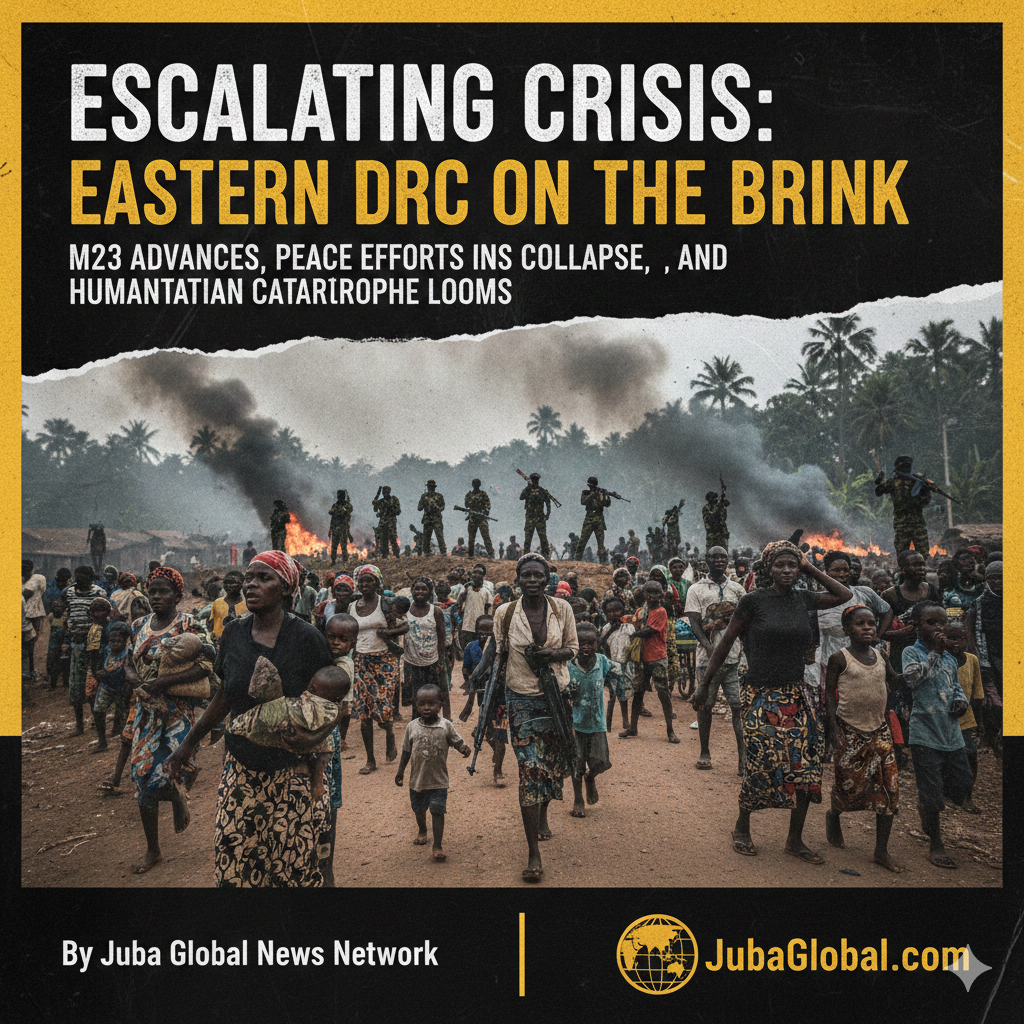
By Juba Global News Network
GOMA, Democratic Republic of Congo – The DRC is once again on the edge of a precipice that could lead to regional conflict after M23 rebel fighters, accused by the government in Kinshasa of being supported by Rwanda, stepped up their drive into the east. In recent days, the situation has dramatically deteriorated with the news of M23 taking control of an important strategic town shocking to a region already teetering on the edge and causing what is areas to become humanitarian cows which cannot be fathomed. The gains, not only have they thrown away months of painful peace talks, but they have also raised the military stakes between the DRC and Rwanda – risks dragging in neighboring countries into a conflict whose impact will be deadly.
Eastern DRC has been a crucible of conflict for more than two decades, a patchwork of armed groups competing to control an enormous prize in mineral wealth and territory. Chief among them is the M23, which had waged a major insurgency in 2012 before being largely defeated. But its re-emergence in late 2021 has featured a new level of ferocity and sophistication, spurring many foreign observers (including the United Nations Group of Experts) to once more point an accusing finger at Rwanda for providing military support, training and logistics – which Kigali emphatically rejects.
On the other hand, the latest M23 offensive has been quite successful and reveals a definite strategic purpose if nothing else. Accounts from the field, supported by humanitarian groups and local officials in North Kivu province, suggest that the rebels have taken substantial territory and even claim to have seized a strategic town. This is just not a symbolic capture; this seizure has important logistical and strategic implications for the M23, strengthening its hold on crucial supply lines and pushing blood-battered communities deeper into isolation.
The days immediately after have been predictable but horrifying: a new wave of displacement, with tens of thousands fleeing their homes, either cramming themselves into already overcrowded camps or venturing into unknown places in search of safety. The images of fleeing families clutching whatever they can bring out are a brutal read on the human price of this protracted war. Children, who are especially at risk, are suffering from malnutrition, disease and the trauma of witnessing unspeakable atrocities.
The world has looked on with increasing alarm. The United States, a major player on the diplomatic front in the region, said it was extremely concerned by the M23’s recent moves and that advances by the armed group were undermining a fragile peace process. Now a tenuous peace deal brokered painfully by regional leaders and international mediators seems poised to fall apart. The deal, intended to defuse the crisis and open the way for a political resolution, called on M23 to pull out of captured territory and disarm. Yet today, the rebels are blatantly flouting those conditions.In fact, based on recent rebel behavior, there’s little question about their intentions or the success of our diplomacy.
The souring security situation has further frayed ties between Kinshasa and Kigali.
The DRC government has consistently labeled Rwanda an aggressor and spoiling agent, claiming the growing reinvigoration of M23 ranks and artillery as irrefutable verification of external assistance. Rwanda, for its part, accuses the DRC of sheltering and supporting the FDLR (Democratic Forces for the Liberation of Rwanda), a Hutu extremist group some of whom helped to carry out the 1994 genocide in Rwanda, now based in Eastern DRC. This blame cycle on both sides is a zero sum game, and it simply breeds festering distrust and a lack of willingness to engage each other in good faith, which makes any mediation efforts exceedingly more difficult.
Rhetoric from both capitals has sharply escalated, and analysts have warned that their current trajectory seems virtually guaranteed to result in an open armed conflict between the two sovereign nations. Such an insurgency would not only destabilize the Great Lakes region, but it could also drag in other neighbouring countries such as Uganda and Burundi, which have a stake themselves in the DRC through historical meddling and their own thorny national interests.
Humanitarians are scrambling to deal with the explosion of the displaced. Camps around Goma and other relatively safe locations are full, short of food, water, sanitation and medical equipment. The risk of cholera and other communicable diseases is skyrocketing, made worse by the continuing fighting that has restricted access for aid workers. Accounts of sexual violence and other violations of human rights against civilians, in particular women and girls, are also mounting, highlighting the gruesome experience of inhabiting a war zone.
For their part, however, the international responses remain overwhelmed by the scope of the crisis and can do little to check its swift expansionwards showing more clearly than ever before how much stronger a holistic response would be.
About the future, it seems that the road toward peace in eastern DRC is now more precarious. For a peace agreement to work, there has to be the real commitment of all involved, no more outside interference and a transparent system of accountability. A regional response through the EACRF has been launched to stabilize this situation, but it has not always been effective because of a lack of adequate mandates and decisive action against armed groups.
The conditions require resolute and increased diplomatic pressure from international powers, along with continued support for the displaced. Some form of sanctions must be imposed on those individuals or entities responsible for aiding the conflict, and it is also necessary to establish strict monitoring mechanisms that would prevent arms and materials from reaching armed groups.
Indeed, the long-term security of DRC and the broader Great Lakes region depends on resolving the underlying root causes of conflict — equitable sharing of resources, inclusive governance, and addressing with finality, impunity for those responsible for violence. In the meantime, eastern DRC’s people continue to be trapped in a brutal cycle of displacement, misery and uncertainty about what might come next for them as they pray and hope war does not consume their dreams of peace.
Juba Global is dedicated to providing in depth analysis and reporting on the ground from all over Africa.
