

Deepening Ties: Re-elected Central African Republic President Faustin-Archange Touadéra Invites Vladimir Putin to Visit Bangui
In a significant diplomatic gesture amid strengthening bilateral relations, Faustin-Archange Touadéra , the newly re-elected President of the Central Afric
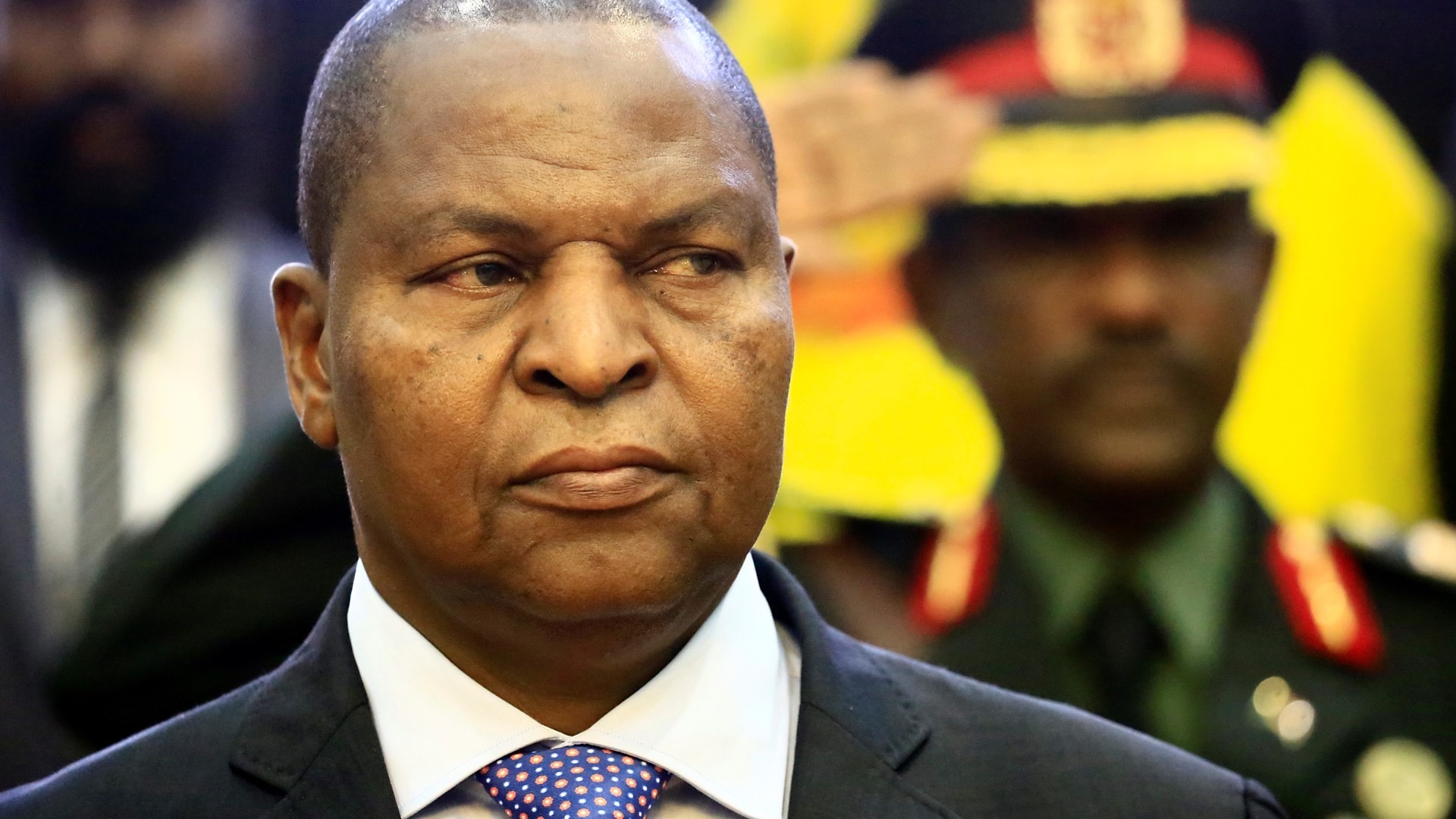
In a significant diplomatic gesture amid strengthening bilateral relations, Faustin-Archange Touadéra, the newly re-elected President of the Central African Republic (CAR), has extended a formal invitation to Russian President Vladimir Putin to visit the country. The announcement, made in a video interview with Russia’s state news agency TASS on January 7, 2026, underscores the deepening strategic partnership between Bangui and Moscow, which has been a cornerstone of Touadéra’s administration since 2016.
Touadéra, who secured a resounding third-term victory in the December 28, 2025, presidential election with over 76% of the vote according to provisional results, praised Putin as a “great leader” who has been “very attentive” to relations with the CAR. This invitation comes at a pivotal moment, as Touadéra’s re-election—enabled by a 2023 constitutional referendum that scrapped term limits—solidifies his grip on power in one of Africa’s most unstable nations.
A Landslide Victory Amid Controversy
The election, which combined presidential, legislative, regional, and long-overdue municipal ballots, marked a historic quadruple vote for the CAR. Provisional results released by the National Elections Authority on January 5-6, 2026, showed Touadéra garnering 76.15% of the vote on a turnout of approximately 52.4%. His closest challenger, former Prime Minister Anicet-Georges Dologuélé, received 14.66%, while another ex-prime minister, Henri-Marie Dondra, trailed with 3.19%.
While supporters celebrated the outcome as a mandate for continuity and stability, the vote was marred by opposition boycotts and allegations of fraud. The main opposition coalition, the Republican Bloc for the Defense of the Constitution (BRDC), refused to participate, citing an uneven playing field and doubts over the independence of electoral institutions. Dologuélé and others contested the results, proclaiming irregularities and even declaring alternative victories in separate press conferences. The government denied any malpractice, and the Constitutional Court has until January 20, 2026, to review challenges and proclaim definitive results.
Despite these controversies, the election proceeded relatively peacefully compared to the violence-plagued 2020 vote, where rebels disrupted polling in many areas. Analysts attribute this relative calm partly to enhanced security provided by Russian forces and allies.
Russia’s Pivotal Role in CAR’s Security and Economy
The invitation to Putin reflects the CAR’s heavy reliance on Russia for security amid a protracted civil conflict that erupted in 2013, when predominantly Muslim Séléka rebels ousted then-President François Bozizé. The ensuing violence between rebel groups and government forces has displaced millions and left large swaths of the country lawless.
Since 2018, Russia has emerged as Bangui’s primary ally, filling a vacuum left by waning French influence. That year, the CAR became the first nation in West and Central Africa to enlist Russian private military contractors—initially from the Wagner Group—to combat rebel factions. Wagner mercenaries, often rebranded under structures like the Africa Corps following the 2023 death of Wagner founder Yevgeny Prigozhin, have been credited with helping government forces reclaim territories, train the national army (FACA), and provide elite protection for Touadéra himself.
In exchange, Russian entities have gained access to the CAR’s abundant natural resources, including gold, diamonds, and timber. Companies linked to Russian networks operate mining concessions, which have proven lucrative—helping Moscow circumvent Western sanctions related to its actions in Ukraine. Humanitarian aid, weapons donations (bypassing UN embargoes with special exemptions), and infrastructure support have further cemented ties.
Recent developments highlight this partnership’s evolution. In 2025, Russia provided diesel fuel aid, food assistance via the UN World Food Programme, and hosted Touadéra in Moscow for talks. Political consultations between foreign ministries occurred in Bangui, and celebrations marked the 65th anniversary of diplomatic relations.
Geopolitical Implications: A Shift from West to East?
Touadéra’s overtures to Putin signal a broader realignment in African geopolitics, where Russia positions itself as an alternative to traditional Western partners. Moscow’s “pragmatic” approach—offering no-strings-attached security and economic deals—appeals to leaders facing insurgencies or domestic challenges. In the CAR, this has translated into visible symbols of Russian influence: murals of Touadéra and Putin in Bangui, monuments honoring Wagner figures, and Russian cultural centers promoting soft power.
Critics, including human rights groups and Western observers, accuse Russian forces of abuses, including civilian killings and resource exploitation that exacerbates inequality. Yet, for many Central Africans weary of decades of instability, Russian intervention has brought a semblance of order to urban centers and key roads.
If Putin accepts the invitation—a visit would be his first to sub-Saharan Africa in years—it could elevate the CAR-Russia axis, potentially announcing new mining deals, military cooperation, or even joint initiatives like a UAV training center, as Touadéra has floated. This would further entrench Russia’s footprint in Central Africa, competing with influences from China, the EU, and the United States.
Looking Ahead: Stability or Dependency?
As the Constitutional Court finalizes election results, Touadéra’s third term promises continuity in pro-Russian policies. His landslide, though contested, reinforces a narrative of strongman stability in a fragile state. The Putin invitation is more than courtesy—it’s a declaration of strategic alignment in an era of multipolar competition.
For the CAR, a resource-rich but impoverished nation, deeper ties with Moscow offer short-term security gains but raise questions about long-term sovereignty and equitable development. As Touadéra himself noted in his TASS interview, cooperation with Russia “continues to bring tangible results.” Whether those results benefit all Central Africans or primarily elites and foreign interests remains a contentious debate.
In a continent increasingly courted by global powers, the CAR’s embrace of Russia exemplifies a trend: leaders prioritizing immediate survival and regime protection over Western-conditioned reforms. The world will watch closely if Putin steps onto Bangui soil, signaling not just bilateral friendship, but Russia’s enduring ambition in Africa.
