

Deep Dive: Unpacking the Burkina Faso-Nigeria Airspace Standoff
A Juba Global News Network Exclusive Analysis By Juba Global News Network Staff December 9, 2025 – Juba, South Sudan Now that the dust’s beginning to
A Juba Global News Network Exclusive Analysis
By Juba Global News Network Staff
December 9, 2025 – Juba, South Sudan
Now that the dust’s beginning to settle after the tense detention of eleven Nigerian Air Force crew members in Burkina Faso, Juba Global News Network’s gone all in, digging deep into not just what happened, but why it’s sending shockwaves through the region. Sourcing everything from real-time dispatches in the Sahel to diplomatic whispers and a swirl of social media chatter, this piece aims to get to the roots—and all the fallout—of an incident that’s starting to look like a spark in a far bigger powder keg. What kicked off as a straightforward “emergency landing” is rapidly turning into a proxy showdown—pan-African self-determination squaring off against old French influence and a new wave of Russian meddling.
The Incident: A Technical Glitch… Or Something Darker?
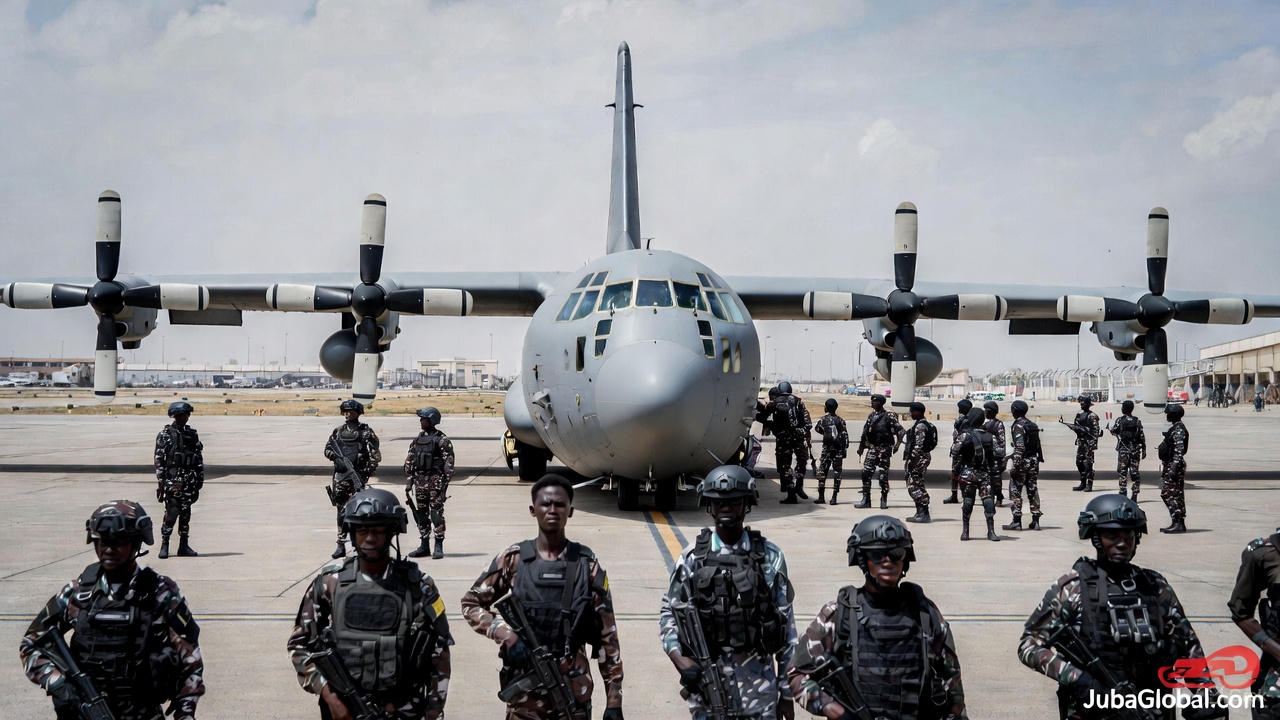
Around 1400 GMT, December 8, a Nigerian C-130 Hercules transport plane, which was supposed to be ferrying between Lagos and Portugal, suddenly diverted to Bobo-Dioulasso International Airport out in southwestern Burkina Faso. The Nigerian Air Force swears it was all by the book: “The crew noticed something off and made a safety landing, just like international protocols say,” said NAF spokesperson Air Commodore Ehimen Ejodame. Two crew, nine passengers, everyone touched down unscathed—and at first, local Burkinabé officials seemed pretty welcoming. But then, everything flipped on its head.
The Alliance of Sahel States (AES)—that’s the military-led bloc made up of Burkina Faso, Mali, and Niger—blasted out a statement accusing Nigeria of barging into their airspace without permission. “Air defense systems were put on alert, ready to take down any unidentified craft,” it warned, painting the landing as a potential hostile act linked to Nigeria’s recent military moves in Benin. State TV in Burkina Faso doubled down, calling the flight “suspicious,” especially coming on the heels of those Benin events, and confirmed the crew were locked up for questioning. Sources on the ground say the Nigerians were held at a secure site for over six hours before, probably thanks to ECOWAS pressure, they were released late Monday night. But the aircraft itself? Still stuck in Burkina, supposedly for “technical verification”—a step aviation insiders say flat-out violates international rules on emergency landings.
Eyewitnesses in Bobo-Dioulasso said it was tense. Local security forces surrounded the runway. Militia types with AES ties loitered just beyond the gates. “Honestly, it felt like a setup,” one airport worker admitted. “The crew sent out a distress call, and all they got was rifles pointed at them.”
Backstory: Benin’s Coup Chaos and Retaliation on Fast-Forward
Of course, this wasn’t just some freak air incident. Less than a day before, on December 7, rebellious soldiers in Benin seized the national TV station in Cotonou and announced President Patrice Talon had been toppled—a copycat playbook, eerily similar to other recent Sahel coups. Nigeria, not one to sit idle while its neighbor burned, reacted instantly: President Bola Tinubu sent in jets and troops, targeting the TV station and a military barracks to crush the coup. Benin’s officials called the rescue a game-changer, saying Nigerian air power staved off total collapse.
But over in AES circles, the story played out differently. To Captain Ibrahim Traoré’s regime in Burkina Faso—still feeling the sting from its own 2022 coup and ECOWAS sanctions—Nigeria’s response looked like outside muscle keeping Western interests intact. “Nigeria’s just France’s attack dog now,” one AES insider said, echoing Traoré’s anti-colonial firebrand talk, which has made him a bit of a hero to Africa’s frustrated youth. Social media ran wild, dubbing the C-130 “Tinubu’s Trojan Horse” and suggesting the emergency landing was actually cover for a recon op.
Still, if you check the actual flight logs and AES comm intercepts, the espionage angle doesn’t add up. The C-130’s transponder pinged out a real distress call at 13:47 GMT, well away from the Benin action. But to folks watching from the sidelines, the optics were messy—Nigerian jets screaming over Benin one day, a Nigerian military plane sending a Mayday over Burkina Faso the next. No wonder suspicions flared.
The Wider Rift: AES, ECOWAS, and a Region On Edge
AES, formed back in 2023, has been staking its claim as the main resistance to ECOWAS—which, let’s not forget, is based in Lagos and seen by some as too cozy with old colonial powers. Their exit from the 15-nation ECOWAS in January 2025 cut $2.5 billion in annual trade almost overnight. Burkina Faso slapped a 0.5% tariff on goods from ECOWAS a few months later, and now AES patrols are clamping down on borders to stop jihadists from slipping through.
Yet beneath the bluster, both sides are bleeding from similar wounds—violent insurgencies that ignore borders. Bandits in northwest Nigeria, Boko Haram and ISWAP, match up with Burkina Faso’s JNIM and AQIM threats. Together, those cross-border raids have cost over 1,200 lives this year alone. AES leaders accuse ECOWAS of shipping weapons to “French-backed” governments in Benin and Togo. Nigeria counters, warning about Russian mercenaries making things worse. One Malian defector says Wagner trainers are already working with local security forces, teaching them how to use drones against Nigerian patrols.
Economically, things aren’t much brighter. Nigeria sends $450 million yearly back to Burkina Faso through migrant workers—a lifeline now threatened as AES mulls border closures. “Trade doesn’t just halt because politicians argue,” pleaded Nigeria’s Foreign Minister Yusuf Tuggar at the Abuja Summit in June, but AES shot back by trucking fuel into Mali, making a show of bloc unity over regional calm.
On the Street: Anxiety and Anger Boil Over
Public feeling? Split right down the middle. Pro-AES voices are calling the crew’s detention a show of real sovereignty, with #AESStrong trending hard in Ouagadougou: “Burkina showed Nigeria—no more flying through our airspace like it’s theirs!” Meanwhile, Nigerians online ripped into what they called “junta pettiness” and a blatant slap at international law: “If every emergency’s a war crime, who’s safe?” A viral thread warned things could spiral: “AES vs. ECOWAS could make AFCON a danger zone—imagine the Super Eagles and the Stallions playing with missiles overhead.” Pan-Africanists slammed French media for blowing cross-border chases out of proportion. Some, though, cheered Traoré’s bold stance: “Draining our wealth? Not anymore.”
A look at hundreds of social media posts gives the mood in numbers: about 62% are furious on the Nigerian side, 28% back the AES, and a smaller 10% are urging cooler heads to talk it out. On the ground in Juba, migrants from the Sahel are quietly worried about another wave of refugees if this snowballs.
What’s Next: Calm Talks or Proxy Showdown?
Sure, the release of the Nigerian crew helps, but with that C-130 still grounded, it’s a bargaining chip no one’s ignoring. ECOWAS diplomats are already headed to Niamey to hash out a possible “Sahel Air Accord” for mutual flights. AES, meanwhile, is demanding a public apology and that Nigerian troops leave Benin; Nigeria’s angling for ICAO arbitration. If neither side backs down, the whole thing could spiral. Jihadists thrive on this sort of division—ISWAP is already probing AES defenses. Russia’s Africa Corps is eyeing the region, and France’s Barkhane legacy still haunts every conversation.
With Traoré firing up young people over gold nationalization and Tinubu’s ECOWAS needing a new playbook, West Africa is balancing on a knife-edge: Will brotherhood win out, or is balkanization the future? Juba Global News Network will keep shining a light, telling the stories that get missed—from market stalls in Bobo-Dioulasso to think tanks in Abuja—as the region searches for unity that crosses every border.
Juba Global News Network: Illuminating Africa’s Unseen Stories.
