Catastrophic Wildfires Engulf Southeastern South Korea, Leaving Devastation in Their Wake
A relentless wave of wildfires has swept across South Korea’s southeastern region, claiming at least 18 lives and injuring 19 others as of March 26, 2025.
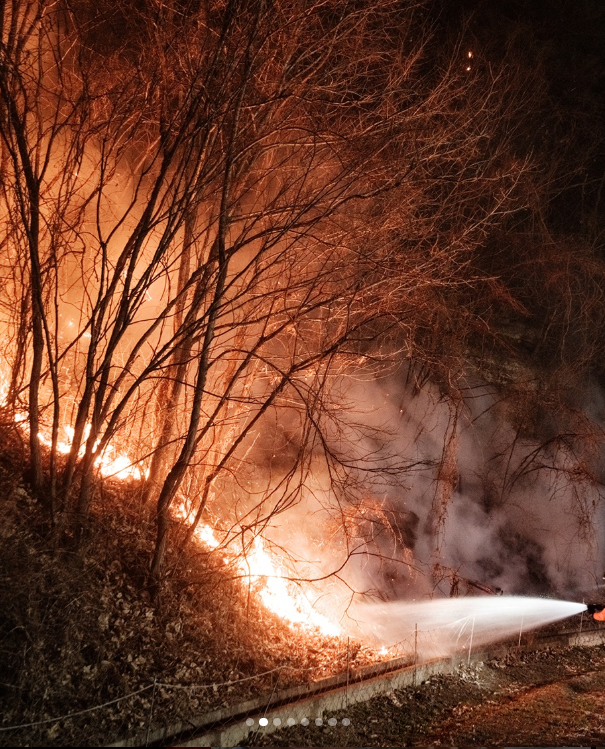
A relentless wave of wildfires has swept across South Korea’s southeastern region, claiming at least 18 lives and injuring 19 others as of March 26, 2025. Fueled by dry winds and parched landscapes, these blazes have spiraled into what Acting President Han Duck-soo has dubbed an “unprecedented crisis,” shattering records and etching a somber milestone as the nation’s most destructive wildfires to date. The inferno’s toll is not just measured in lives lost but in the vast swathes of history and heritage reduced to ash.
The fires have disproportionately struck the elderly, with many victims in their 60s and 70s, a stark reminder of the vulnerability of rural communities in the affected areas. Over 23,000 people have been uprooted from their homes, fleeing as flames devoured neighborhoods and landmarks alike. Among the casualties is the Gounsa Temple, a 1,300-year-old Buddhist sanctuary in Uiseong city, its ancient timbers consumed by the blaze. Monks and officials managed to salvage some of its irreplaceable relics—stone statues and sacred artifacts—whisking them to safety before the temple succumbed. Yet, the loss of this cultural cornerstone, nestled at the foot of Deungun Mountain since the 7th century, reverberates as a wound to South Korea’s historical soul.
The scale of the disaster has triggered a Herculean response. More than 4,000 firefighters, their faces streaked with soot and resolve, stand shoulder-to-shoulder with approximately 5,000 military personnel, battling a dozen active blazes across cities like Andong, Uiseong, Sancheong, and Ulsan. The sky hums with the roar of helicopters—87 in total, including support from U.S. forces stationed in Korea—dumping torrents of water onto the advancing flames. Yet, the winds, relentless and dry, have thwarted containment efforts, turning forests into tinderboxes and pushing the fires across an estimated 17,000 hectares (over 42,000 acres) of land.
Acting President Han Duck-soo, addressing the nation, painted a grim picture: “This is a full-scale national response. The damage is snowballing, exceeding all our prediction models.” The government has elevated the wildfire crisis to its highest alert level, a “serious” designation that mandates sweeping measures—more emergency workers, restricted access to forests, and a pause on military live-fire drills. Evacuations continue apace, with schools and gymnasiums transformed into temporary refuges for the displaced. In Andong, the UNESCO-listed Hahoe Folk Village teeters on the edge of danger, its thatched roofs and wooden homes a potential feast for the encroaching fire.
The crisis began last Friday in Sancheong County, a spark that exploded into a multi-front catastrophe as gusts carried embers to neighboring regions—Uiseong, Cheongsong, Yeongyang, and Yeongdeok. Power outages flicker through the night, roads lie blocked by fallen trees and debris, and communication lines falter, plunging communities into chaos. A helicopter crash in Uiseong, claiming the life of its lone pilot, briefly grounded aerial operations, a tragic setback in an already desperate fight.
Beyond the immediate human and material losses, these wildfires signal a broader reckoning. Experts like Lee Byung-doo, a forest scholar, warn that climate shifts—drier seasons, fiercer winds—may herald more such disasters. For now, hope rests on a forecast of rain due Thursday, a potential ally to weary firefighters. Until then, South Korea holds its breath, its southeastern heartland a battleground where nature’s fury tests the limits of human resilience.