

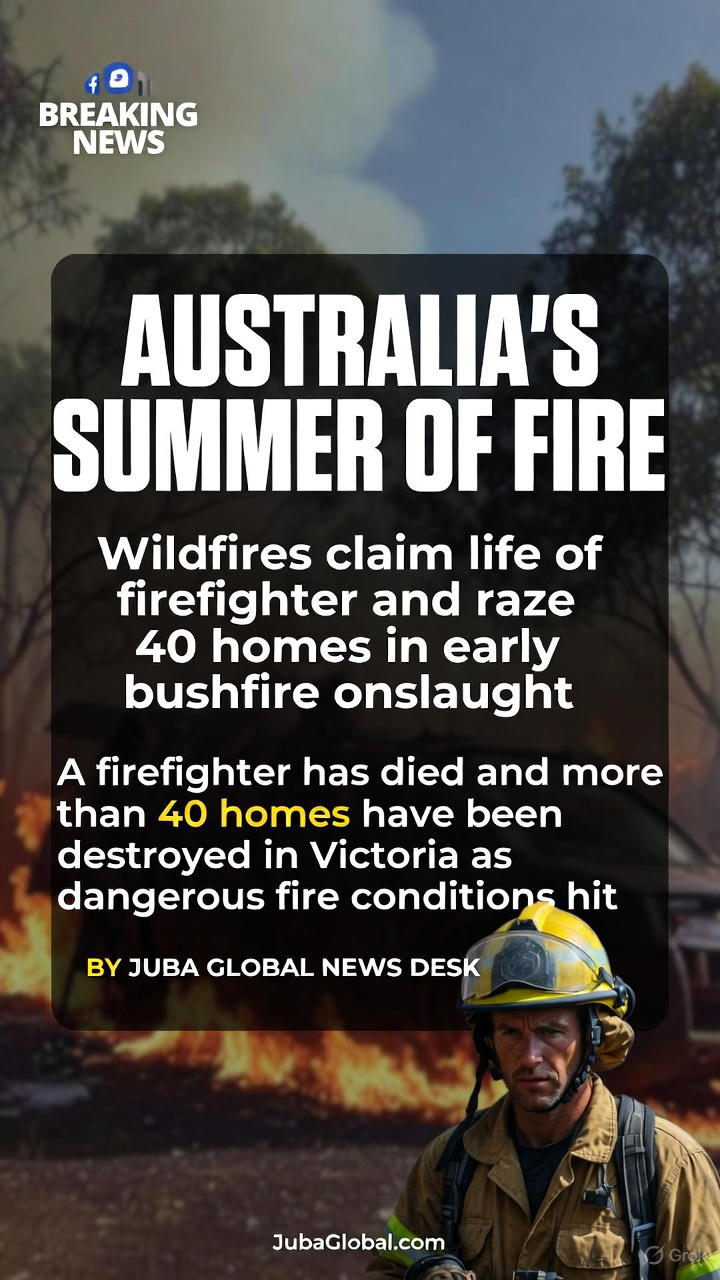
Australia’s Summer of Fire: Wildfires Claim Firefighter’s Life, Raze 40 Homes in Early Bushfire Onslaught
By Juba Global News Network December 8, 2025 BULAHDELAH, Australia – Tragedy struck late Sunday when a 59-year-old firefighter lost his life after a burnin
By Juba Global News Network
December 8, 2025
BULAHDELAH, Australia – Tragedy struck late Sunday when a 59-year-old firefighter lost his life after a burning tree came down on him amid an intense fight with a raging wildfire sweeping through the woodlands of New South Wales’ mid-north coast. It’s a grim start—maybe the grimmest in years, if you listen to officials—to what’s shaping up to be one of Australia’s most “foreboding” bushfire seasons on record.
The death of this veteran National Parks and Wildlife Service (NPWS) field officer, who’d been with the service since way back in 1996, hangs heavy over the entire nation’s firefighting community. With fires already ripping through New South Wales and Tasmania, scorching roughly 40 homes, fueled by bone-dry conditions, hot westerly winds, and higher-than-normal ocean temps, the mood is, understandably, somber.
At Bulahdelah, where the blaze has torched 3,500 hectares (about 8,650 acres) and destroyed four homes, the incident highlights just how dangerous this season is for Australia’s first responders. The country, bracing for what might be a brutal summer, faces ever higher fire risks. NSW Premier Chris Minns sounded the alarm on Monday: December’s turbulent winds and high temps point to “more volatile weather periods in the years ahead due to the changing climate.”
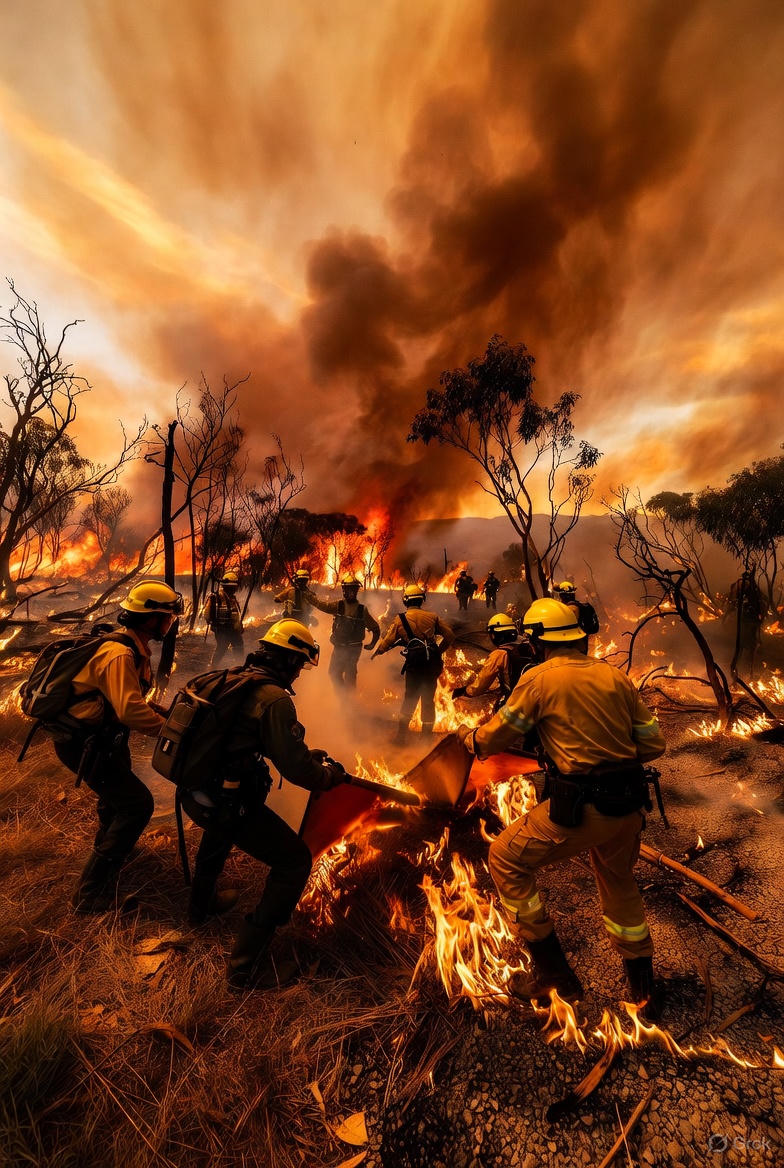
Right now, New South Wales alone is battling 52 fires—nine of them still not contained. Over 500 firefighters, supported by 160 vehicles and aerial teams, are digging in for the long haul to shield communities and wildlife. As evacuations roll on and containment lines go up, this loss has reignited debates about firefighter safety, climate resilience, and the urgent push for bushfire management—especially in a country still scarred by the catastrophic 2019–2020 “Black Summer,” which killed 33 people and torched 24 million hectares.
A Fatal Collapse: The Firefighter’s Final Moments
The firefighter, whose name hasn’t been released, was remembered by Environment Minister Penny Sharpe as an “experienced” NPWS member. He was on the ground at Bulahdelah around 11 p.m. local time on December 7, when the deadly accident happened. Rural Fire Service (RFS) Commissioner Trent Curtin said the man was struck by a falling tree while fighting through extreme heat and wild, unpredictable winds. He went into cardiac arrest right there, and even with immediate resuscitation, he couldn’t be revived.
As the smoke starts to clear, Australia finds itself once again on the edge of a fiery summer, staring down a future that demands adaptation—or, maybe, risks being overtaken by an ever more relentless climate.
“He could not be resuscitated,” Curtin stated, adding that crews expect to be fighting this fire for several more days as it continues to threaten nearby rural homes and critical infrastructure. This particular blaze, which flared up over the weekend, is just one of several fast-moving fires tearing through multiple states. Some relief came on Monday as conditions eased, letting crews shore up containment lines with the help of aircraft, but the loss has already triggered a review of safety procedures.
NSW Emergency Services Minister Jihad Dib was blunt: “This is a reminder of the risks our firefighters face every day.” The response from across Australia was immediate and heartfelt. Prime Minister Anthony Albanese called it a “deeply distressing turn of events,” pledging federal support for both the fallen firefighter’s family and ongoing RFS operations. In Bulahdelah, a tight-knit timber town of about 2,500, locals are rallying—organizing meals and lodging for the crews, and planning community vigils for the fallen hero.
Blazes Across Borders: NSW and Tasmania Hit Hard
New South Wales has taken the brunt so far, with bone-dry forests and relentless westerlies fueling the spread through eucalypt stands and coastal scrub. In Koolewong, a suburb on the Central Coast, a fire on Saturday wiped out multiple homes, leaving behind blackened ruins and forcing evacuations for thousands of residents.
Further south, Tasmania’s Dolphin Sands community was hammered by a weekend blaze that destroyed 19 homes and prompted a complete evacuation, with roads closed off. Local council official Dick Shaw said the fire was under control by Monday, but warned folks not to come back yet—there’s too much danger left in unstable wreckage and lingering ash. The fires there tore through vulnerable dune ecosystems, threatening rare bird habitats and sparking criticism from environmentalists over what they call insufficient pre-season hazard reduction burns.
All told, between the two states, about 40 homes have been lost, and while there haven’t been civilian injuries, property damage is thought to be in the tens of millions of dollars.
Weather’s Fury: Drought, Heat, and the Shadow of Climate
Weather experts chalk up this early intensity to a perfect storm of factors: extended drought in the east, hotter Pacific waters cranking up the heat, and the end of the La Niña pattern that, for a while, held the fires somewhat in check. The Bureau of Meteorology is calling for above-average temps straight through February, and fire bans are in effect across several parts of New South Wales this week.
“This is a high-risk bushfire season,” said RFS Commissioner Curtin, who oversees 70,000 volunteers around Australia. “The conditions feel a lot like what we saw before Black Summer, but we’re in a better place now, with new tech and better coordination.” Drones for spotting hotspots, AI-powered modeling, and stepped-up backburning have helped contain smaller blazes, though critics argue rural fire services are still underfunded and can’t cover every gap.
Climate scientists point the finger at human-driven warming, noting Australia’s bushfires now burn 15% more intensely than last century, with fire seasons not only coming earlier, but sticking around longer. “Volatile weather is the new normal,” Premier Minns insisted, urging federal leaders to invest more in resilient infrastructure and carbon reduction.
Heroes on the Front Lines: Firefighters Under Strain
What happened at Bulahdelah is a stark, painful reminder of the price paid by those on the front lines. About 80% of Australia’s firefighters are volunteers, and many are stretched thin—surveys say 40% struggle with mental health after repeated callouts. This is the first firefighter death of the season, but it’s not an outlier: five firefighters died during the 2019–2020 crisis.
Support groups like the RFS’s peer counseling service and the Black Dog Institute’s programs for wildfire responders are stepping up, but advocates are calling for more—better gear, especially advanced thermal imaging to spot tree-fall dangers, and stricter rest requirements. “These men and women run toward danger when everyone else is running away,” Minister Dib said. “We owe them everything.”
Community Resilience and Looking Forward
In places hit hard by fires, people are pulling together: at Dolphin Sands, neighbors have set up supply drives; over in Koolewong, residents are lending out generators and water tanks. The federal government’s rolling out disaster payments of up to $1,000 per household, and there are mental health hotlines up and running.
Still, as the immediate threat fades, some big questions remain: How to weave Indigenous fire practices, like cultural burning, more deeply into mainstream bushfire management? Could this early tragedy finally push leaders to take real action on climate and emissions? For now, with forecasts predicting even harsher conditions later in the week, the fight continues.
The sacrifice of the Bulahdelah firefighter—one life given for so many others—quietly symbolizes the courage at the heart of Australia. “Our hearts are with his family, but our resolve is unbreakable,” said Premier Minns.
