

A Milestone for Unity: President Salva Kiir and Minister Hussein Abdelbagi Akol Advance Forces Integration in South Sudan
Juba, December 23, 2025 – In a significant step toward consolidating peace and unifying the nation’s security apparatus, President Salva Kiir Mayardit held
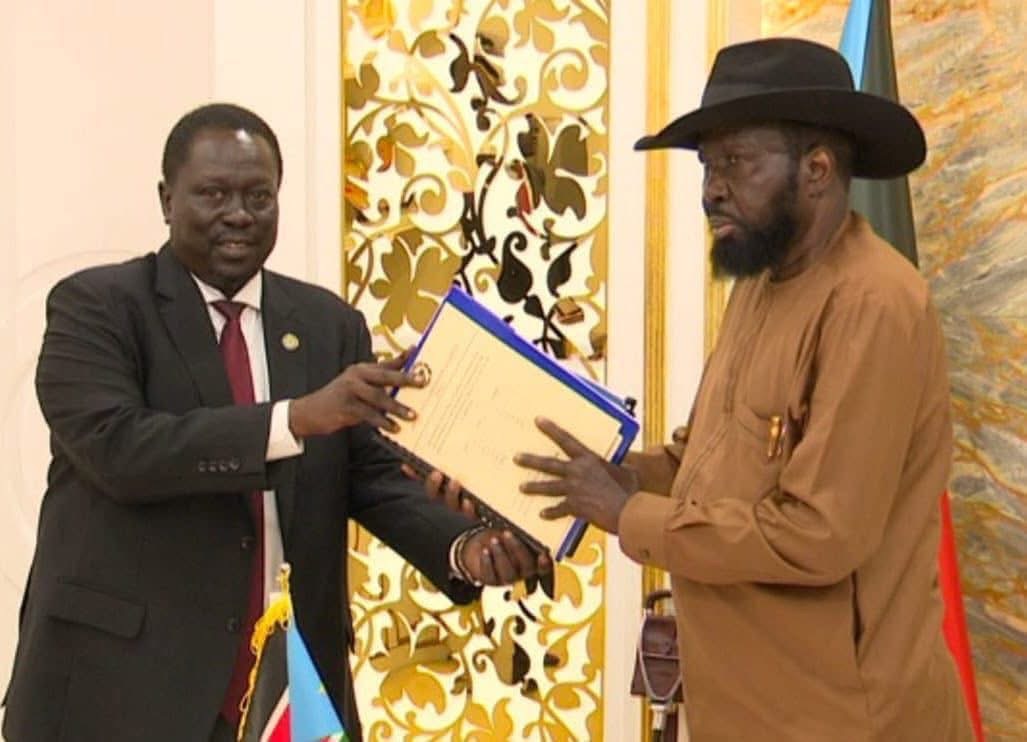
Juba, December 23, 2025 – In a significant step toward consolidating peace and unifying the nation’s security apparatus, President Salva Kiir Mayardit held a high-level meeting on December 23, 2025, with key figures including Presidential Advisor on National Security Affairs Tut Gatluak Manime and Minister of Agriculture and Food Security Hussein Abdelbagi Akol. The discussions focused on the formal integration of forces previously aligned with the South Sudan Opposition Alliance (SSOA) into the South Sudan People’s Defence Forces (SSPDF).
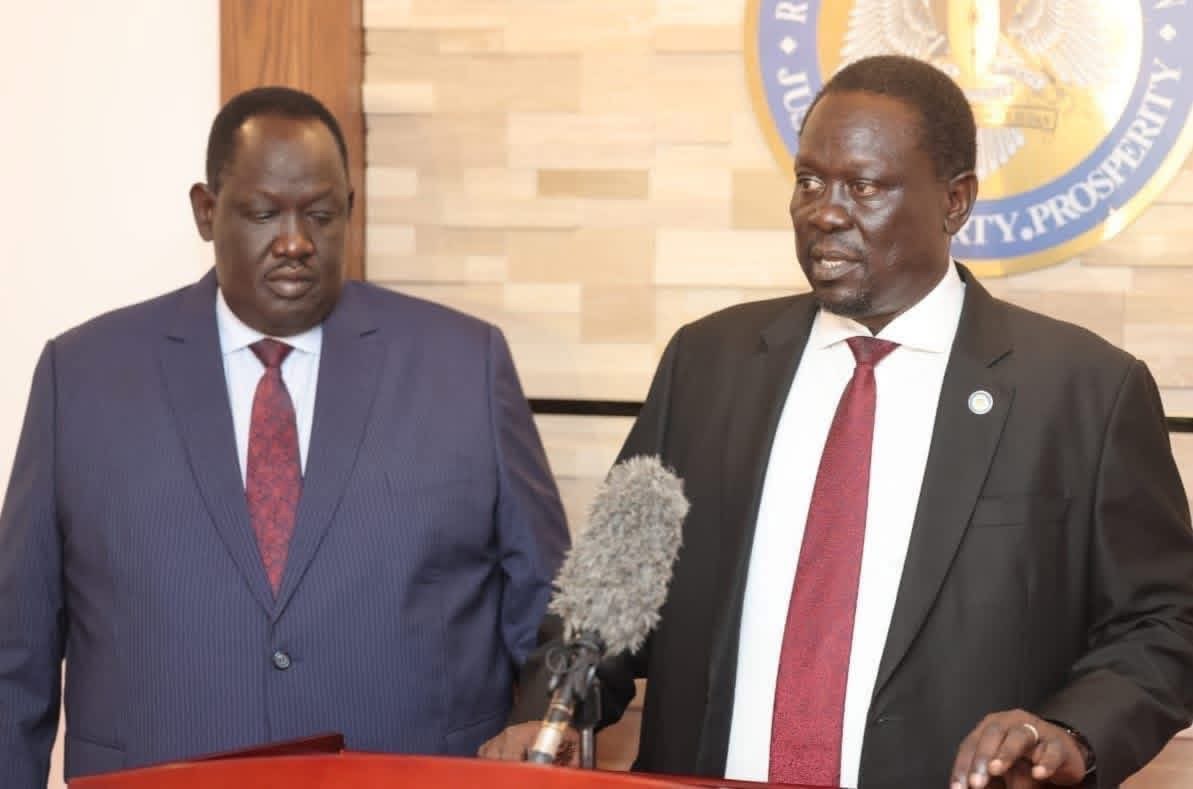
During the meeting, an official document was presented outlining the modalities for integrating Hon. Hussein Abdelbagi Akol’s forces into the national army. This follows Abdelbagi’s public announcement on December 22, 2025, where he formally relinquished his role as overall commander of the SSOA forces, placing them under the direct authority of President Kiir as Commander-in-Chief.
The Announcement and Its Immediate Context
The development stems from a press briefing held in Juba on December 22, where Minister Abdelbagi, flanked by allies, declared his irreversible decision to dissolve his military command. “The future of South Sudan must be determined through ballots, not bullets; through institutions, not armies,” he stated, invoking Chapter Two of the 2018 Revitalized Agreement on the Resolution of the Conflict in South Sudan (R-ARCSS), which calls for the unification of forces and an end to militarized politics.
Abdelbagi emphasized that all SSOA forces and their weaponry were voluntarily handed over to the national command structure. He claimed control over approximately 3,700 fighters, primarily from the South Sudan Patriotic Movement (SSPM), his core group within the fractured SSOA.
The government swiftly welcomed the move. Government Spokesperson Ateny Wek Ateny described it as a demonstration of “leadership and trust in our national institutions,” noting that it eliminates parallel command structures and advances political stability.
Background: Hussein Abdelbagi Akol’s Political Journey
Hussein Abdelbagi Akol, a Malual Dinka from Northern Bahr el Ghazal and son of the influential tribal leader Sultan Abdelbagi Akol, has been a prominent figure in South Sudan’s turbulent politics. He rose to national prominence as leader of the SSPM, part of the SSOA coalition that initially opposed the government before partially joining the 2018 peace process.
In 2020, President Kiir appointed him as one of five vice presidents under the R-ARCSS, making him South Sudan’s first Muslim vice president – a symbolic gesture toward inclusivity. However, internal SSOA rivalries intensified, leading to a split. In February 2025, a cabinet reshuffle saw Abdelbagi demoted to Minister of Agriculture, with Vice President Josephine Joseph Lagu taking his former role, representing a rival SSOA faction.
Observers view Abdelbagi’s recent decision as partly strategic, solidifying his alliance with President Kiir amid ongoing factional disputes. His move challenges rival SSOA leaders to prove control over any remaining armed elements. 4 “LARGE”
Broader Implications for South Sudan’s Peace Process
South Sudan’s journey since independence in 2011 has been marked by civil war (2013–2018), which claimed hundreds of thousands of lives and displaced millions. The R-ARCSS aimed to unify rival forces into a single national army, but progress has been slow due to mistrust, funding shortages, and political maneuvering.
The unification of forces remains a cornerstone of the peace agreement. While major elements from the government and the main opposition Sudan People’s Liberation Movement-In Opposition (SPLM-IO) have undergone partial integration, holdout groups like SSOA factions have lagged. Abdelbagi’s voluntary handover is seen as a positive precedent, potentially encouraging others.
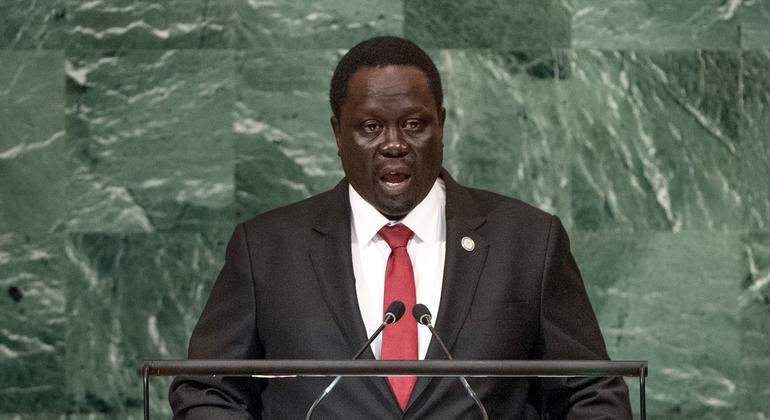
However, controversy surrounds the announcement. A rival SSPM faction disputed Abdelbagi’s claim to command the forces, arguing that his authority was revoked earlier in 2025. This highlights the persistent fragmentation within opposition alliances.
President Kiir has long directed that opposition forces be “cleared from prior affiliations” before integration into the SSPDF. The expected absorption of these troops could bolster the national army’s ranks and reduce risks of splinter insurgencies. 6 “LARGE” 7 “LARGE”
Challenges Ahead and Hopes for Stability
As South Sudan approaches delayed elections (now slated for 2026 amid ongoing tensions), moves like this are crucial for building a professional, apolitical military. The government has reiterated commitments to deploying unified forces fully, with advisors like Tut Gatluak playing key roles in oversight.
International partners, including peace guarantors, have urged accelerated implementation of the R-ARCSS to prevent relapse into conflict. Abdelbagi’s transition from armed opposition leader to civilian politician – focusing on democratic competition – aligns with calls for “ballots over bullets.”
Yet, underlying issues persist: inter-communal violence, economic hardship, and political detentions continue to strain the fragile peace. Abdelbagi’s forces integration, if smoothly executed, could mark a tangible win for unity.
In the words of the minister himself, this step is “irreversible” and a call for others to prioritize nation over faction. As these forces prepare for absorption into the SSPDF, South Sudanese watch closely, hoping it signals a turning point toward lasting stability.
By Independent Analysis | Sources: Eye Radio, Radio Tamazuj, and official statements