TERROR HITS EUROPE: Explosion Rocks U.S. Embassy in Oslo as Iran War Spills Over Borders
The explosion at the U.S. Embassy in Oslo on March 7–8, 2026, has sent shockwaves through diplomatic circles and underscored the rapidly expanding reach of
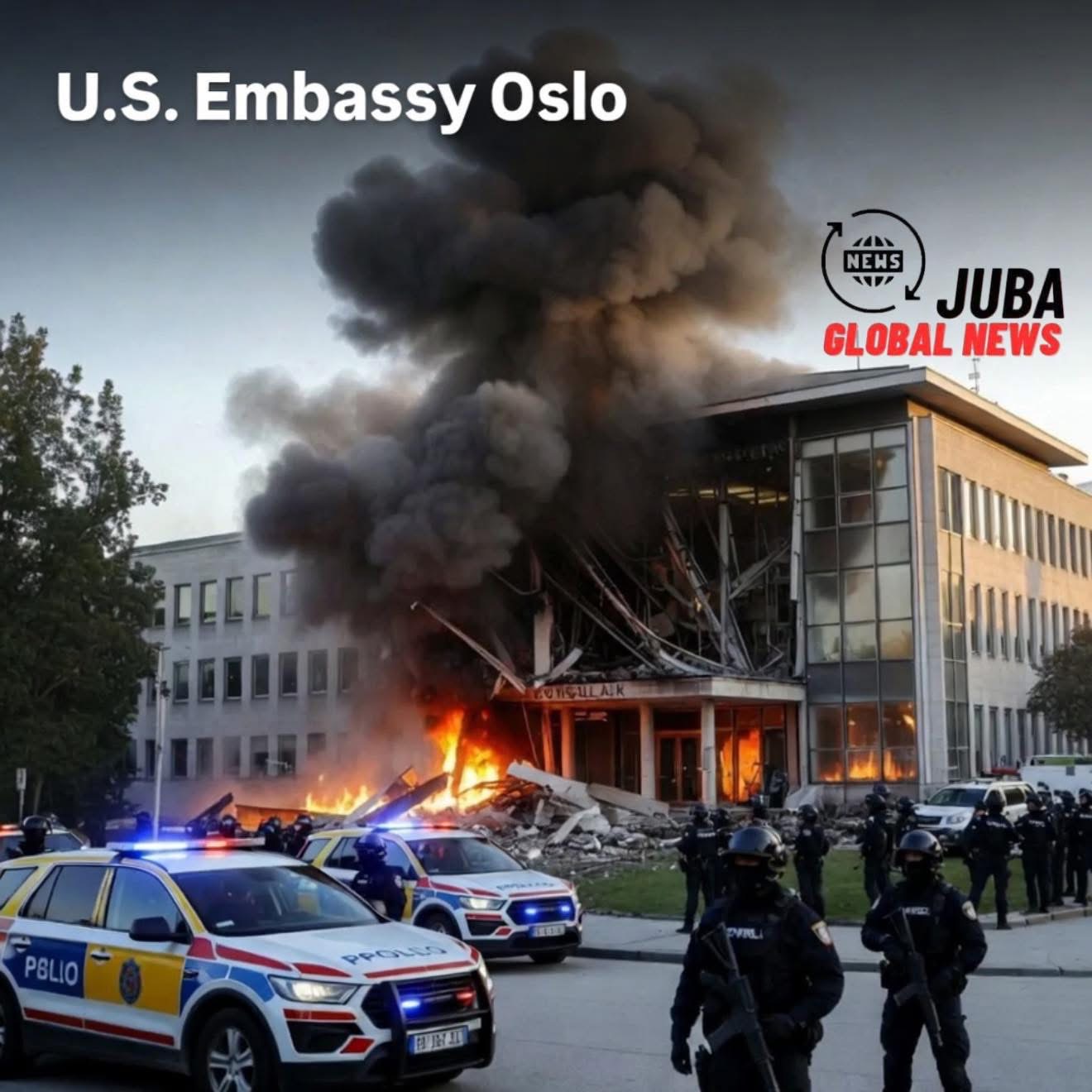
The explosion at the U.S. Embassy in Oslo on March 7–8, 2026, has sent shockwaves through diplomatic circles and underscored the rapidly expanding reach of the U.S.-Israel war with Iran—now in its second brutal week. A powerful blast that damaged the consular entrance of the heavily fortified compound has been met with immediate suspicion of Iranian state-sponsored retaliation, marking the first confirmed physical attack on a U.S. diplomatic facility in Europe directly linked to the escalating Middle East conflict.
The Incident: What Happened
Around 1:00 a.m. local time in Oslo (late Saturday evening EST on March 7), a loud explosion shattered the quiet near the U.S. Embassy. Norwegian police quickly cordoned off the area as thick smoke rose from the site. Authorities confirmed the blast struck close to the consular entrance, causing visible structural damage—shattered glass, scorched walls, and debris scattered across the perimeter—but fortunately no injuries to embassy staff, security personnel, or nearby civilians.
Oslo police incident commander Michael Delmer stated that investigators were working closely with U.S. officials. Early forensic analysis ruled out a vehicle-borne improvised explosive device, though the exact nature of the device remained under investigation. Norwegian media outlets, including NRK and Verdens Gang, reported that counter-terrorism units had taken the lead and were treating the incident as a suspected act of state-linked terrorism tied to Iran’s ongoing retaliation campaign.
The timing was no coincidence. The blast came just hours after intensified U.S. and Israeli airstrikes hammered Iranian oil depots, refineries, and military infrastructure in and around Tehran, sending massive fireballs into the night sky and further degrading Iran’s ability to sustain conventional warfare.
Context Within the Broader War
The Oslo attack unfolded against a backdrop of dramatic and dangerous escalation in the conflict that began on February 28, 2026:
- U.S. and Israeli Strikes Intensify — Coalition forces expanded targeting to include Iran’s critical energy sector for the first time. Satellite imagery revealed enormous fires at facilities like the Shehran oil depot on Tehran’s northern edge. Israeli F-35s and U.S. B-2 bombers struck ballistic missile sites, command centers, and air defense batteries, with confirmed Iranian casualties now exceeding 1,300 since the war’s start. Iran’s navy has been crippled, and much of its integrated air defense system lies in ruins.
- Iran Strikes Back—Regionally and Beyond — Tehran responded with fresh barrages of ballistic missiles and drones targeting Israel, U.S. regional bases, and—most alarmingly—Gulf Arab states hosting American forces. Strikes damaged desalination plants in Bahrain, oil infrastructure in Kuwait (killing at least two people), refineries in Saudi Arabia, and sites across Qatar and the UAE. Iran briefly attempted to close the Strait of Hormuz, triggering a historic surge in global oil prices. President Masoud Pezeshkian issued an unprecedented public apology to Gulf neighbors, insisting the attacks were unintended collateral damage, even as hardline factions demanded continued escalation.
- Fighting Reignites on Multiple Fronts — In Lebanon, Israeli special forces conducted raids on Hezbollah strongholds in Beirut’s southern suburbs, killing dozens in renewed clashes. The Lebanese health ministry reported civilian deaths from strikes on residential and commercial buildings. Meanwhile, the war’s economic fallout continued to mount: oil prices reached unprecedented levels, shipping insurers scrambled, and fears of global recession grew.
President Trump, speaking from the White House, rejected any negotiation short of Iran’s “unconditional surrender” and dismissed British offers of military support, stating the U.S. was “already winning.” China warned of the “flames of war” spreading uncontrollably, while Russia quietly supplied Tehran with intelligence but avoided direct involvement.
Immediate Aftermath and Global Security Response
- U.S. Embassy Lockdown — The Oslo compound was placed on full lockdown. The State Department issued worldwide cautionary alerts for U.S. diplomatic posts, though the White House reportedly paused distribution of certain Iran-specific threat bulletins to prevent public panic.
- Norwegian and NATO Reaction — Norwegian authorities condemned the attack in the strongest terms and activated heightened security protocols. As a NATO member, Norway coordinated closely with alliance partners. Similar precautionary measures were implemented at other U.S. embassies across Europe, though no follow-on incidents had been confirmed by early March 8.
- Broader Diplomatic Ripples — The Oslo blast has intensified debate over the war’s global consequences. Some analysts argue it could solidify European backing for U.S.-Israeli objectives; others fear it will fuel calls for de-escalation to prevent a wave of Iranian proxy terrorism targeting Western capitals.
Why This Matters: A Harbinger of Global Spillover
The attack in peaceful, neutral Norway—a country with virtually no direct stake in Middle East conflicts—demonstrates how quickly the war is metastasizing. With Iran’s conventional military power severely degraded, experts widely expect increased reliance on asymmetric tactics: terrorism, cyberattacks, proxy operations, and strikes on soft targets like embassies, energy infrastructure, commercial shipping, and critical civilian sites far from the primary theater.
For Norway and much of Europe, the incident serves as a grim wake-up call: in today’s interconnected world, no nation is truly insulated from the fallout of a major regional war.
As President Trump signals readiness for even greater escalation and Iran vows it will never surrender, the Oslo explosion may prove to be only the opening act in a dangerous new chapter—one in which the conflict’s shadows stretch far beyond the Persian Gulf, threatening stability and security on multiple continents. The coming days will reveal whether diplomacy can still contain the fire—or whether the flames are about to burn even hotter.