

Winter Olympics Spotlight: How College Football Fueled America’s Olympic Dominance
By: Juba Global News Network | JubaGlobal.com As the Milan-Cortina 2026 Winter Olympics unfold—with Team USA fielding its largest-ever Winter contingent of
By: Juba Global News Network | JubaGlobal.com
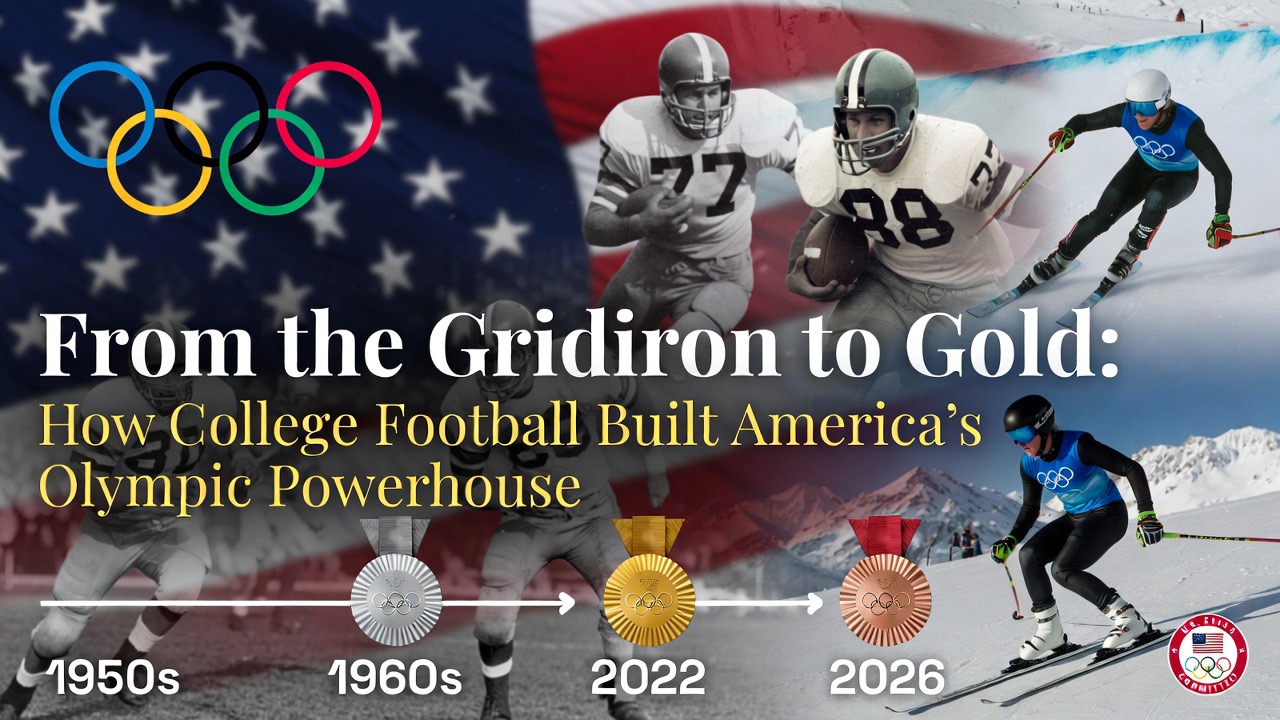
As the Milan-Cortina 2026 Winter Olympics unfold—with Team USA fielding its largest-ever Winter contingent of 232 athletes and strong medal prospects across ice hockey, alpine skiing, snowboarding, and more—a fascinating historical thread ties America’s enduring Olympic success to an unlikely source: college football. During the Cold War era, the U.S. deliberately leveraged its unique collegiate sports model—especially the massive infrastructure and funding of football—to counter the state-sponsored athletic machines of the Soviet Union and Eastern Bloc, creating a pipeline that helped propel the United States to sustained Olympic dominance.
This “accidental accelerator” of elite athlete development, as described in recent analyses, emerged from ideological necessity. The U.S. rejected full government funding for sports, viewing it as antithetical to capitalist ideals of individual initiative and private enterprise. Instead, college sports—bolstered by football’s enormous popularity, revenue, and cultural cachet—became the de facto national training ground.
The Cold War Context: Ideology Meets Athletics
The Cold War transformed the Olympics into a high-stakes propaganda battleground. The Soviet Union treated elite sport as a state priority, pouring resources into centralized training programs, scholarships, and full-time athlete support. Victories were framed as proof of communism’s superiority. The U.S., by contrast, insisted on an “amateur” model rooted in voluntary participation and private initiative—no direct federal subsidies for Olympic training.
This stance created a challenge: how to produce world-class athletes without a state-run system? The answer lay in America’s sprawling higher education network. College football, already a cultural juggernaut by the 1950s, provided the financial engine and organizational framework. Massive stadiums, booster clubs, TV contracts, and alumni donations generated billions in revenue over decades, subsidizing “minor” or Olympic sports that otherwise lacked funding.
Football’s success funded scholarships, facilities, coaching, and year-round training for track & field, swimming, wrestling, gymnastics—and crucially for winter sports—ice hockey, skiing, and figure skating programs at universities in cold-weather states.
Football’s Role in Building the Olympic Pipeline
Key mechanisms included:
• Revenue Sharing and Scholarships — Football programs at powerhouses like Michigan, Ohio State, Notre Dame, and USC generated surplus funds that supported broad-based athletics departments. This “football subsidy” model allowed non-revenue sports to offer scholarships and elite coaching—essential for developing Olympians.
• Talent Identification and Development — College recruiting networks scouted athletes nationwide. Multi-sport high school stars (common in the mid-20th century) often played football while pursuing Olympic disciplines. The physical demands of football—strength, speed, discipline—translated well to events like bobsled, skeleton, or even alpine skiing.
• Cultural Reinforcement — Football embodied “American values”: toughness, teamwork, individualism, and competition. Coaches and media promoted it as proof of democratic superiority, contrasting with Soviet “professional amateurs.” This mindset permeated Olympic preparation.
Historical examples abound. In the 1950s–1970s, as the U.S. faced Soviet medal surges (especially in gymnastics, wrestling, and weightlifting), college football’s infrastructure helped maintain leads in track & field, swimming, and emerging winter sports. The NCAA’s broad-based model ensured athletes had access to top facilities without direct government control.
Legacy into the Modern Era—and the 2026 Games
The model endures. At the 2024 Paris Summer Olympics, ~75% of Team USA athletes were current or former NCAA competitors. For the 2026 Winter Games, the NCAA footprint remains strong:
• Nearly 50 former NCAA men’s ice hockey players (from 29 schools) are on national teams, showcasing collegiate hockey’s role in producing NHL-caliber talent that doubles as Olympic rosters.
• Institutions like Clarkson University lead with 11 alumni/current athletes (mostly hockey, plus skeleton).
• Overall, ~36% (84 athletes) of Team USA’s 232-member Winter roster have NCAA ties.
This pipeline has helped the U.S. maintain dominance in freestyle skiing, snowboarding, and figure skating—sports often nurtured through college programs in states like Colorado, Vermont, and Michigan.
Yet the system faces modern pressures. NIL deals, conference realignments, and revenue-sharing debates could strain subsidies for Olympic sports. Some worry the “football engine” may slow as football revenue concentrates in a few super-conferences.
Still, as Milan-Cortina 2026 highlights American stars—from hockey goalies honed on NCAA rinks to skiers who trained at university facilities—the historical debt to college football is clear. What began as an ideological workaround during the Cold War evolved into one of the world’s most effective athlete-development systems.
In an era of renewed global competition, the U.S. collegiate model—fueled by the gridiron’s passion and profits—continues to prove its worth on the Olympic stage.
Juba Global News Network will provide ongoing coverage of Team USA’s performances in Milan-Cortina.
