Revolution on the Horizon: Africa’s Launch of Long-Acting HIV Prevention Injection Ushers in a New Era of Empowerment and Equity
By: Juba Global News Network
Pretoria, South Africa – December 10, 2025
On a sunlit Johannesburg morning, right in the heart of Alexandra township where the streets pulse with vendors and clinics buzz with activity, 28-year-old Thandiwe Nkosi got an injection that might just change her life forever. This wasn’t some regular flu jab or a childhood vaccine; it was lenacapavir—the world’s very first HIV prevention injection that only needs to be taken twice a year. On World AIDS Day, December 1, 2025, Africa began a historic rollout, and Thandiwe was right there at the front.
For Thandiwe, balancing motherhood, factory shifts, and the exhausting routine of daily oral PrEP—with its stigma and endless hurdles—this shot felt like a release. “No more pills every morning, no more sneaking around in front of my in-laws,” she said, quietly pulling down her sleeve, a hint of relief in her smile. “This is real freedom— for me, for my little girl, really, for all of us.”
Developed by Gilead Sciences and known as Sunlenca, this injection marks a dramatic new step in fighting HIV/AIDS, especially across sub-Saharan Africa where the virus still steals over 670,000 lives and infects 1.3 million more every year. Lenacapavir, which showed over 99.9% efficacy in clinical trials—almost like a vaccine, just without the immune response—works by binding to HIV’s capsid, the protective shell around its genetic material, and basically jams up the virus’s lifecycle at several points. A shot every six months means the endless pill bottles and daily reminders are finally history.
And for women like Thandiwe—dealing with abusive relationships, fear of disclosure, and power imbalances—having a long-acting option feels more than just medical. It’s nothing short of transformative.
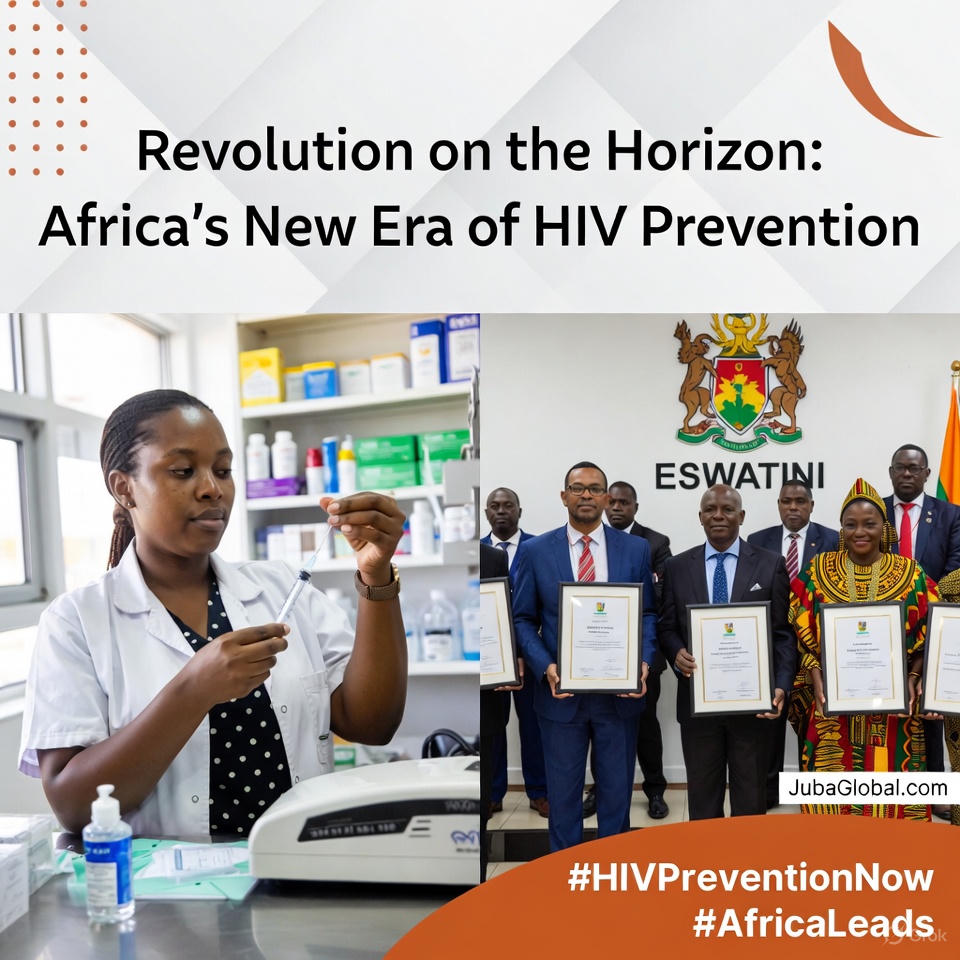
This launch is being led by Unitaid, WHO, UNAIDS, and PEPFAR (the U.S. President’s Emergency Plan for AIDS Relief). It kicked off in South Africa, Eswatini, and Zambia, marking the first time this kind of injection reached public clinics in lower-income settings outside of clinical trials. In South Africa, the country with the world’s highest HIV prevalence (one in five adults), Wits University clinics—backed by Unitaid’s innovative funding—delivered the first shots. In Eswatini, Prime Minister Russell Dlamini called the day a “turning point,” celebrating with music and dancing as eager crowds lined up. Meanwhile, Zambia’s health minister Sydney Chisanga stressed reaching adolescent girls and young women, who make up a staggering 75% of new infections in the region.
By early December, more than 5,000 people had already received the injection in those countries, with regulatory greenlights coming one after another: South Africa on October 27, Zambia on November 4, and Zimbabwe on November 27. Gilead, pledging to keep prices at cost, promised two million doses over three years for the hardest-hit countries, and 1.2 million of those earmarked for lower-income nations by 2025. PEPFAR will distribute 30% of ViiV Healthcare’s (Gilead’s HIV division) supply—speeding up access in 18 countries that carry 70% of sub-Saharan Africa’s HIV burden. Generic versions, licensed to Indian pharma companies like Hetero through Gates Foundation deals, are due in 2027 at about $40 a year—barely a drop compared to the U.S. sticker price of $28,000.
A Continent’s Burden: Why This Launch Couldn’t Wait
Sub-Saharan Africa is home to 52% of the world’s 40.8 million people with HIV, according to 2024 UNAIDS figures, yet prevention methods have long lagged behind advances in treatment. The 1996 arrival of antiretrovirals brought global AIDS deaths down from millions to under 700,000 by 2023, but new infections still hover stubbornly at 1.3 million in 2024 alone. Oral PrEP, introduced back in 2012, has only reached 1.7 million people in Africa—despite eligibility for 28 million—due to issues like daily adherence (which plummets to just 30% after half a year), supply shortages, and deep-rooted social hurdles.
Women, who make up 63% of those living with HIV in the region, face particular hardships: forced sex, economic dependency, and risky clinic visits that could end in violence or social rejection. Lenacapavir tackles these head-on. Phase 3 studies (PURPOSE 1 and 2), held in South Africa, Uganda, Kenya, Malawi, and Zimbabwe, proved its worth: 100% efficacy for cisgender women compared to oral PrEP, and 96% for men who have sex with men and transgender people. As a capsid inhibitor, it exploits a new viral weakness, dodging resistance issues that haunt older drugs. In July 2025, WHO made it the go-to PrEP choice, with global procurement made easier after prequalification on October 6.
Still, it’s not a silver bullet. Funding faces serious headwinds—PEPFAR’s budget hangs in the balance until March 2026, and global HIV funding is down 20%. South Africa’s own analysis last December found it’s not cost-effective at current pricing, sparking calls for more government support. Winnie Byanyima, UNAIDS Executive Director, at the ICASA conference in Accra on December 10, urged African leaders to grab this moment—despite debt and political setbacks. “Ending AIDS is a political choice,” she said, quoting Ubuntu: “I am because we are.”
Stories of Hope: Faces Behind the Breakthrough
In Eswatini, where HIV prevalence soars at 27%—the highest on earth—22-year-old Sipho Mdluli was among the first to get the jab. A university student and peer educator, she stopped taking daily PrEP after missing doses during exam stress and facing judgment at home. “My aunt said the pills meant I was ‘loose,’” Sipho recalled during a Unitaid-backed clinic visit. The new injection, lasting and discreet, gives her back control. “Now I can focus on my studies, not keeping secrets. This could actually save my whole generation.”
Next door in Zambia, the launch sparked lively discussions in Lusaka’s crowded neighborhoods. Nurse Agnes Chanda, responsible for giving the first 50 shots, saw immediate enthusiasm: 80% of recipients were young women, many who’d struggled just to get to monthly appointments. “One woman even walked 50 kilometers for her last oral PrEP refill,” Chanda explained. “With lenacapavir, she only needs to come twice a year—leaving her more time for the things that really matter, like family and farming.”
In South Africa, the rollout—overseen by the Desmond Tutu HIV Centre—blends medical care with real support: counseling on side effects (about 10% of trial participants had mild injection site reactions) and help linking to testing. Dr. Linda-Gail Bekker, the center’s director, cautioned about access: “Without subsidies, this is still out of reach for many. But PEPFAR’s commitment—24,000 doses already in Zambia, Zimbabwe, and Malawi—shows we can get there.”
Challenges on the Road to Universal Access
Of course, hope comes with plenty of tough realities. Supply chains in rural Africa, often fragile and hard to manage, need new solutions—like drones in Malawi or training community health workers through Africa CDC. Social stigma lingers; in some conservative areas, people whisper that injectable PrEP is really for “secret abortions.” Activists push for decriminalization of sex work and stronger protections for LGBTQ+ folks, as new cases are clustered in these groups.
Economically, generics are make-or-break. Unitaid’s $75 million investment helps lock in cheaper production, but ramping up to reach 10 million users by 2030 will need $5 billion a year—twice what’s currently spent on prevention. At ICASA, Byanyima pressed for debt relief and more homegrown funding: “Africa has to take the lead, from Accra Reset roadmaps to African Union pledges.”
A Beacon for Global Solidarity
This isn’t just about the science—it’s about justice. As Dr. Matshidiso Moeti of WHO said on December 1, “Lenacapavir isn’t only a shot—it’s a shield against inequality.” And for PEPFAR’s John Nkengasong, it’s a real chance to “bend the curve” as we aim to end AIDS by 2030. Inside Pretoria’s clinics, murals of raised fists stretch across the walls, symbols of unity. Here, Thandiwe Nkosi carries that sense of hope. “HIV took my sister,” she says quietly. “But it won’t take me—won’t take my child, either.” Now, as the number of doses climbs from thousands to millions, Africa finds itself leading once again, transforming what once felt like weakness into a powerful front. The steady routine of the injection—just twice a year, changing like the seasons—serves as a reminder: prevention isn’t a one-off thing; it’s something that lasts. In a world that seems exhausted by constant pandemics, lenacapavir hints at something different: maybe, just maybe, a future where HIV isn’t inherited, but instead remembered as history. For the 25 million African women and girls facing risk, that quiet hint is more like a shout.