Burkina Faso Brings Back Death Penalty for Treason, Terrorism, Espionage, and Major Corruption
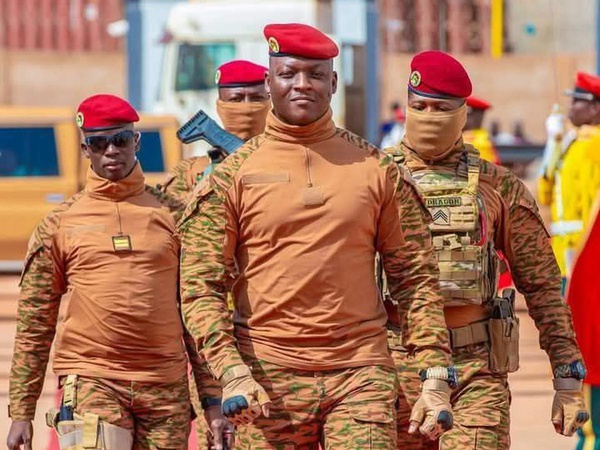
Burkina Faso Brings Back Death Penalty for Treason, Terrorism, Espionage, and Major Corruption
By Juba Global News Network
Ouagadougou | 9 December 2025
Burkina Faso’s military-led government has reignited fierce debate both at home and abroad by officially bringing back the death penalty for certain top-level crimes, ending a 37-year-long break from carrying out executions. On Wednesday, December 3, 2025, the Council of Ministers, led by Captain Ibrahim Traoré, signed off on major changes to the Penal Code, restoring capital punishment for acts of treason, terrorism, espionage, and corruption involving more than five billion CFA francs (roughly US$8.3 million).
Edasso Rodrigue Bayala, Minister of Justice, Penal Modernisation and Human Rights, told journalists after the weekly cabinet meeting that these moves are “indispensable for the survival of the nation in this period of existential war.” According to Bayala, the death penalty would only be used for “the most odious crimes that directly threaten the sovereignty and security of Burkina Faso.”
A Dormant Penalty Revived
Burkina Faso hasn’t executed anyone since 1988, when twelve people were put to death under Captain Thomas Sankara’s revolutionary regime and, after that, Blaise Compaoré’s rule. Even though capital punishment was never formally abolished by the 1991 Constitution or subsequent legal changes, a series of civilian governments kept a moratorium in place that, until now, seemed almost permanent. As recently as 2018, the National Assembly actually voted to drop death sentences from the military justice code, and Burkina Faso voted for a global death penalty moratorium at the United Nations General Assembly in 2021.
The new amendments, though, reverse all that. Article 501 of the Penal Code, as now revised, says:
“Shall be punished by death:
- Any act of high treason as defined in Articles 91 to 97;
- Terrorist acts causing death or likely to endanger the security of the State;
- Espionage carried out for a foreign power or terrorist group;
- Embezzlement, misappropriation or illegal enrichment with public funds above five billion CFA francs when done by a senior official.”
Executions may be carried out by firing squad—the sole method allowed under Burkinabè law—after all appeals are finished and the President of the Transition gives the final nod.
Context: A Nation in Conflict with Itself
Since the two military coups in January and September 2022, the Patriotic Movement for Safeguard and Restoration (MPSR), headed by 37-year-old Captain Ibrahim Traoré, has governed Burkina Faso. The junta defends its strict security measures by pointing to a relentless jihadist insurgency that’s said to control nearly half the country and has displaced over two million people. In just 2025, there were at least 2,800 conflict-related deaths, according to the Armed Conflict Location & Event Data Project (ACLED).
Massacres like the November 2025 killing of 127 civilians in Solenzo (Boucle du Mouhoun region), plus repeated attacks on military convoys, have ratcheted up public anger and demands for tougher action. Government officials argue that the old penalties—mainly life imprisonment with no chance for parole—just haven’t stopped informants, collaborators, or those bankrolling groups linked to JNIM (Jama’at Nasr al-Islam wal Muslimin) and Islamic State in the Greater Sahara (ISGS).
“Some traitors in our midst have sold out our soldiers’ blood for a few million CFA francs,” Colonel Moussa Diallo, the Defence Ministry spokesman, said last month.
The Corruption Clause: Weaponized Politics?
Maybe the most controversial part of the reform is including large-scale corruption among capital crimes. Legal experts point out that the five-billion-CFA-franc threshold is really high—about 0.5% of the 2024 national budget—so it would only target very top officials. Opposition leaders in exile and civil society critics were quick to slam the provision, calling it a new tool for eliminating political enemies.
“This isn’t about fighting corruption,” said Eddie Komboïgo, head of the former ruling Congress for People’s Movement for Progress (MPP), speaking from Côte d’Ivoire. “It’s about creating a legal guillotine for anyone who dares criticize the junta.”
Recent arrests seem to back up those concerns. In October 2025, former Prime Minister Lassina Zerbo and ex-Finance Minister Rosine Sori-Coulibaly were picked up on corruption charges tied to alleged mismanagement during the 2021–2022 transition. Both remain in custody, awaiting trial. Analysts worry that if the new law is applied retroactively, their life sentences could turn into death sentences.
Mixed Reactions at Home and Abroad
Human Rights Watch (HRW) called the decision “a dangerous step backward for human rights in Burkina Faso.” In a December 6 statement, HRW’s senior Sahel researcher Ilaria Allegrozzi warned, “Reinstating the death penalty in such a polarised and volatile context risks becoming an instrument of political repression rather than justice.”
Amnesty International called on the transitional government to repeal the amendments and respect Burkina Faso’s international obligations, including the Second Optional Protocol to the ICCPR, which the country signed in 1999 but never ratified.
Within West Africa, reactions have mostly been subdued. The Economic Community of West African States (ECOWAS), which had suspended Burkina Faso alongside Mali and Niger after their respective coups, only expressed “concern.” Mali itself, led by a military junta, brought back the death penalty in 2023 and carried out its first executions in over ten years earlier this year. Niger is reportedly thinking about similar laws.
Inside Burkina Faso, public opinion is split but seems to lean in favor, especially in the big cities. A snap poll in November 2025 by the independent Institut Free Afrik found that 58% of those surveyed in Ouagadougou and Bobo-Dioulasso “strongly agreed” that “traitors who collaborate with terrorists deserve death.” Some youth groups aligned with the junta have even held small rallies in support.
What Comes Next? Cloudy Outlook
The amendments still need to be passed by the Transitional Legislative Assembly (ALT), a 91-member body appointed by Captain Traoré in 2023 that many see as a rubber-stamp parliament. Debate is supposed to start in the next regular session, January 2026.
Even with passage, legal experts say putting the new law into practice won’t be simple:
- The judiciary is in rough shape after years of attacks on courts in areas held by insurgents.
- Many judges have either fled the country or lost their jobs for alleged disloyalty.
- International partners, like the EU and France, have already indicated that bringing back capital punishment could mean losing budgetary aid and justice-sector assistance.
For now, nobody has been sentenced to death under the new rules. Still, at least 23 people—mostly military officers accused of plotting against the junta and charged with treason or terrorism—could be eligible.
As Burkina Faso plunges deeper into what its leaders have dubbed a “war of liberation and dignity,” bringing back the death penalty marks a sharp and symbolic break from three decades of shifting toward abolition. Will it really deter terrorism and betrayal, or just worsen the mood of fear and repression? Hard to say—only time will tell. Juba Global News Network is going to keep an eye on how things unfold and will keep offering independent coverage as this story keeps developing.