

Bobi Wine Ignites Uganda’s 2026 Presidential Race: Electric Crowds in Nakawa East Herald a “Protest Vote” Revolution
By Juba Global News Network December 8, 2025 – There was no mistaking the surge of defiance and hope in the air as Uganda’s outspoken opposition leader, Ro
By Juba Global News Network
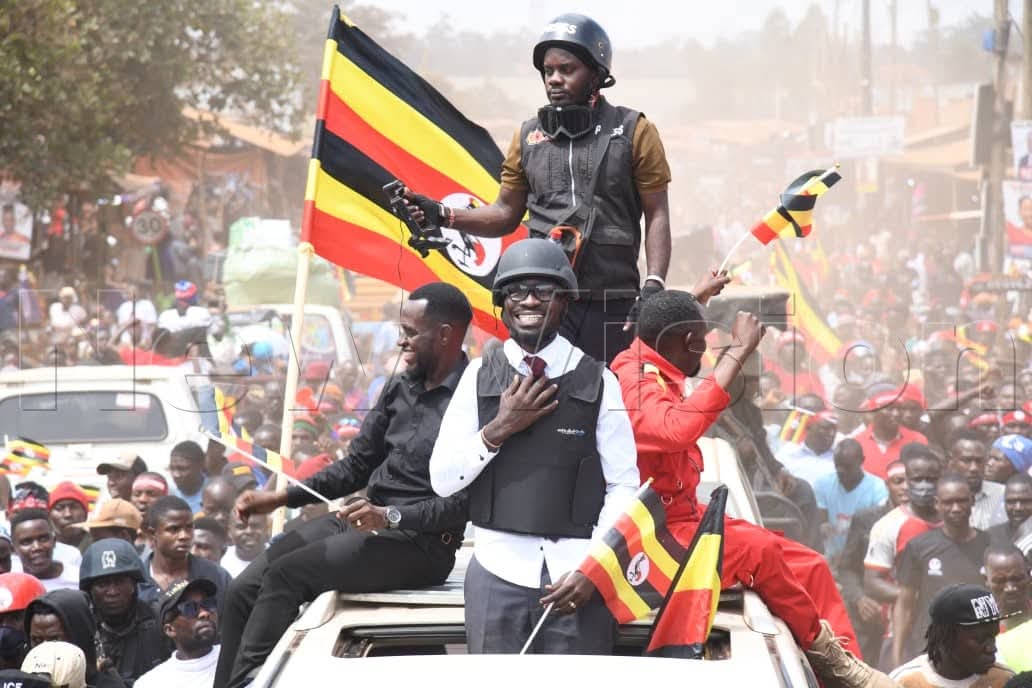
December 8, 2025 – There was no mistaking the surge of defiance and hope in the air as Uganda’s outspoken opposition leader, Robert Kyagulanyi Ssentamu—better known as Bobi Wine—kicked off his presidential campaign in the heart of Nakawa East, Kampala. What started out as just another rally in Mbuya quickly exploded into a vibrant show of resistance, with thousands—clutching red umbrellas and chanting in unison—filling the streets in a clear stand against decades of entrenched power. The energy was undeniable: people danced, flags whipped in the air, and passionate speeches echoed off busy Kampala roads, all pointing toward what Wine is now calling the “#ProtestVote2026” movement. With the January 12, 2026 general elections fast approaching, he’s clearly hoping to spark a major shift.
The rally seemed to capture something raw and vital in the youth-powered opposition. By the time Wine’s convoy pulled in, you could feel anticipation buzzing. Supporters—many sporting the National Unity Platform’s (NUP) yellow T-shirts and, of course, those signature red berets—crowded the road from the NUP School of Leadership in Kamwokya (which, by the way, is a loaded place to start, given its head, Doreen Kaijja, is in jail on what allies call trumped-up charges) all the way to the main rally. “This isn’t just a campaign; it’s the rebirth of our people’s power,” Wine thundered to the crowd, his voice cutting through the scents of frying chapati and the rumble of Kampala’s traffic.
A Warm Welcome, But the Shadow of Repression Lingers
Nakawa East, which is a pretty densely packed area full of students, market traders, and working professionals, really is a snapshot of Uganda’s political divide. Places like Makerere University and the Uganda Bureau of Statistics are here, and the area pulses with youthful ambition—over 70% of Uganda’s population is under 30—yet there’s fatigue too, with many just tired of being shut out or left behind by the old guard.
So, when Wine showed up, people didn’t just shrug. Instead, the crowd’s energy was almost electric, at least if you ask the organizers. Boda bodas darted around, kids perched on shoulders waved NUP flags, and elders prayed for the “ghetto president” who came up from Kamwokya’s streets to challenge the establishment.
And yet, as always, the government’s repressive tactics weren’t far behind. Just as Wine’s team neared the venue, police moved in to block access, unleashing tear gas into the waiting crowd. People doubled over, coughing in the smoke, but somehow managed to regroup, chanting “Bobi Wine!” and “People Power, Our Power!” louder than before. Afterward, Wine didn’t mince words in a statement: “Just as we thought, the regime police tried again to stop us from reaching the venue when we planned, then fired tear gas at our peaceful people who were there to welcome us. But our message of freedom has taken hold in Nakawa East.”
Of course, this kind of thing isn’t exactly new. Uganda’s 2021 elections—remember those?—were marred by internet shutdowns, abductions, and at least 50 opposition deaths (that’s according to Human Rights Watch). Wine, who came in second behind President Yoweri Museveni (official results: 59% to 35%), has survived more than one attempt on his life, including a 2021 shooting that sent him to the hospital. Back in April 2025, he had put it bluntly: “If I am still alive and not in jail by the end of this year, then I’m going to run for presidency, again.” Now he campaigns wearing a bulletproof vest, a grim necessity given the credible threats against him—showing just how dangerous this political fight has become.
Allies in the Struggle: Nubian Li and the Mufumbiro Legacy
On stage with Wine were other key NUP figures, each helping drive home this message of shared struggle. Nubian Li, running for mayor in Nakawa Municipality, brought his own rhythm to the event. He’s a well-known musician (real name David Ebangit) and has stood by Wine for years, performing songs like “Nalongo” that mix Afrobeat with calls for justice. “Nakawa is the cradle of our revolution,” he told the crowd, not wavering even as tear gas hung in the air. “With Bobi as president, we’ll turn these streets from places of fear into centers of opportunity—markets buzzing, youth at work, leaders answering to the people.”
There was also Kato, brother to Alex Waiswa Mufumbiro, NUP’s parliamentary candidate for Nakawa East. Mufumbiro—a fiery activist and party deputy spokesperson—has been stuck in Luzira Maximum Security Prison since he was snatched outside a Kampala courtroom in September 2025, slapped with “inciting violence” charges that NUP says are pure politics. He’s just one of more than 200 opposition figures locked up as the election nears. Kato, clearly moved, took the mic: “My brother fights from behind bars, but his spirit is with us here. Nakawa East will vote for him—for justice, for freedom. #FreeAllPoliticalPrisonersInUganda.”
The Mufumbiro saga is just a slice of what NUP’s campaign is fighting for—not just ballots, but the release of political prisoners like Doreen Kaijja and others caught up in, as Wine calls it, “Museveni’s dragnet of despair.” Last month, Wine even sent an audio message to launch Mufumbiro’s campaign, promising: “He is a prisoner of conscience whose resolve shall not be silenced.” On this day, Kato tried to channel that spirit, urging voters to “fill the ballot with umbrellas”—the NUP’s symbol—as a stand against detentions without trial.
The Broader Campaign: A Nationwide Surge of People Power
This rally in Nakawa is really just the latest escalation in Wine’s carefully plotted nationwide campaign, which kicked off back on October 1, 2025, after the Electoral Commission finally cleared him and 11 other candidates—including, yes, the 80-year-old Museveni seeking a seventh term. It wasn’t easy for Wine to get there: early on, his campaign was almost torpedoed over alleged signature shortfalls, but a massive effort from NUP gathered 200,000 verified endorsements—showing just how strong his grassroots support actually is.
Since then, Wine’s campaign has ranged all over the country: through Luweero’s war-scarred forests (where some of Museveni’s old allies now back NUP), the northern Lango sub-region (even when denied venues in Amolatar), and the West Nile’s Adjumani, where crowds turned out despite intimidation. In Luweero, crowds draped in NRM shirts actually cheered for Wine—a quirky twist that seems to show shifting allegiances. Online, hashtags like #UgandaDecides2026, #NUP, and #VisionUpdates keep the momentum rolling.
At the core of it all is Wine’s 11-point manifesto, announced in late September, which lays out a plan to “reset” Uganda: universal health care, funds for youth entrepreneurs, serious electoral reform, and courts to take on corruption. “Our country is in problems… but we can fix them if we press the reset button,” Wine declared at the launch, standing next to his wife, Barbara Itungo Kyagulanyi—herself a force in activism, even having faced illegal house arrest during the 2021 campaign.
NUP’s playbook smartly leans on cultural stars: Nubian Li and others headline rallies, while their parliamentary slate includes musicians aiming to energize that crucial youth vote (remember, that’s 70% of the country).
Echoes of a Musician’s Journey: From Ghetto Roots to the Global Stage
Bobi Wine’s life story really does mirror Uganda’s own—rising from poverty to become the face of a movement that’s captured the world’s attention. Kyagulanyi was born in 1982, right in the gritty heart of Kamwokya, and hustled his way up as a musician through the early 2000s. He mixed reggae and dancehall, churning out anthems like “Tuliyambala Engule,” tracks that took shots at those in power. By 2017, he’d been elected as MP for Kyadondo East, running as an independent, and then in 2019 he launched the NUP—blending his music roots with a newfound activist streak. The documentary Bobi Wine: The People’s President (which, by the way, nabbed an Oscar nomination in 2021) traced his rise, bullet scars and all, catapulting him into international headlines—from speeches at the UN to even some Grammy attention. Sure, some critics just write him off as a “populist performer,” but plenty of folks see him as the voice of a new generation. At 43, Wine stands in stark contrast to Museveni, who, deep in his eighties, has clung to power since 1986 through insurgencies, ups and downs in the economy, you name it. Yet, Museveni’s Uganda hasn’t exactly delivered for young people—youth unemployment stubbornly sits at around 13%, national debt has soared to 50% of GDP, and corruption scandals (think of the 2024 iron sheets fiasco) have only further corroded any remaining trust. Wine is tapping straight into all that frustration, pitching a “New Uganda”—one built on fairness and innovation.
The Road to January: Hope, Hazards, and History in the Making
As the last light faded in Nakawa East, Wine’s final words seemed to hang in the air: “We have rallied them to vote for the umbrella symbol across all electoral levels in order to be part of our protest vote cause.” With the election now just a month away, you really can’t deny the campaign’s momentum. In places like Oyam and Omoro, crowds have swelled just as large, even with the government trying to throw up roadblocks. Watchdogs like the EU and Amnesty International are already sounding the alarm about “pre-election repression,” urging Uganda to avoid the mistakes of 2021. And now, echoes from Nakawa keep resounding—a reminder that in Uganda’s precarious democracy, sometimes it’s music, crowds, and unbreakable hope that tip the scales. As Wine shouted after the rally, “#ANewUgandaNow.” Whether this surge of “people power” will finally unseat Museveni in 2026? That’s still the big question. But one thing’s crystal clear: Bobi Wine’s flame doesn’t look ready to fade out any time soon.
