

Yemen’s Houthi Rebels Squeeze Out Aid Groups: Humanitarian Organizations on the Brink in Houthi-Controlled Areas as Millions Face Dire Threat
In a dramatic escalation of pressure on international humanitarian operations, Yemen’s Houthi authorities have intensified restrictions, surveillance, and

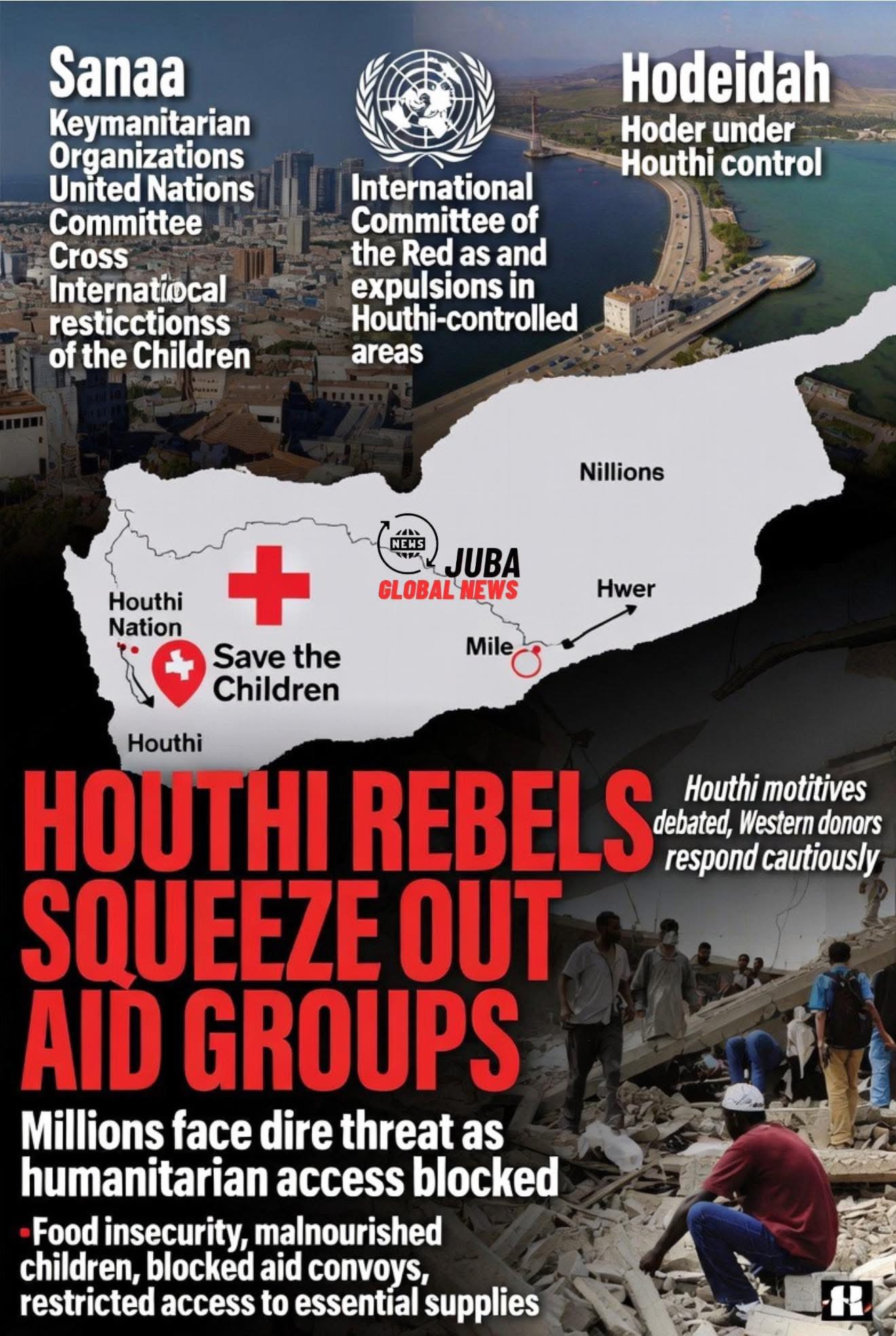
In a dramatic escalation of pressure on international humanitarian operations, Yemen’s Houthi authorities have intensified restrictions, surveillance, and outright expulsions of aid organizations in territories under their control, driving several major relief groups to the edge of withdrawal or severe operational curtailment. As of February 27, 2026, the United Nations, the International Committee of the Red Cross (ICRC), and leading non-governmental organizations (NGOs) warn that the systematic squeeze could soon leave millions of Yemenis—already among the most food-insecure populations on Earth—without life-saving assistance.
The crackdown has unfolded over the past 18 months but reached a critical point in early 2026. In January, the Houthis ordered the ICRC to halt nearly all activities in Sanaa and other Houthi-held governorates, citing unspecified “security concerns.” The ICRC—one of the few organizations still able to operate at scale across front lines—was forced to suspend most health, water, and protection programs affecting over 4 million people. Médecins Sans Frontières (MSF) reported similar ultimatums, with Houthi security officials demanding access to staff residences, detailed financial records, and veto power over project approvals.
Several smaller international NGOs have already ceased operations or drastically reduced their footprint. Save the Children, Oxfam, and CARE have scaled back significantly in Houthi areas after repeated arrests of national staff, vehicle confiscations, and demands for exorbitant “taxes” on imported supplies. The Norwegian Refugee Council (NRC) described the environment as “increasingly untenable,” with aid convoys blocked for weeks and warehouses raided under pretexts of “customs violations.”
The Humanitarian Catastrophe in Numbers
Yemen remains the world’s largest humanitarian crisis. According to the latest UN figures:
- 21.6 million people (two-thirds of the population) require some form of humanitarian assistance in 2026.
- 17.1 million face acute food insecurity; 5 million are one step from famine.
- Over 4.5 million children under five are acutely malnourished, including 1.3 million severely malnourished.
- More than 4 million people remain internally displaced.
In Houthi-controlled areas—which include the capital Sanaa, much of the densely populated highlands, and the port of Hodeidah (through which the majority of commercial and humanitarian imports enter)—the situation is particularly acute. The World Food Programme (WFP) has already reduced rations by 50% in many districts due to funding shortfalls and access constraints. Recent Houthi restrictions on biometric registration and cash programming have further complicated distributions.
Why the Squeeze Now?
Analysts and humanitarian officials point to several overlapping motives behind the Houthi campaign:
- Revenue and control: The Houthis have imposed increasingly heavy “taxes,” fees, and customs duties on aid imports, reportedly generating tens of millions of dollars annually. By pressuring organizations to leave or comply, they aim to centralize resource flows under their authority.
- Security paranoia: The Houthis accuse many Western NGOs of espionage and links to the Saudi-led coalition or the internationally recognized Yemeni government. Several staff arrests in 2025–2026 were justified on vague “spying” charges.
- Political leverage: With the Houthis’ Red Sea maritime campaign continuing to draw global attention (and occasional U.S. and UK airstrikes), restricting aid may be intended to pressure the international community into negotiations or sanctions relief.
- Internal consolidation: After years of war and economic collapse, the Houthis are tightening control over civil society, media, and humanitarian space to eliminate perceived threats to their governance model.
Voices from the Field
Anonymous aid workers in Sanaa describe a climate of fear: mandatory “minders” accompany every field visit, expatriate staff require day-to-day approval to leave compounds, and national employees face interrogation after meetings with donors. One senior official told Reuters: “We are being slowly strangled. Every day another permission is denied, another staff member is summoned, another warehouse is sealed.”
The UN’s Office for the Coordination of Humanitarian Affairs (OCHA) warned in its latest Yemen Humanitarian Update that “systematic interference in humanitarian operations risks collapsing the aid architecture in the north.” The ICRC stated bluntly: “We cannot operate under conditions that compromise our neutrality, impartiality, and independence.”
Regional and Global Stakes
Yemen’s humanitarian implosion would have ripple effects far beyond its borders. A resurgence of famine could trigger renewed large-scale displacement toward Saudi Arabia and Oman. The Houthis’ maritime disruptions already affect global shipping; a total aid collapse could further destabilize an already fragile Red Sea corridor.
Western donors—already stretched by competing crises in Ukraine, Gaza, Sudan, and elsewhere—face a difficult choice: continue funding under increasingly coercive conditions or reduce support and risk mass mortality. The U.S. State Department and European Commission have condemned the restrictions but have not yet announced concrete measures to counter them.
For millions of Yemeni families surviving on the edge, the clock is ticking. As one displaced mother in Sanaa told MSF: “We wait for food distributions that never come. The world forgets us while we starve in silence.”
The coming weeks will test whether quiet diplomacy, donor pressure, or public advocacy can reverse the squeeze—or whether Yemen’s humanitarian lifeline will snap under the weight of politics and control.
(Compiled from reports by the United Nations OCHA, World Food Programme, ICRC, MSF, NRC, Reuters, BBC, Al Jazeera, The Guardian, and Yemen Data Project as of February 27, 2026. The situation is rapidly evolving; check UN and NGO statements for the latest updates.)
