US-Israel Strikes Pound Iran as Conflict Enters Day 3: Khamenei Assassination Sparks Regional Chaos
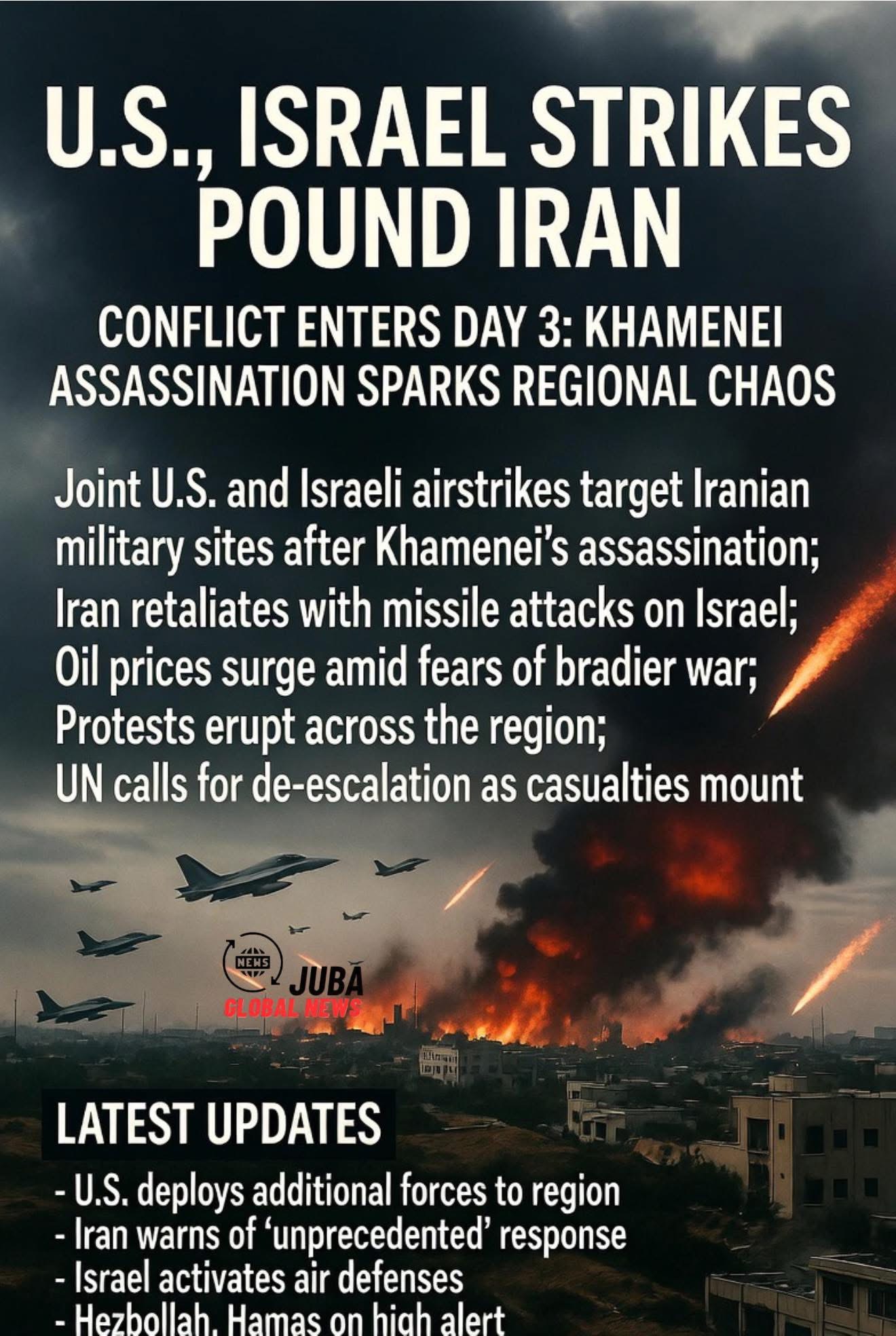
The US-Israel Strikes Pound Iran as Conflict Enters Day 3: Khamenei Assassination Sparks Regional Chaos has rapidly become one of the most consequential geopolitical events of the 21st century. What began as a targeted pre-emptive operation on February 28, 2026, has escalated into a full-scale regional war, with profound implications for global security, energy markets, and the future of the Middle East.
The Opening Blow: Decapitation of Iran’s Leadership
On the night of February 28, 2026, joint U.S. and Israeli forces launched a massive, coordinated airstrike campaign codenamed by Israeli officials as “Roar of the Lion” (with U.S. involvement often referred to in broader terms as part of ongoing operations against Iranian threats). The strikes targeted high-value regime assets across Iran, including command centers in Tehran.
Central to the operation was the assassination of Supreme Leader Ayatollah Ali Khamenei, the 86-year-old cleric who had ruled Iran as supreme leader since 1989, succeeding Ayatollah Ruhollah Khomeini. Khamenei was killed in a precision missile strike on his compound in Tehran, confirmed by Iranian state media on March 1 and corroborated by U.S. and Israeli intelligence sources. The attack also eliminated dozens of senior figures, including:
- Islamic Revolutionary Guard Corps (IRGC) Commander Major General Mohammad Pakpour
- Supreme National Security Council Secretary Ali Shamkhani
- Defense Minister Brigadier General Aziz Nasirzadeh
- Other top security and military officials
Reports indicate that CIA intelligence, gathered over months and shared with Israeli counterparts, pinpointed Khamenei’s location, enabling the strike. President Donald Trump later described the operation as eliminating “48 leaders in one shot,” noting that many potential successors to Khamenei were also killed, leaving Iran’s leadership in disarray.
Iranian state media declared 40 days of public mourning, with Khamenei’s funeral held amid heavy security in Tehran on March 1. Crowds gathered in squares, chanting slogans and holding portraits of the late leader, while some areas saw quiet celebrations from regime opponents.
Iran’s Retaliation: Missiles and Proxy Activation
Tehran’s response was swift and ferocious. Iranian officials, including interim President Masoud Pezeshkian, vowed “crushing revenge” and “blood for blood,” framing the strikes as a “declaration of open war” on Muslims and Shiites worldwide.
By March 1 (Day 2 of the conflict), Iran launched waves of ballistic missiles and drones targeting:
- Israel, with barrages piercing defenses in some areas, causing casualties near Jerusalem and other sites.
- U.S. military assets and allies in the Gulf, including explosions reported in Dubai, Abu Dhabi, Doha, Manama, and Kuwait.
A new wave of missiles was fired toward Israel early on March 2. Iran’s proxies were quickly activated:
- Hezbollah in Lebanon declared the strikes revenge for Khamenei’s death and launched rockets into northern Israel, prompting Israeli counterstrikes on Beirut and southern Lebanon. At least 31 were reported killed in initial exchanges, with fighting potentially lasting “many more days” according to Israeli officials.
- Other Iran-backed militias in Iraq, Syria, and Yemen signaled involvement, though direct actions remained limited as of March 2.
A suspected Iranian drone struck a British RAF base in Cyprus (Akrotiri), marking the conflict’s reach toward Europe, though with minimal damage.
U.S. and Israeli Escalation on Day 3
As the conflict entered its third day on March 2, 2026, U.S. and Israeli aircraft maintained air dominance, pounding targets in Tehran and elsewhere. Strikes focused on military infrastructure, nuclear-related sites (raising IAEA concerns), and command structures.
President Trump acknowledged the first U.S. casualties: three service members killed and five wounded in operations, likely tied to Iranian missile strikes on bases in Kuwait or elsewhere in the Gulf. Trump warned of “more likely” losses, stating the operation could last “four weeks or less” but would continue until objectives—crippling Iran’s ballistic missile and nuclear programs, and potentially regime change—are met.
In Kuwait, several U.S. warplanes crashed amid the chaos (crews ejected safely), highlighting risks to coalition forces. Israel reported striking “the heart of Tehran” again, vowing to dominate Iranian skies.
Broader Regional and Global Fallout
The war has widened dramatically:
- Oil and Energy Shock: Disruptions in the Strait of Hormuz and attacks on Gulf infrastructure caused oil prices to surge over 13%, with fears of prolonged shortages.
- Humanitarian Toll: Iranian reports cite over 550 deaths from strikes, including a controversial bombing of a girls’ primary school near a military site (condemned by UNESCO as a violation of international law).
- Diplomatic Reactions: World leaders urged restraint, but divisions deepened. Trump signaled possible talks with Iran’s interim leadership, while hardliners like U.S. Senator Lindsey Graham praised the strikes.
- Protests and Unrest: Mourning mixed with dissent in Iran; protests erupted in places like Jammu and Kashmir over the assassination.
U.S. officials expressed skepticism about immediate regime change, despite tactical successes in decapitating leadership.
What Comes Next?
With no clear successor to Khamenei (an Interim Leadership Council formed amid uncertainty), Iran’s response remains defiant—no negotiations, continued strikes. The involvement of Hezbollah opens a northern front, risking a multi-theater war.
For the U.S. and Israel, air superiority offers leverage, but ground risks, proxy escalations, and economic blowback loom large. The killing of Khamenei—a figure who shaped Iran’s anti-Western stance for decades—marks a historic turning point, but whether it leads to regime collapse, negotiated de-escalation, or prolonged regional conflagration remains uncertain.
The world watches as Day 3 unfolds, with the potential for even greater chaos.
By Juba Global News Network | JubaGlobal.com
March 2, 2026
Stay tuned for live updates as this fast-moving story develops.