US-China Trade Chiefs Set Mid-March Meet Before Trump-Xi Summit

Amid the chaos of the escalating US-Israel-Iran war and the effective closure of the Strait of Hormuz, senior economic officials from the United States and China have quietly confirmed they will hold high-level trade talks in mid-March 2026, setting the stage for a potential face-to-face summit between President Donald Trump and Chinese President Xi Jinping later that month. The announcement—delivered through low-key diplomatic channels rather than splashy press conferences—stands in stark contrast to the military headlines dominating global attention and signals that both superpowers intend to keep their economic relationship on a separate, pragmatic track even as geopolitical tensions reach historic highs.
The Scheduled Meeting
According to statements from the US Treasury Department and China’s Ministry of Commerce, US Treasury Secretary Scott Bessent and China’s Vice Premier He Lifeng will convene in a neutral location (widely expected to be Singapore or Switzerland) around March 15–17, 2026. The agenda is expected to focus on:
- Implementation and possible expansion of the Phase One trade deal remnants
- Tariffs on critical goods (semiconductors, rare earths, electric vehicles, solar panels, batteries)
- Currency practices and exchange-rate transparency
- Market access for US financial services and agricultural products in China
- Supply-chain resilience and “de-risking” versus outright decoupling
- Cooperation (or competition) in green-technology standards and critical-minerals sourcing
The timing is deliberate: the meeting is positioned as a preparatory session ahead of a Trump–Xi summit tentatively penciled in for late March or early April—potentially in a third country or via video link if travel logistics prove difficult amid regional airspace closures.
Why Now? The Dual-Track Reality
The decision to press ahead with trade diplomacy despite the Middle East crisis reflects a shared recognition in both Washington and Beijing that a full-blown economic rupture would inflict catastrophic damage on both economies at the worst possible moment.
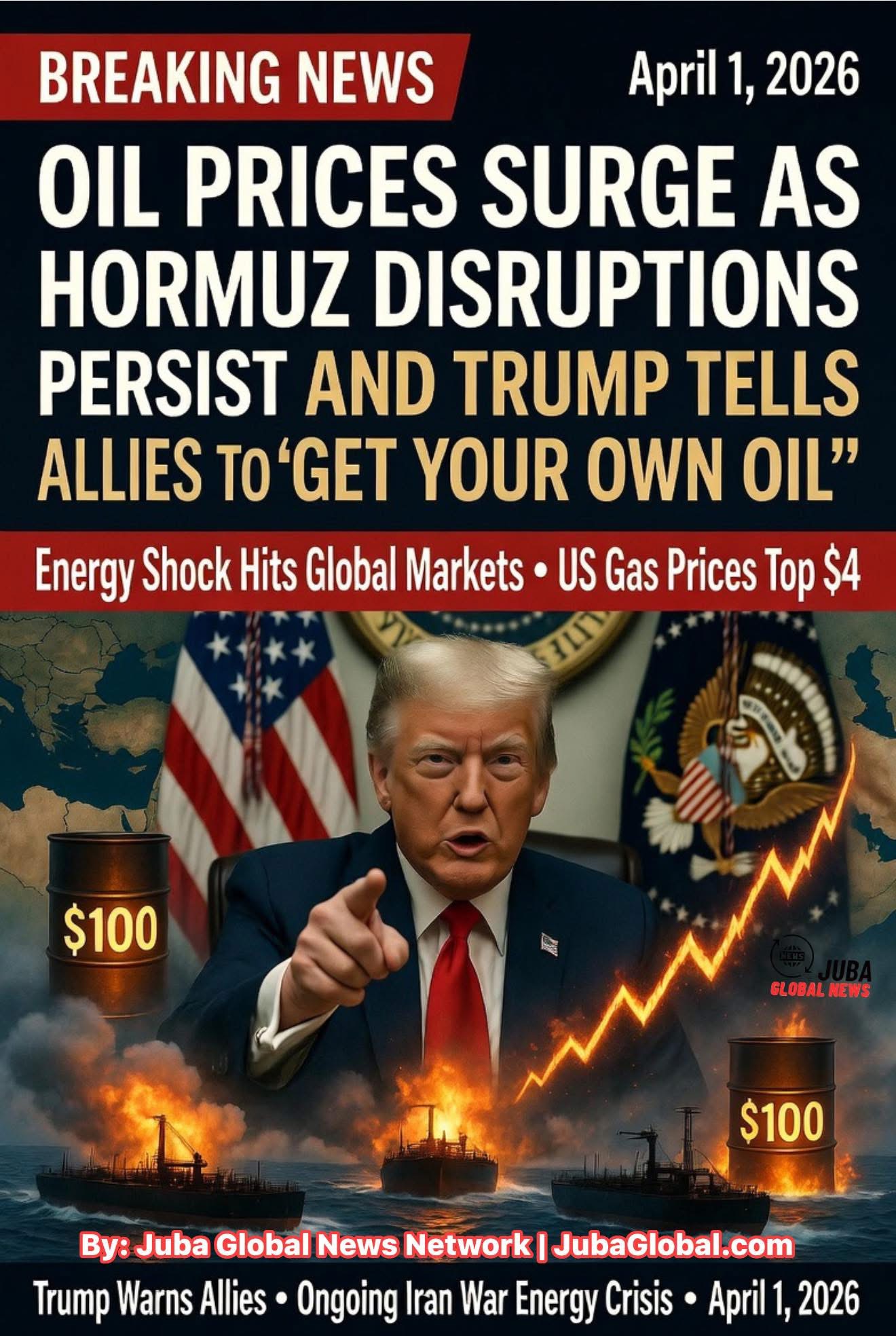
- For the United States: Surging oil prices (Brent already above $80/barrel and analysts warning of $100+ if Hormuz remains blocked) are already fueling inflation fears and squeezing consumers. A simultaneous trade war escalation with China—home to the majority of global manufacturing capacity for consumer electronics, solar panels, batteries, and many defense-critical components—would compound the pain. The Trump administration has repeatedly signaled that while it is prepared to confront China strategically, it does not want to fight simultaneous economic and military crises.
- For China: Beijing faces its own vulnerabilities. Iran is a key oil supplier, and prolonged disruption through the Strait of Hormuz threatens China’s energy security. At the same time, Chinese exporters are still recovering from previous tariff rounds and are heavily exposed to US consumer demand. A further breakdown in trade relations would deepen China’s economic slowdown at a politically sensitive time.
Both sides appear to have concluded that decoupling rhetoric must coexist with managed competition—and that some level of dialogue is essential to prevent accidental economic collision.
What to Expect from the Bessent–He Meeting
Insiders describe the mid-March session as “serious but limited in scope.” Neither side expects a grand bargain, but both hope to achieve modest, confidence-building steps:
- Possible tariff relief or exemptions on select goods (lithium-ion batteries, certain medical supplies, or green-tech components) to ease immediate supply-chain pressure.
- Renewed commitments to avoid competitive devaluations amid currency volatility.
- Agreement on technical working groups to address agricultural purchases, intellectual-property enforcement, and financial-market opening.
- A joint statement reaffirming that trade frictions should not be allowed to “spill over” into military domains.
Chinese state media has framed the meeting as evidence of “rational dialogue prevailing over confrontation,” while US officials have emphasized that any concessions will be “narrow, reciprocal, and fully enforceable.”
The Trump–Xi Summit Shadow
The real prize—and the biggest source of uncertainty—is the potential Trump–Xi meeting. Trump has repeatedly said he wants to “sit down with Xi” and that a deal is possible “much easier now” because of military pressure on Iran and perceived US leverage. Xi, for his part, has signaled openness to high-level engagement provided it is based on “mutual respect and equality.”
Yet the optics are fraught. Any perceived softening toward China while the US is engaged in active military operations in the Middle East could be politically toxic at home—especially with the CNN poll showing 59% disapproval of the Iran strikes and protests spreading nationwide. Conversely, scuttling trade talks could accelerate global economic fragmentation at a moment when energy markets are already in turmoil.
Broader Implications
The quiet continuation of US–China economic dialogue amid war in the Middle East is a reminder of the “G2” reality that persists beneath the surface of great-power rivalry. While missiles fly over the Persian Gulf and Tehran burns, the world’s two largest economies are still trying to manage their interdependence rather than sever it completely.
Whether the mid-March meeting and potential Trump–Xi summit produce tangible progress—or collapse under the weight of geopolitics—will be one of the defining economic storylines of spring 2026. For now, the fact that the talks are even scheduled speaks volumes: even in an era of open conflict, the gravitational pull of trade and mutual economic vulnerability remains extraordinarily strong.
By Joseph for Juba Global News Network | JubaGlobal.com
March 3, 2026 – Real-time updates and live coverage available at JubaGlobal.com. Stay informed as events unfold.