Trump Signals Talks with Iran’s New Leadership After Khamenei Death
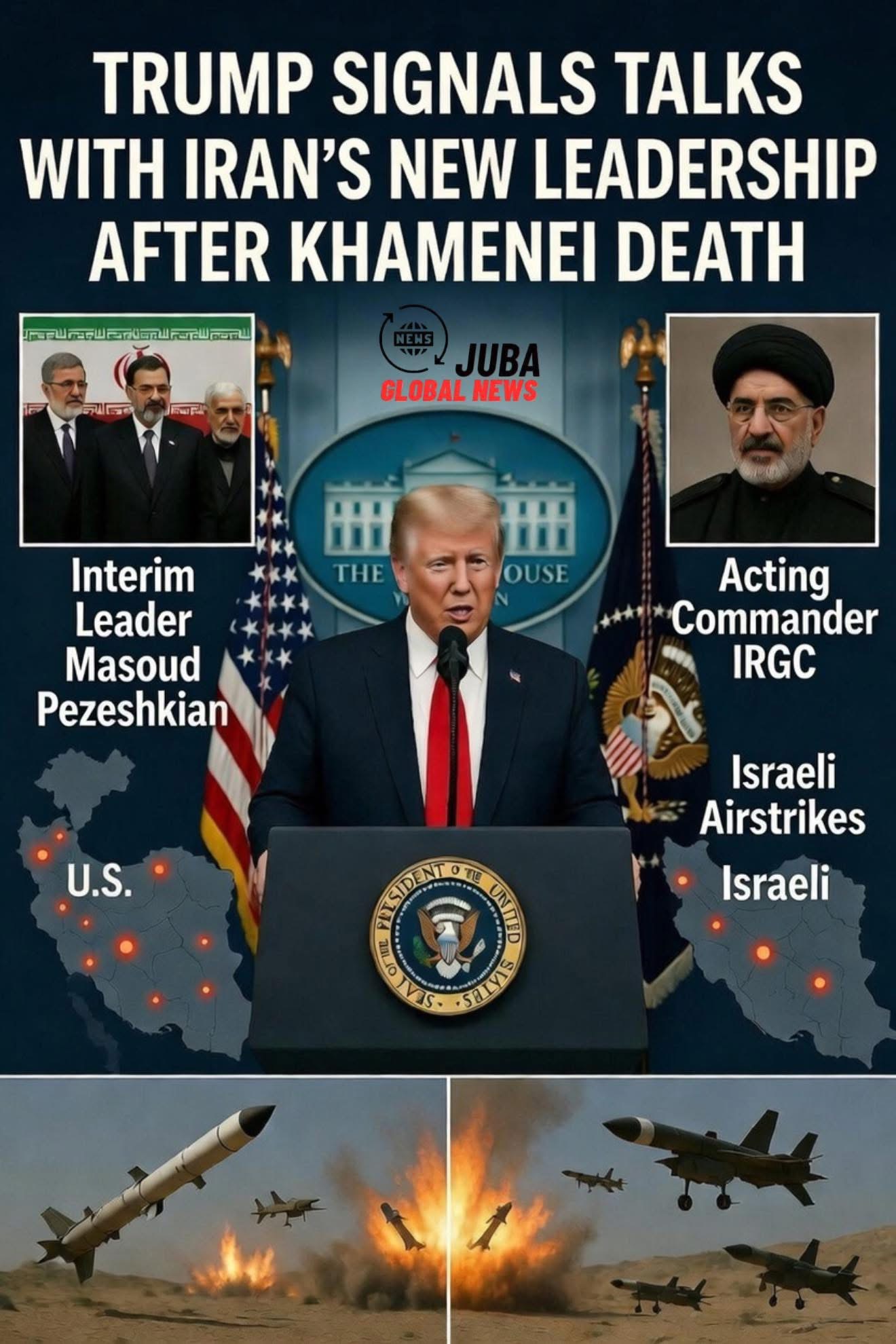
In a surprising shift amid the intensifying US-Israel war on Iran—now in its third day on March 2, 2026—President Donald Trump has publicly opened the door to direct negotiations with Iran’s interim leadership following the assassination of Supreme Leader Ayatollah Ali Khamenei. The comments, delivered during a late-night Oval Office address and amplified on Truth Social, represent the first indication from the White House of a possible diplomatic off-ramp even as airstrikes continue and Iranian missiles target Israel and Gulf allies.
The statement comes at a moment of maximum military pressure: U.S. and Israeli aircraft maintain near-constant sorties over Iran, three American service members have been killed and five wounded in retaliatory strikes, three F-15E jets were lost to friendly fire in Kuwait, and a suspected Iranian drone has struck a British base in Cyprus. Yet Trump’s words suggest the administration sees value in testing whether the decapitation of Iran’s long-time supreme leader has created an opening for de-escalation—or regime fracture.
The Context: A Power Vacuum in Tehran
Ayatollah Ali Khamenei’s death in a precision strike on his Tehran compound on February 28, 2026, eliminated not only the 86-year-old cleric who had ruled Iran since 1989 but also many of the figures positioned to succeed him. Reports indicate that at least 20–30 senior clerics, IRGC commanders, and Assembly of Experts members who could have influenced succession were killed in the same wave of strikes or in follow-on operations.
Iran’s constitution provides for an interim leadership council to manage affairs until a new supreme leader is selected by the Assembly of Experts. Current acting figures include:
- President Masoud Pezeshkian (reformist-leaning, elected 2024)
- First Vice President Mohammad Mokhber (conservative, previously first VP under Raisi)
- Judiciary Chief Gholam-Hossein Mohseni-Eje’i
- IRGC acting commander (name not yet publicly confirmed after multiple senior losses)
The council has issued defiant statements vowing “crushing revenge” and rejecting negotiations “under bombardment,” yet private channels reportedly remain open through intermediaries in Oman, Qatar, and Iraq.
Trump’s Opening: “Talk to the New Guys”
During his March 1 address, President Trump addressed Iran’s post-Khamenei reality directly:
“We took out the old supreme leader and a lot of the bad people around him—48 in one shot. Now you’ve got new people running things. If they want to talk, I’m willing to talk. We can end this fast. But if they keep firing missiles, we keep hitting harder. Choice is theirs. No more games.”
On Truth Social shortly after, he added: “Iran’s new leadership can pick up the phone. No preconditions. Stop the rockets, come to the table. We’ll see if they’re smarter than the last guy.”
The remarks contrast sharply with earlier administration language framing the operation as a sustained campaign to dismantle Iran’s ballistic missile and nuclear programs “regardless of regime change or not.” White House officials later clarified that any talks would require immediate cessation of hostilities and verifiable steps to freeze enrichment and missile production—conditions Tehran has so far rejected.
Why Now? Strategic Calculations
Several factors appear to underpin the timing of Trump’s outreach:
- Military Leverage Peak — With air dominance secured and Iranian launch capacity visibly degraded (fewer missiles fired on Day 3 compared to Day 1–2), the U.S.-Israel coalition holds strong negotiating leverage.
- Avoiding Prolonged War — Public support for military action remains high after Khamenei’s death, but casualties (U.S. and allied) and oil price surges (up 13%) are already creating domestic pressure to define an endgame.
- Proxy Containment — Hezbollah’s entry into the fight and the Cyprus drone strike raise fears of a multi-front, multi-actor war. A negotiated pause could isolate hardliners and prevent further proxy activation.
- Succession Uncertainty — U.S. intelligence reportedly assesses that Iran’s interim council is fractured between hardliners demanding total revenge and pragmatists worried about regime survival. Trump’s offer aims to exploit that divide.
- Gulf Allies’ Anxiety — Saudi Arabia, UAE, and others hosting U.S. forces have quietly urged Washington to explore diplomacy to prevent a wider energy and security catastrophe.
Reactions: Mixed and Cautious
- Iran — State media dismissed the offer as “psychological warfare” and “a sign of weakness,” while Pezeshkian reiterated: “No talks while bombs fall on our cities.”
- Israel — Prime Minister’s office issued a terse statement: “Israel will continue operations until Iran’s threats are eliminated. Any diplomacy must include irreversible dismantlement of nuclear and missile programs.”
- Democrats & Critics — Some U.S. lawmakers called the outreach “reckless” without preconditions, while others praised it as pragmatic realism.
- Europe & UN — EU foreign policy chief welcomed “any sign of de-escalation,” while UN Secretary-General Guterres urged immediate ceasefire talks.
What Happens Next?
Whether Trump’s signal leads to back-channel contacts, a public Iranian response, or is dismissed as posturing remains uncertain. Oman and Qatar—traditional mediators—have reportedly intensified quiet diplomacy. Meanwhile, military operations continue: fresh U.S.-Israeli strikes targeted Tehran suburbs and suspected missile reload sites overnight.
For a conflict that began with a high-risk decapitation strike, the possibility of talks emerging on Day 3 illustrates the razor-thin line between escalation and exit. If Iran’s new leadership sees survival in dialogue rather than endless attrition, the war that killed Khamenei could end far sooner—and far less destructively—than many feared.
If not, the body count, economic pain, and risk of wider war will only grow.
By Juba Global News Network | JubaGlobal.com
March 2, 2026
Stay tuned for live updates as this fast-moving story develops.