Several US Warplanes Crash in Kuwait Amid Iranian Retaliatory Strikes
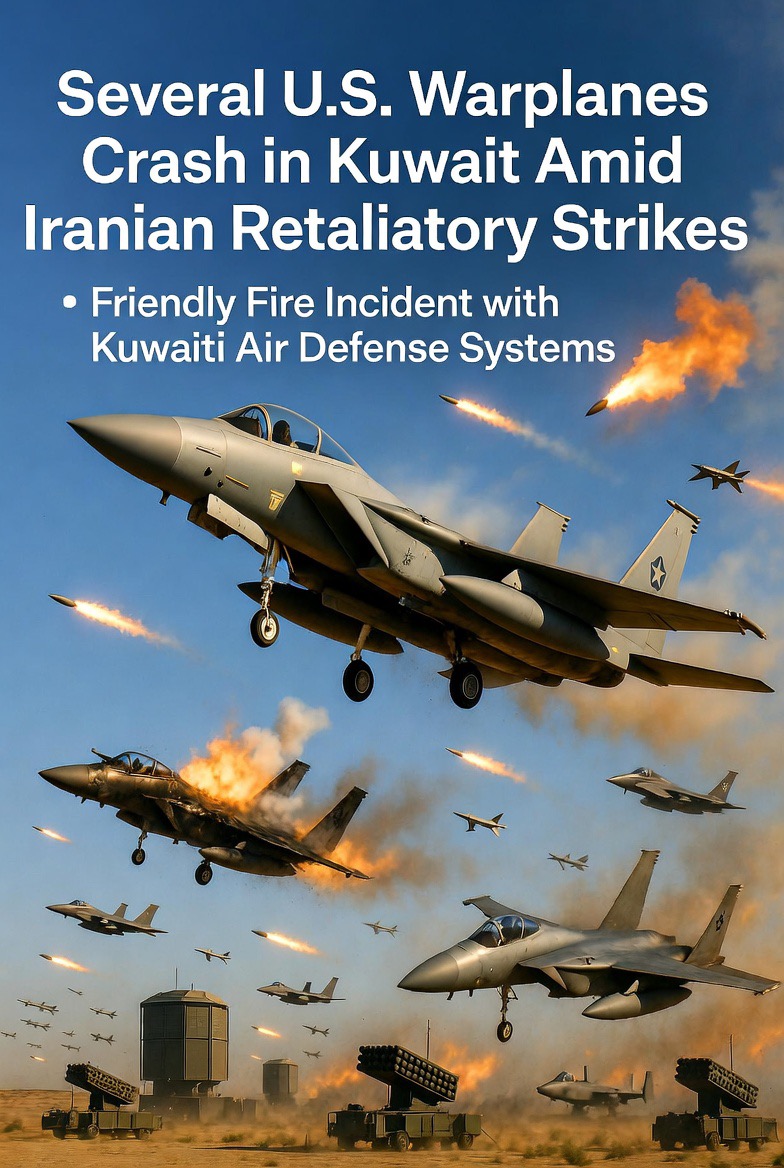
In a dramatic and embarrassing turn amid the escalating US-Israel war on Iran, three U.S. Air Force F-15E Strike Eagle fighter jets crashed over Kuwait late on March 1, 2026 (local time), during active combat operations. U.S. Central Command (CENTCOM) quickly classified the incident as an apparent friendly fire event, with Kuwaiti air defense systems mistakenly engaging and downing the American aircraft. All six crew members ejected safely, were recovered promptly, and are reported in stable condition—no fatalities or serious injuries resulted from the crashes themselves.
The episode highlights the intense chaos and heightened alert levels gripping the Gulf region as Iranian retaliatory missile and drone barrages continue into Day 3 of the conflict (March 2, 2026), following the assassination of Supreme Leader Ayatollah Ali Khamenei.
The Incident: Friendly Fire in the Heat of Battle
According to CENTCOM’s official statement released early March 2:
- At approximately 11:03 p.m. ET on March 1 (corresponding to early morning local time in Kuwait), the three F-15E Strike Eagles—multi-role fighters configured for air-to-ground strikes—were operating in support of Operation Epic Fury, the U.S. designation for joint strikes against Iranian military targets.
- The jets were actively engaging or responding to incoming Iranian threats, including aircraft, ballistic missiles, and drone swarms targeting U.S. and allied positions across the Gulf.
- Amid the saturation of threats and rapid defensive responses, Kuwait’s integrated air defense network—bolstered by U.S.-supplied Patriot systems and other assets—mistakenly identified the low-flying or maneuvering F-15s as hostile.
- Kuwaiti surface-to-air missiles engaged the aircraft, causing all three to crash in separate locations over Kuwaiti territory, some near Ali Al Salem Air Base (a major U.S. hub) and others in more remote areas.
Video footage geolocated by media outlets showed at least one pilot parachuting to safety and landing on the ground, while smoke plumes rose from crash sites. Kuwait’s Ministry of Defense initially announced that “several US military aircraft” had crashed, confirming all crews survived before CENTCOM provided the friendly-fire clarification.
CENTCOM emphasized gratitude to Kuwaiti forces for the swift recovery effort and stressed that the incident is under joint investigation. No disciplinary actions have been announced, but the event underscores the risks of coalition operations in a high-threat environment with layered air defenses.
Context: Iranian Retaliation Overwhelms Gulf Defenses
The crashes occurred against the backdrop of Iran’s aggressive missile and drone retaliation following U.S.-Israeli strikes that killed Khamenei and dozens of senior IRGC leaders. By March 2:
- Iran had launched multiple waves targeting Israel, U.S. bases, and Gulf allies (UAE, Qatar, Bahrain, Saudi Arabia, Kuwait).
- Explosions rocked Dubai, Abu Dhabi, Doha, Manama, and Kuwait City areas, with reports of intercepted drones over Kuwait for the third consecutive day.
- U.S. and allied interceptors (Patriot, THAAD, Aegis ships) have been firing almost continuously, creating a dense, high-stress air picture prone to identification errors.
Kuwait, hosting thousands of U.S. troops at bases like Camp Arifjan and Ali Al Salem, has been on maximum alert. Earlier on March 1, the same Iranian barrages contributed to the first confirmed U.S. ground casualties (three killed, five wounded at various Gulf sites).
The friendly-fire incident is the first known loss of U.S. fixed-wing aircraft in this conflict, though no combat shoot-down by Iranian forces has been confirmed yet.
Reactions and Implications
- U.S. Military & Administration: President Trump, in overnight comments, acknowledged the incident but pivoted to the broader mission: “Mistakes happen in war—especially when the enemy is firing everything they’ve got. Our pilots are safe, thank God, and we’re pressing forward to end Iran’s threats once and for all.”
- Kuwaiti Government: Issued a statement expressing regret, reaffirming commitment to the coalition, and noting the extraordinary pressure from incoming threats.
- Iranian Side: State media highlighted the crashes as evidence of “disarray in the aggressor coalition,” though they did not claim credit, focusing instead on their own missile successes.
- Broader Risks: Analysts warn that friendly-fire events can erode trust in multinational operations, complicate rules of engagement, and increase pilot caution—potentially reducing effectiveness against Iranian targets.
The incident adds another layer of complexity to an already volatile theater. With air superiority still firmly held by the U.S.-Israel coalition but ground and proxy threats mounting, every mission now carries elevated risks—not just from the enemy, but from the fog of war itself.
As investigations continue and strikes persist, the Gulf skies remain a dangerous place for all involved.
By Juba Global News Network | JubaGlobal.com
March 2, 2026
Stay tuned for live updates as this fast-moving story develops.