Oil Prices Surge 13% as Iran Conflict Disrupts Strait of Hormuz Shipping
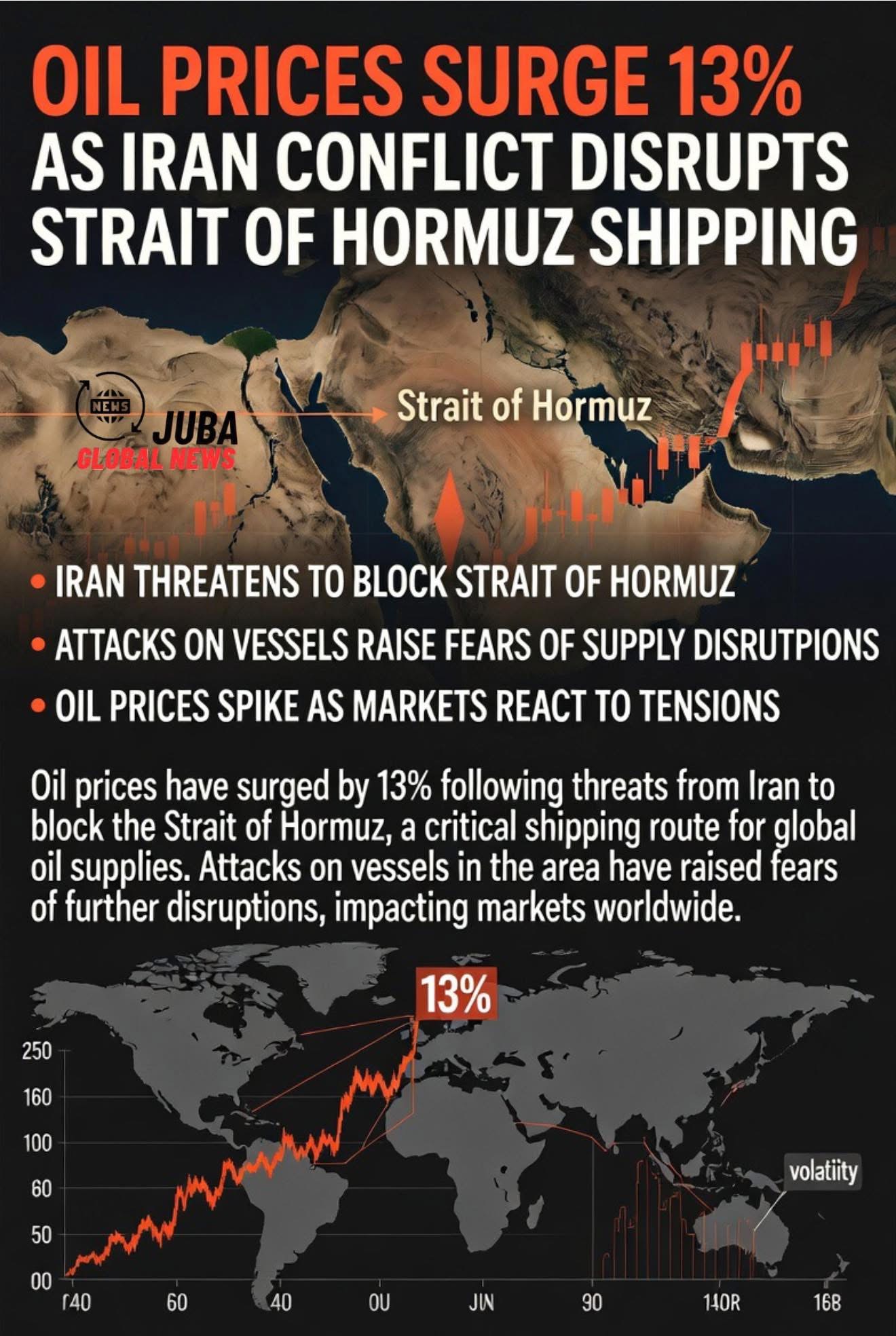
The escalating US-Israel war on Iran, now in its third day as of March 2, 2026, has delivered a sharp shock to global energy markets. Brent crude, the international benchmark, surged as much as 13% in early trading, briefly topping $82 per barrel before settling around $79–$80, while West Texas Intermediate (WTI) climbed over 8% to cross $72. This marks the most dramatic single-day spike in oil prices since major disruptions in prior geopolitical crises, driven primarily by fears that Iran’s retaliatory actions—and the broader conflict—could severely restrict flows through the Strait of Hormuz, the world’s most critical oil chokepoint.
The Trigger: War Hits the Energy Heart of the Middle East
The conflict began with joint U.S. and Israeli airstrikes on February 28, 2026, targeting Iranian military infrastructure, nuclear-related sites, and leadership—including the assassination of Supreme Leader Ayatollah Ali Khamenei. Iran’s response has been multifaceted and aggressive: waves of ballistic missiles and drones targeting Israel, U.S. bases, and Gulf allies, coupled with direct threats to maritime traffic.
By March 1, Iranian officials and the Islamic Revolutionary Guard Corps (IRGC) broadcast warnings that “no ship is allowed to pass the Strait of Hormuz,” effectively signaling a partial or threatened closure. Reports confirmed multiple incidents near the strait, including attacks on vessels (at least three ships hit over the weekend), GPS jamming, drone strikes on ports like Duqm in Oman, and electronic warfare activity. Shipping companies, including major operators like Maersk, began rerouting or halting passages through the strait and even parts of the Red Sea/Bab el-Mandeb route due to spillover risks.
The Strait of Hormuz, a narrow waterway between Iran and Oman, handles roughly 20–30% of global seaborne oil trade and a significant portion of liquefied natural gas (LNG). Daily transit includes exports from Saudi Arabia, UAE, Iraq, Kuwait, and Iran itself. Any sustained disruption here would remove millions of barrels per day from the market almost immediately.
Market Reaction: Immediate Spike and Fear of Worse
Oil markets reacted violently in the first trading sessions post-weekend:
- Brent crude jumped 10–13% to highs above $82/barrel (a 14-month peak), before paring gains slightly.
- WTI rose 7.8–8.6% to around $72–$73/barrel.
- Analysts from firms like Wood Mackenzie, ICIS, and RBC warned that prolonged issues could push prices over $100/barrel—a level not seen consistently since earlier energy shocks—if tanker flows aren’t restored quickly.
- Global stocks fell in tandem: FTSE 100 down 1%, broader indices sliding on inflation and recession fears tied to energy costs.
The surge reflects traders pricing in a “risk premium” for supply disruption. Even without a full blockade (which Iran has historically avoided due to self-harm), sporadic attacks, insurance rate spikes, and vessel avoidance have already reduced traffic by at least 33% in the Persian Gulf, per maritime data.
OPEC+ announced a modest output increase of 206,000 barrels per day, and Saudi Arabia/UAE signaled potential export boosts, but these measures are seen as insufficient against a Hormuz choke.
Broader Economic and Humanitarian Fallout
The energy shock extends far beyond pump prices:
- Consumer Impact: Higher gasoline, heating oil, and diesel costs are expected soon in the U.S., Europe, and Asia. U.S. drivers could see noticeable increases at the pump within weeks if the conflict drags on.
- Inflation Risks: Surging energy feeds into broader price pressures, potentially complicating central bank efforts to control inflation amid already fragile global growth.
- Supply Chain Ripples: Airlines suspended Middle East flights; shipping reroutes add costs and delays to global trade.
- Humanitarian Angle: Disruptions compound civilian suffering in the region, where strikes have already caused hundreds of deaths and infrastructure damage.
Experts emphasize that the duration matters most: A brief flare-up might see prices retreat with restored flows and strategic reserve releases (U.S. SPR considerations are underway). But if Iran escalates maritime attacks or the U.S./Israel intensify strikes on Iranian naval assets, prolonged high prices—and possible $100+ oil—become likely.
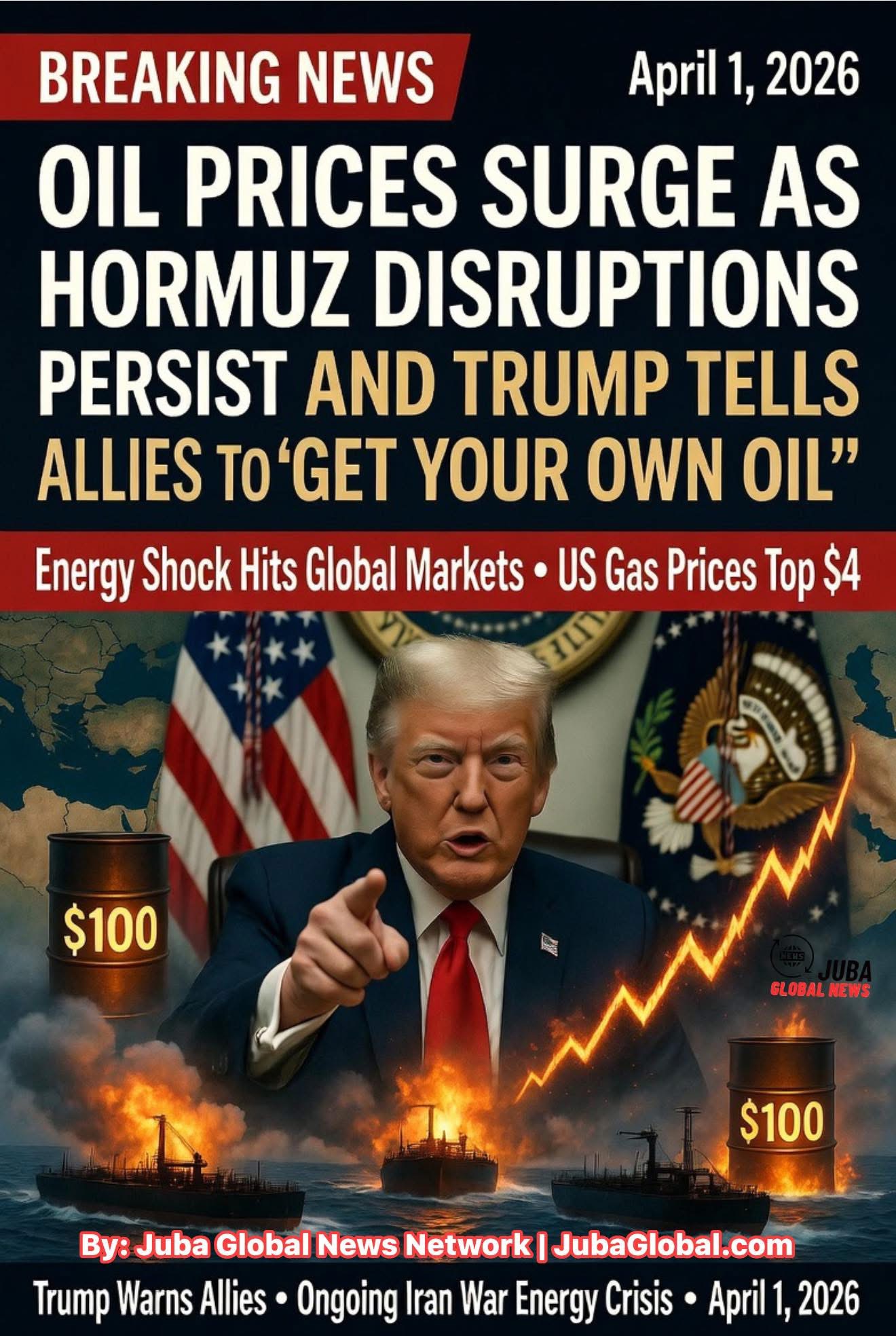
President Trump has described Operation Epic Fury as continuing “until objectives are met,” including crippling Iran’s missile and nuclear programs. Iran vows no negotiations amid “crushing revenge,” raising the stakes for energy markets.
Outlook: Volatility Ahead
As Day 3 progresses, markets remain on edge. Air superiority favors the U.S.-Israel coalition, but Iran’s asymmetric threats—drones, missiles, proxies—could sustain pressure on shipping lanes. Analysts urge monitoring Hormuz transit data, IRGC statements, and any de-escalation signals from Gulf mediators.
For now, the war has transformed abstract geopolitical risks into tangible economic pain, reminding the world how tightly global prosperity ties to Middle East stability.
By Juba Global News Network | JubaGlobal.com
March 2, 2026
Stay tuned for live updates as this fast-moving story develops.