India-Canada Seal Landmark Uranium Deal Amid Global Tensions
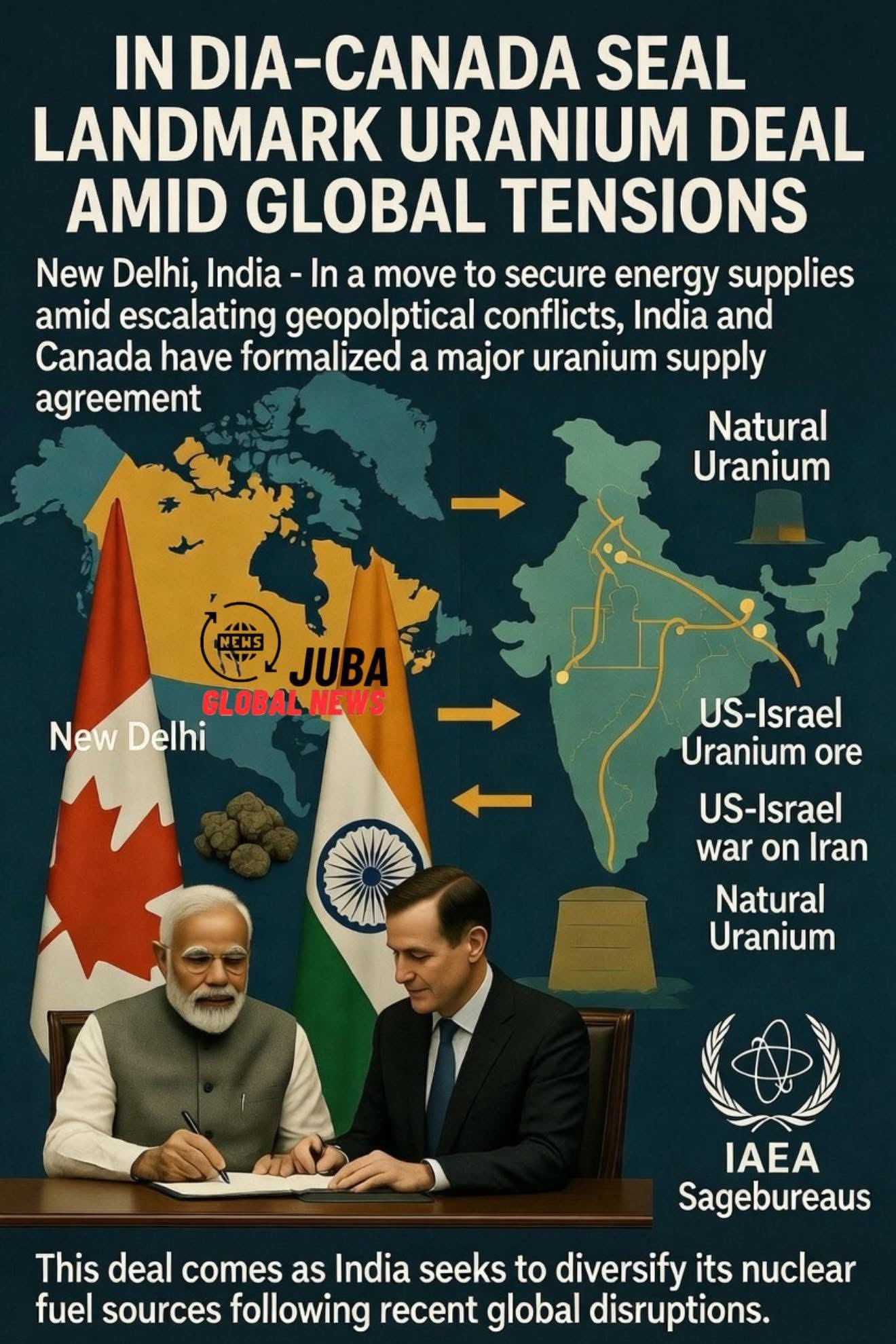
In a significant diplomatic and economic development that stands in stark contrast to the escalating violence in the Middle East, India and Canada signed a major bilateral uranium supply agreement on March 2, 2026, during high-level talks in New Delhi. The deal—valued at several billion dollars over the coming decade—will see Canada resume and significantly expand uranium exports to India’s civilian nuclear power program, while both countries committed to a long-term “trade reset” aiming for bilateral trade of ₹4.1 lakh crore (approximately US$50 billion) by 2030.
The agreement was finalized in a ceremony attended by Indian Prime Minister Narendra Modi and Canadian Prime Minister Mark Carney (who assumed office following the 2025 election), marking the most substantial economic cooperation between the two nations since diplomatic tensions peaked in 2023–2024 over the killing of Sikh separatist Hardeep Singh Nijjar and subsequent mutual accusations of interference.
Background: From Diplomatic Freeze to Nuclear Thaw
Canada was historically one of India’s earliest nuclear partners, supplying the CIRUS reactor in the 1950s that played a key role in India’s early nuclear program. However, after India’s 1974 “peaceful nuclear explosion,” Canada suspended nuclear cooperation. The relationship remained strained for decades until the 2008 India–Canada Nuclear Cooperation Agreement, which allowed limited uranium sales under strict safeguards.
That cooperation was effectively frozen after 2023 when Canada accused Indian agents of involvement in Nijjar’s assassination in British Columbia—an allegation India strongly denied. Diplomatic expulsions, visa restrictions, and trade talks stalled for nearly two years.
The breakthrough came after behind-the-scenes negotiations facilitated by the United Arab Emirates and France, combined with shifting global energy realities:
- Russia’s reduced uranium exports due to sanctions
- Heightened global demand for non-Russian nuclear fuel following the Ukraine war
- India’s ambitious target of 100 GW nuclear capacity by 2047
- Canada’s need to diversify uranium markets away from over-reliance on China
Key Terms of the Landmark Deal
According to joint statements and briefings provided to media:
- Volume & Duration — Canada will supply up to 3,000–4,000 metric tonnes of natural uranium per year starting in 2027, ramping up to 7,000 tonnes annually by 2032. The initial 10-year contract includes options for renewal.
- Value — Estimated at CAD 6–8 billion over the first decade, with escalator clauses tied to global uranium spot prices.
- Safeguards — All uranium will be subject to IAEA full-scope safeguards and end-use monitoring. India reaffirmed its separation of civilian and military programs.
- Technology & Investment — Canada’s Cameco and Orano will partner with Indian public sector undertakings (NPCIL, UCIL) on joint exploration in Canada and potential downstream processing in India.
- Broader Trade Vision — Both leaders endorsed a “₹4.1 lakh crore trade roadmap” by 2030, focusing on critical minerals (lithium, cobalt, rare earths), clean energy tech, agriculture, and defense co-production.
Prime Minister Modi described the agreement as “a new chapter of trust and shared prosperity,” while Prime Minister Carney called it “a pragmatic reset based on mutual economic benefit and non-proliferation commitments.”
Geopolitical Context: Signing Amid Global Chaos
The timing of the announcement—while the US-Israel war on Iran entered its third day, oil prices surged 13%, and nuclear safety fears gripped the IAEA—is no coincidence. Both countries positioned the deal as a stabilizing signal:
- For India: Diversifying nuclear fuel away from Kazakhstan and Russia, strengthening energy security amid global volatility.
- For Canada: Securing a major long-term buyer for its uranium industry (Canada is the world’s second-largest producer) at a time when Western sanctions limit other markets.
- For the West: Reinforcing India’s role as a responsible nuclear power outside the NPT framework while counterbalancing China’s influence in critical minerals.
Domestic Reactions
- India — The deal received broad bipartisan support in Parliament, with opposition parties praising the economic benefits while urging transparency on safeguards.
- Canada — Sikh diaspora groups and some opposition MPs criticized the timing, arguing it overlooks justice for Nijjar. However, business leaders and Prairie provinces (major uranium producers) welcomed the economic boost.
- International — The United States quietly endorsed the agreement as consistent with non-proliferation goals. Russia and China expressed concern over “further militarization of nuclear supply chains.”
Looking Ahead
The uranium deal is widely seen as the first major milestone in a broader India–Canada rapprochement. Follow-on talks are already scheduled on defense, intelligence-sharing, and counter-terrorism cooperation.
While the Middle East burns and nuclear sites in Iran face risk of collateral damage, the India–Canada agreement offers a rare example of diplomacy and commerce advancing amid global turmoil—proof that even in times of war, energy security and economic pragmatism can still find pathways forward.
By Juba Global News Network | JubaGlobal.com
March 2, 2026
Stay tuned for live updates as this fast-moving story develops.