CNN Poll: 59% of Americans Disapprove of US Strikes on Iran
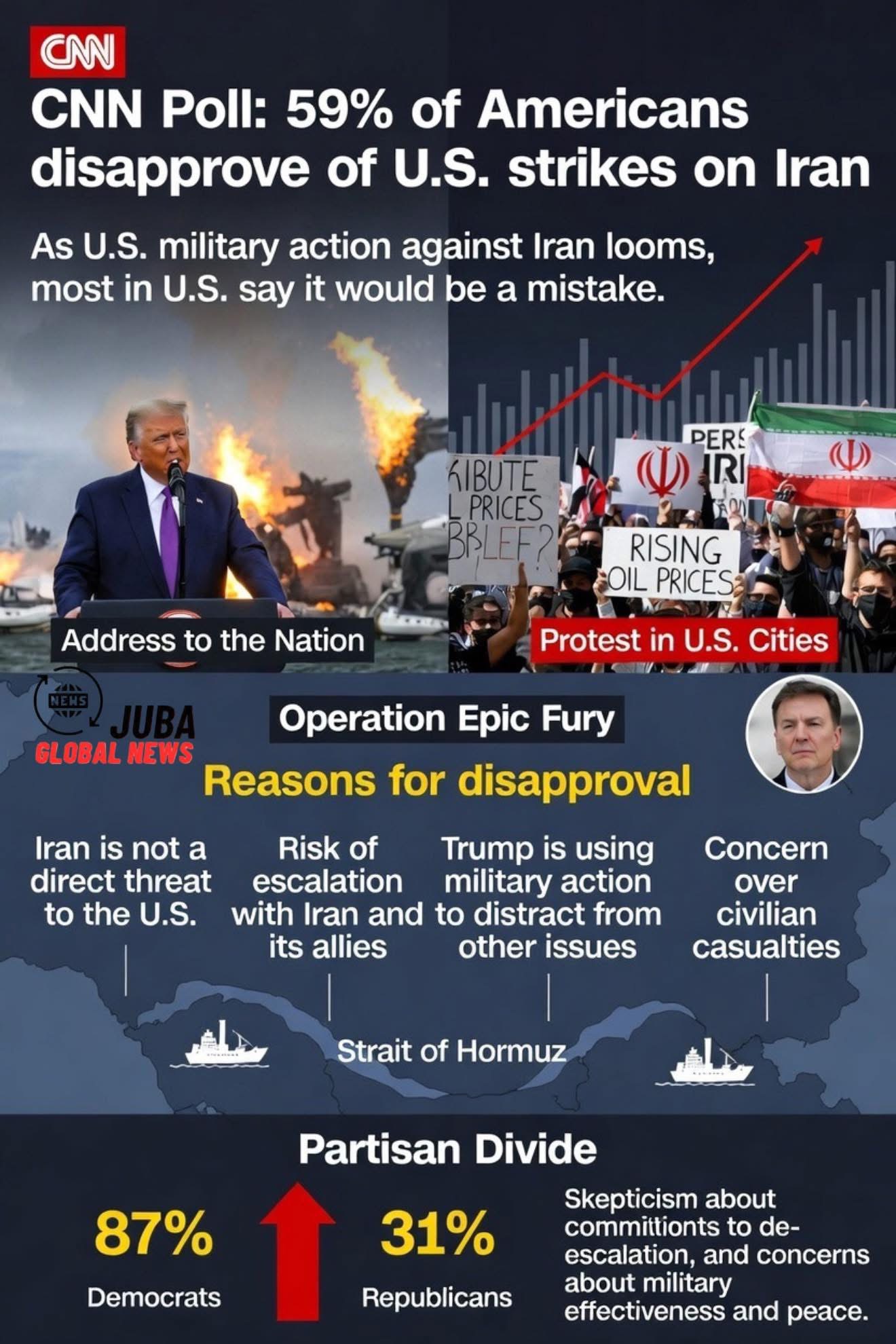
A new CNN poll released on March 2, 2026, reveals deep public unease with President Donald Trump’s decision to launch military strikes against Iran as part of Operation Epic Fury, the joint US-Israeli campaign that began February 28. Conducted by SSRS from February 28 to March 1 among 1,004 U.S. adults via text message (margin of error ±3.9%), the survey shows that 59% of Americans disapprove of the initial decision to take military action in Iran, while only 41% approve. Strong disapproval (31%) roughly doubles strong approval (16%), highlighting a polarized and largely skeptical domestic reaction to the escalating conflict.
The poll arrives as the war enters its fourth day on March 3, with Iranian retaliatory strikes—including drone attacks on US facilities in the Gulf, missile barrages toward Israel, and the effective closure of the Strait of Hormuz—driving oil prices higher and raising fears of prolonged entanglement. Six US service members have already been killed in Iranian counterattacks, adding to the human cost and public wariness.
Key Findings on Public Sentiment
The CNN results underscore widespread doubts about the operation:
- Lack of Trust in Trump’s Handling: A majority (around 60%) do not trust President Trump to make the right decisions regarding the use of force in Iran. Respondents expressed concern over the absence of a clear strategy, with 62% saying Trump should seek congressional approval for any further military action—reflecting lingering memories of past Middle East conflicts and the War Powers Act debates.
- Expectation of Long-Term Conflict: Most Americans believe the strikes will lead to a prolonged military confrontation between the US and Iran, rather than a quick resolution. This pessimism aligns with Trump’s own warnings that the campaign could last “four to five weeks” or longer, and his statements that “harder hits” are coming.
- Perceived Threat Increase: 54% of respondents say the military action will make Iran more of a threat to the United States in the long run, compared to just 28% who believe it will make Iran less threatening. This view suggests many see the strikes as potentially counterproductive, risking escalation without eliminating core dangers like Iran’s missile capabilities or nuclear program.
- Partisan Divide: The disapproval is heavily partisan. Over 80% of Democrats oppose the strikes, while Republicans show stronger support (around 77% approve in related polling aggregates). Independents lean toward disapproval, mirroring broader trends in foreign policy skepticism.
These numbers are consistent with other recent surveys: A Reuters/Ipsos poll found only 27% approval and 43% disapproval, while a Washington Post-SSRS poll showed 52% opposition. YouGov reported 48% disapproval versus 37% approval, with Democrats overwhelmingly critical (78% disapprove) and Republicans largely supportive.
Broader Domestic Context
The poll reflects growing domestic divisions amid the war’s rapid spread. Protests have erupted in major US cities, with anti-war demonstrators clashing with counter-protesters in some locations. Economic concerns—surging gasoline prices, potential inflation from energy disruptions, and fears of broader instability—are amplifying unease. Critics argue the administration has not adequately explained end goals beyond destroying Iran’s missiles, navy, nuclear ambitions, and proxy support, leaving many questioning whether regime change or a negotiated settlement is the true objective.
President Trump has downplayed domestic opposition, emphasizing military progress and the need to neutralize threats before they reach American soil. However, the poll’s findings could complicate congressional support for sustained operations, especially if casualties mount or the conflict drags on.
As explosions continue in Tehran, Beirut, and Gulf sites, and with the Strait of Hormuz crisis deepening global economic pain, American public opinion remains a critical factor. The CNN survey indicates that while the initial strikes may have rallied some support among Trump’s base, the broader population is far from convinced—raising questions about the political sustainability of a prolonged campaign.
By Joseph for Juba Global News Network | JubaGlobal.com
March 3, 2026 – Real-time updates and full poll details available at JubaGlobal.com. Stay informed as events unfold.