EU Tightens Asylum Rules: Lawmakers Back ‘Return Hubs’ for Failed Seekers
ByJuba Global News Network | JubaGlobal.comMarch 10, 2026 In a significant shift toward stricter migration controls, the European Parliament has given prel
ByJuba Global News Network | JubaGlobal.comMarch 10, 2026
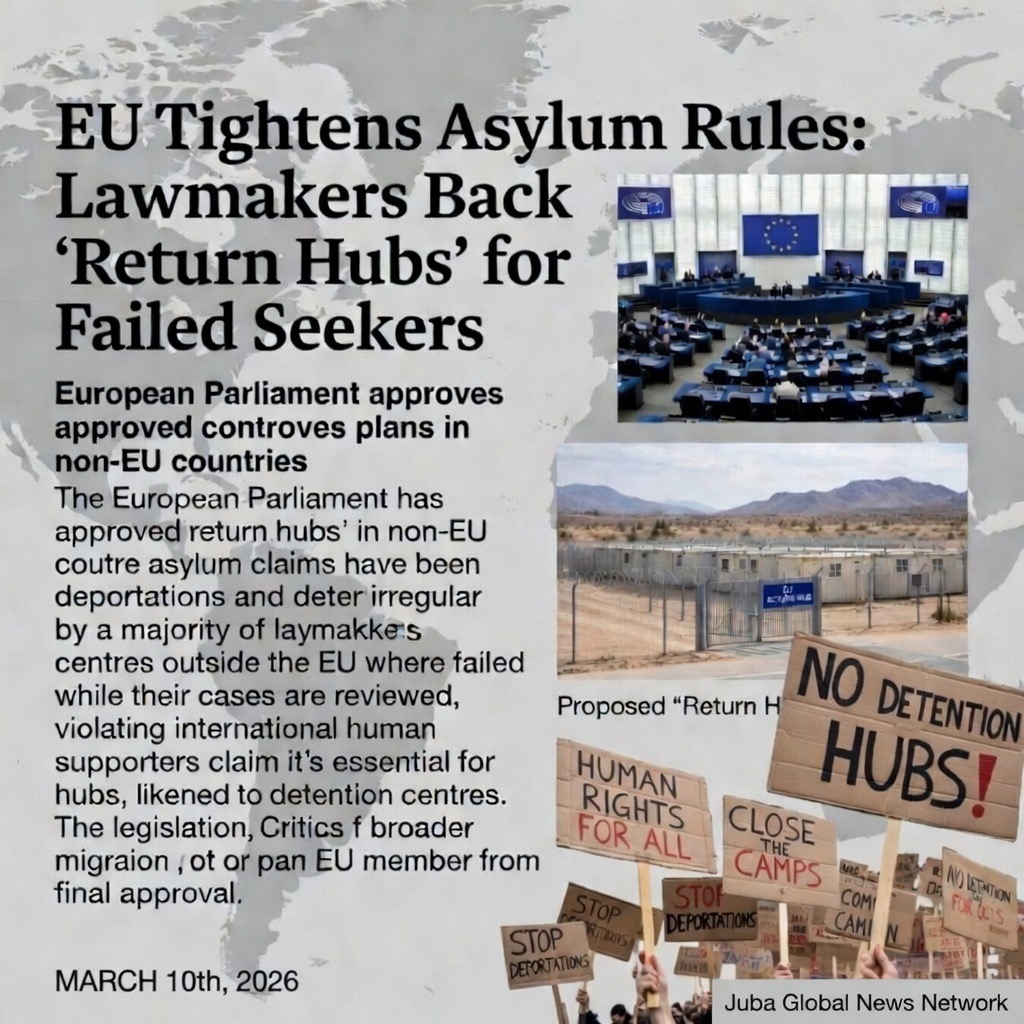
In a significant shift toward stricter migration controls, the European Parliament has given preliminary approval to reforms that tighten asylum procedures and pave the way for controversial “return hubs” — extraterritorial facilities outside the EU where rejected asylum seekers would be held pending deportation. The move, backed by centre-right and far-right lawmakers on March 9, 2026, reflects mounting political pressure across the bloc amid public frustration over irregular migration and rising support for anti-immigration parties.
The Vote and Key Reforms
On March 9, a European Parliament committee voted to endorse amendments to the EU’s asylum and returns framework, with a full plenary vote expected soon. The changes build on the 2024 Migration and Asylum Pact (set for full implementation in June 2026) and recent agreements on returns policy.
Central to the reform is the creation of “return hubs” — detention-like centres in non-EU countries where individuals whose asylum claims have been rejected can be transferred while awaiting repatriation to their country of origin or another safe third country. These hubs would operate under bilateral or multilateral agreements between EU member states (or the EU collectively) and willing third countries. The facilities could serve as transit points or even final destinations in some cases, though exact conditions remain subject to negotiations and human rights safeguards.
The reform also introduces:
- Harsher penalties for non-compliance with return orders, including extended detention periods.
- Expanded use of “safe third country” concepts, allowing rejection of claims if protection was available elsewhere.
- An EU-wide list of “safe countries of origin” (including Bangladesh, Colombia, Egypt, India, Kosovo, Morocco, and Tunisia), enabling faster processing and higher rejection rates for nationals from these nations.
- Provisions for EU candidate countries to be presumed safe unless specific risks (e.g., conflict or high asylum recognition rates) apply.
These measures aim to boost the EU’s low return rate (currently around 20% for those ordered to leave) by streamlining deportations and outsourcing parts of the process.
Momentum from Member States
The parliamentary backing follows December 2025 agreements where EU interior ministers endorsed the return hubs concept. A working group of five countries — Germany, the Netherlands, Austria, Denmark, and Greece — has already formed to advance practical implementation, marking the first concrete multilateral effort to build such facilities abroad. This group builds on earlier models, such as Italy’s agreements with Albania for processing centres.
The push reflects a broader rightward shift in European politics. Governments face domestic backlash over migration, with far-right parties gaining ground in recent elections. Supporters argue the changes restore control, deter irregular arrivals, and address overburdened frontline states like Greece, Italy, Spain, and Cyprus.
Criticisms and Human Rights Concerns
The reforms have drawn sharp criticism from left-leaning lawmakers, NGOs, and UN experts. Humanitarian organizations warn that return hubs risk becoming de facto detention camps with limited oversight, potentially violating non-refoulement (the principle barring returns to places of persecution) and exposing individuals to poor conditions or abuse in third countries.
UN Special Procedures have flagged the lack of mandatory human rights impact assessments, individual protection screenings before transfers, and independent monitoring for these hubs. Critics also highlight concerns over racial profiling, expanded detention norms, and the outsourcing of EU responsibilities to countries with varying human rights records.
Left-wing MEPs and rights groups argue the measures undermine asylum rights, accelerate rejections without full merits reviews, and could lead to chain refoulement if third countries pass migrants onward unsafely.
Broader Context and Timing
These developments occur against a backdrop of declining irregular arrivals in 2025–2026 (down significantly from peaks), yet persistent political demands for tougher policies. The full Migration Pact rollout in June 2026 will introduce border screening, solidarity mechanisms (including relocations or financial contributions), and faster procedures — but the return hubs push accelerates even before full implementation.
As centre-right and far-right forces align to push the package forward, the EU’s migration system edges toward a more enforcement-oriented model. Whether return hubs become operational — and where — will depend on diplomatic deals with third countries and ongoing parliamentary negotiations.
Juba Global News Network will track the plenary vote, implementation details, and international reactions. For the latest on EU migration policy, global displacement trends, and related humanitarian issues, visit JubaGlobal.com.
Sources: Aggregated from Euronews, Reuters, The Straits Times, European Parliament press releases, UNHCR statements, ECRE analyses, and Council of the EU announcements as of March 10, 2026.