World Leaders React to Iran Crisis: Calls for Restraint Amid Escalating Strikes
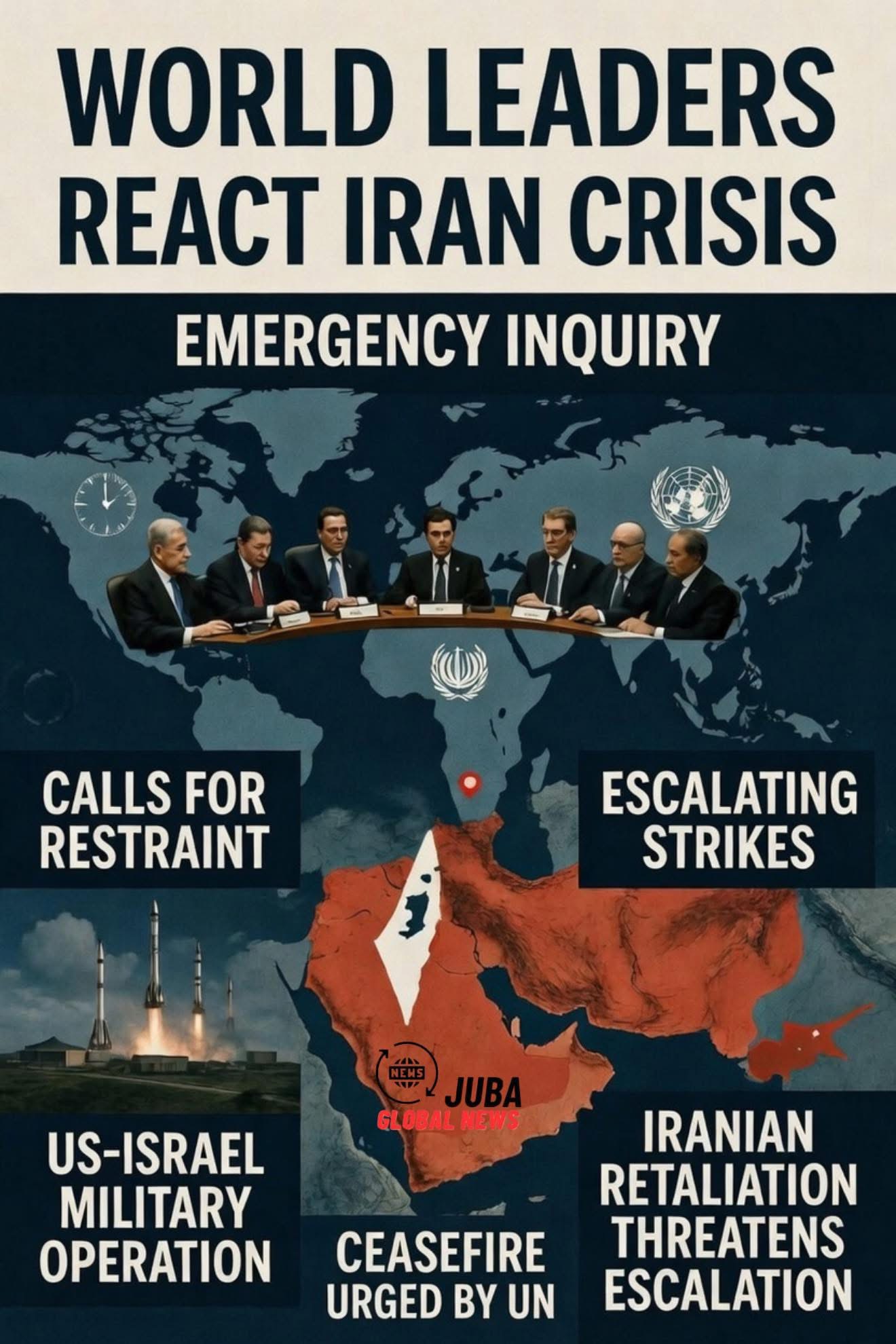
As the US-Israel military operation against Iran enters its third day on March 2, 2026, world leaders have issued a flurry of statements, emergency meetings, and diplomatic appeals in response to the rapidly deteriorating situation. What began as a targeted decapitation strike that killed Supreme Leader Ayatollah Ali Khamenei has spiraled into open warfare, with Iranian missile barrages hitting Israel and Gulf states, Hezbollah opening a northern front against Israel, U.S. casualties confirmed, and the conflict now reaching sovereign British territory in Cyprus. The international community—divided along familiar geopolitical lines—is struggling to find a unified voice while the risk of broader regional or even global escalation grows by the hour.
United Nations
UN Secretary-General António Guterres convened an emergency session of the Security Council late on March 1 (New York time), delivering one of his most urgent appeals since the outbreak of major conflicts in recent years:
“This is a moment of extreme peril. The assassination of a head of state, followed by massive retaliatory strikes and the involvement of multiple regional actors, threatens to ignite a conflagration with consequences no one can control. I call on all parties for an immediate cessation of hostilities and the opening of humanitarian corridors. The United Nations stands ready to facilitate dialogue—but time is running out.”
Russia and China proposed a draft resolution demanding an “immediate and unconditional ceasefire” and “full respect for Iran’s sovereignty and territorial integrity.” The United States and United Kingdom indicated they would veto any text that did not also condemn Iran’s missile attacks and proxy activations.
United States
President Donald Trump, speaking from the White House Situation Room, struck a defiant yet pragmatic tone:
“We did what had to be done—took out the supreme leader and his top people who were planning attacks on us and our allies. Now Iran is lashing out. We’ve lost brave Americans, and more may come. But we will not back down until their missile and nuclear programs are finished. If the new guys in Tehran want to talk, I’m ready. If not, we keep hitting—hard.”
Trump’s national security advisor later clarified that any talks would require Iran to halt all attacks and verifiably dismantle key capabilities.
Israel
Israeli Prime Minister Benjamin Netanyahu addressed the nation:
“Iran has chosen war. They fired hundreds of missiles at our cities, activated Hezbollah, and now even struck a NATO ally’s base in Cyprus. We will defend ourselves with full force until the Iranian threat is eliminated—permanently. We thank our American partners and call on the world to stand with us against this terrorist regime.”
United Kingdom
Prime Minister Keir Starmer, after the drone strike on RAF Akrotiri in Cyprus, told Parliament:
“This attack on sovereign British territory is grave and unacceptable. While damage was limited and thankfully there were no casualties, the intent is clear: Iran seeks to intimidate and internationalize this conflict. We are consulting closely with our NATO allies and will respond proportionately. At the same time, we urge all parties to step back from the brink.”
The UK has increased air defense readiness across its Mediterranean bases and deployed additional assets to the region.
European Union
EU High Representative for Foreign Affairs Josep Borrell, speaking on behalf of the 27 member states:
“The EU condemns the initial assassination of Iran’s supreme leader as a dangerous escalation. We equally condemn Iran’s retaliatory missile attacks and the involvement of proxies. We call for an immediate de-escalation, protection of civilians, and unrestricted humanitarian access. The EU is ready to support mediation efforts through existing channels.”
France, Germany, and Italy have pushed for emergency EU foreign ministers’ talks and offered to host back-channel diplomacy.
Russia
President Vladimir Putin, in a televised address:
“The reckless actions of the United States and Israel have pushed the region—and the world—toward catastrophe. The assassination of a head of state is an act of state terrorism. We demand an immediate halt to aggression and respect for Iran’s sovereignty. Russia will continue to support its partners in defending against external threats.”
Moscow has increased military consultations with Tehran and warned of potential supply of advanced air defense systems.
China
Foreign Ministry spokesperson Lin Jian:
“China is deeply concerned by the rapid escalation in the Middle East. We call on all parties to exercise maximum restraint, avoid actions that could lead to wider conflict, and return to dialogue. China stands ready to play a constructive role in de-escalation.”
Beijing has quietly urged Iran to avoid closing the Strait of Hormuz, citing risks to global energy and trade flows critical to China’s economy.
Gulf States
Saudi Arabia, UAE, Qatar, and Bahrain—hosts of major U.S. military bases—issued cautious statements:
- Saudi Foreign Ministry: “We call for urgent de-escalation and protection of civilian lives. The Kingdom supports efforts to restore calm.”
- UAE: Recalled its ambassador from Tehran for consultations and condemned attacks on Gulf civilian infrastructure.
Oman and Qatar—traditional mediators—have intensified quiet diplomacy, reportedly facilitating indirect U.S.-Iran contacts.
Muslim World & OIC
The Organisation of Islamic Cooperation (OIC) called an emergency summit in Jeddah, with many member states condemning the “assassination of a Muslim leader” while others (including Saudi Arabia and UAE) remained more measured.
What Comes Next?
With no unified international response emerging, the coming hours and days will be decisive. Will the combination of military pressure, economic pain (oil prices up 13%+), civilian casualties (including the Tehran school bombing), and diplomatic isolation force one side—or both—to pause? Or will proxy activations, further strikes, and miscalculations pull more nations into the vortex?
For now, the world’s leaders are united only in their alarm—and divided on every other point. As missiles continue to fly and markets reel, the margin for error is shrinking fast.
By Juba Global News Network | JubaGlobal.com
March 2, 2026
Stay tuned for live updates as this fast-moving story develops.