Iran Vows “Crushing Revenge” After Supreme Leader’s Killing: Missile Barrage Targets Israel and Gulf Allies
The assassination of Iran’s Supreme Leader Ayatollah Ali Khamenei in a joint U.S.-Israeli airstrike on February 28, 2026, has ignited one of the most inten
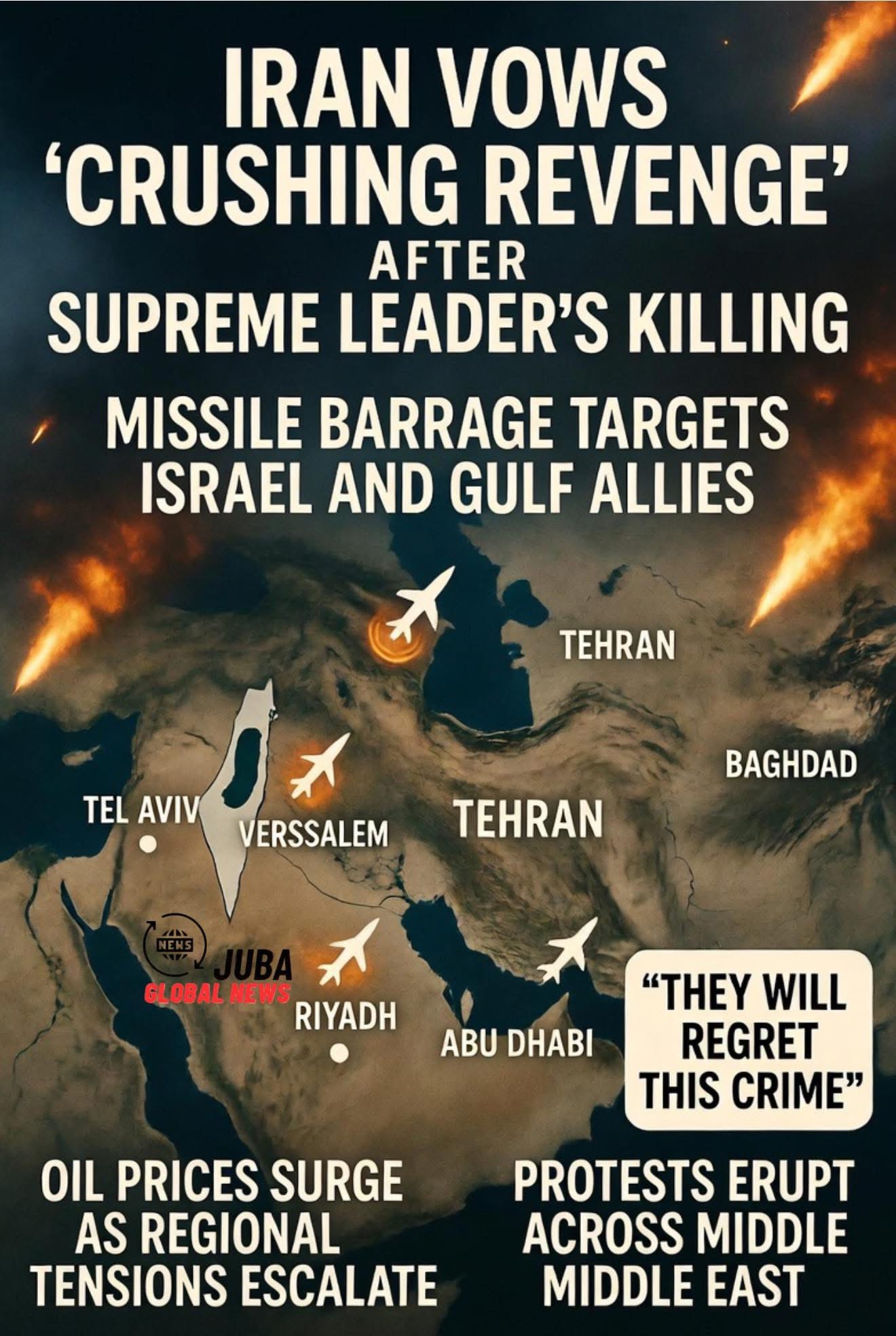
The assassination of Iran’s Supreme Leader Ayatollah Ali Khamenei in a joint U.S.-Israeli airstrike on February 28, 2026, has ignited one of the most intense retaliatory campaigns in modern Middle Eastern history. What Iranian officials describe as a “declaration of open war against Muslims and Shiites worldwide” has prompted Tehran to unleash waves of ballistic missiles, cruise missiles, and drones targeting Israel and U.S. allies across the Gulf region. As the conflict enters its third day on March 2, 2026, Iran’s defiant posture—no negotiations, only vengeance—signals a high-risk escalation with potential for a broader regional conflagration.
The Assassination That Shattered the Status Quo
Ayatollah Ali Khamenei, who had held absolute power as Iran’s Supreme Leader since 1989 following the death of Ayatollah Ruhollah Khomeini, was killed in a precision strike on his secure compound in Tehran during the opening hours of the U.S.-Israeli operation. The strike, part of a coordinated campaign that also eliminated dozens of senior IRGC commanders, defense officials, and potential successors, was enabled by months of CIA intelligence pinpointing high-value targets.
Iranian state media confirmed Khamenei’s death on March 1, declaring 40 days of national mourning. His funeral in Tehran drew massive crowds of loyalists waving portraits and chanting anti-U.S. and anti-Israel slogans. However, reports from witnesses in the capital described mixed scenes: while regime supporters mourned, some residents quietly celebrated from rooftops, reflecting deep internal divisions after decades of repression.
President Donald Trump described the strike as eliminating “48 leaders in one shot,” emphasizing that many potential successors were also killed, leaving Iran’s leadership in chaos. An Interim Leadership Council, including figures like President Masoud Pezeshkian, has assumed temporary control, but the power vacuum has fueled uncertainty.
Tehran’s Immediate and Ferocious Response
Iran’s retaliation began almost immediately after the strikes. Officials, including President Pezeshkian and IRGC spokespersons, framed the assassination as a “historic crime” and vowed “crushing revenge,” “blood for blood,” and a “ferocious offensive.” Pezeshkian declared avenging Khamenei a “duty and legitimate right,” warning that Iran would respond “with all its might.”
By March 1 (Day 2), Iran launched multiple barrages:
- Against Israel: Dozens to hundreds of ballistic missiles and drones targeted military sites, cities including Tel Aviv and Jerusalem areas, and air defenses. Some missiles penetrated Israeli systems, causing casualties (at least nine reported dead in one strike on Beit Shemesh) and damage. Iranian state media hailed the attacks as piercing “Zionist defenses.”
- Against Gulf Allies: Missiles and drones struck U.S. military bases and infrastructure in Bahrain, Kuwait, Qatar, UAE, and Saudi Arabia. Explosions rocked Dubai (including civilian areas like hotels and ports), Abu Dhabi (Zayed Port and near al Dhafra Airbase), Doha, Manama, and Kuwait’s international airport. At least four to five civilians killed in Gulf strikes, with additional damage to commercial hubs like Jebel Ali Port in Dubai.
Iran appeared to “internationalize the battlefield” by targeting Gulf states hosting U.S. forces, aiming to pressure Washington’s regional partners. A suspected Iranian drone also struck a British RAF base in Cyprus (Akrotiri), extending the conflict’s reach toward Europe with limited damage.
Proxy forces mobilized quickly:
- Hezbollah in Lebanon declared the strikes revenge for Khamenei and fired rockets and drones into northern Israel, prompting Israeli counterstrikes on Beirut and southern Lebanon (at least 31 killed in exchanges).
- Other militias in Iraq, Syria, and Yemen signaled readiness, though major actions remained limited initially.
Escalation on Day 3: Continued Barrages and Defiance
As of March 2, Iran fired fresh missile waves toward Israel early in the day, though at a reduced rate compared to Day 1—suggesting U.S.-Israeli strikes on launchers, storage sites, and command networks have degraded capabilities. Iranian leaders projected unity and defiance, closing ranks despite the leadership decapitation.
IRGC statements promised “the most devastating operation” in Iran’s history, with threats of jihad calls from Shiite clerics urging Muslims worldwide to act. No signs of de-escalation emerged; Tehran rejected negotiations outright.
U.S. and Israeli responses intensified: Strikes pounded Tehran and other sites, focusing on military, nuclear-related, and remaining command infrastructure. President Trump warned of sustained operations (“four weeks or less”) and more casualties after confirming three U.S. troops killed and five wounded in Gulf strikes (including at Camp Arifjan in Kuwait).
Global and Regional Repercussions
The missile barrages have triggered widespread fallout:
- Energy Markets: Oil prices surged over 13% amid threats to the Strait of Hormuz and Gulf infrastructure disruptions.
- Humanitarian Impact: Iranian casualties exceed 550 (including controversial school strikes condemned internationally), while Gulf and Israeli civilian deaths add to the toll.
- Diplomatic Front: World leaders urge restraint, but divisions grow. Trump hinted at possible talks with interim leaders, while hardliners praise the strikes. Gulf states like UAE recalled ambassadors and vowed defense measures.
Iran’s vow of “crushing revenge” has transformed a targeted operation into a multi-front war. With proxies activated, Gulf allies hit, and air superiority contested, the risk of prolonged attrition—or unintended escalation—remains high.
Whether Tehran’s barrage forces concessions, provokes overwhelming counterforce, or fractures internally under pressure will shape the region’s future. For now, defiance reigns in Tehran as missiles continue to fly.
By Juba Global News Network | JubaGlobal.com
March 2, 2026
Stay tuned for live updates as this fast-moving story develops.