

North Korea’s Ninth Party Congress Reveals More on Kim Jong-un Succession Plans: Spotlight on Daughter Kim Ju-ae as Potential Heir
The Ninth Congress of the Workers’ Party of Korea (WPK), held in late February 2026 in Pyongyang, concluded with North Korean leader Kim Jong-un reaffirmin
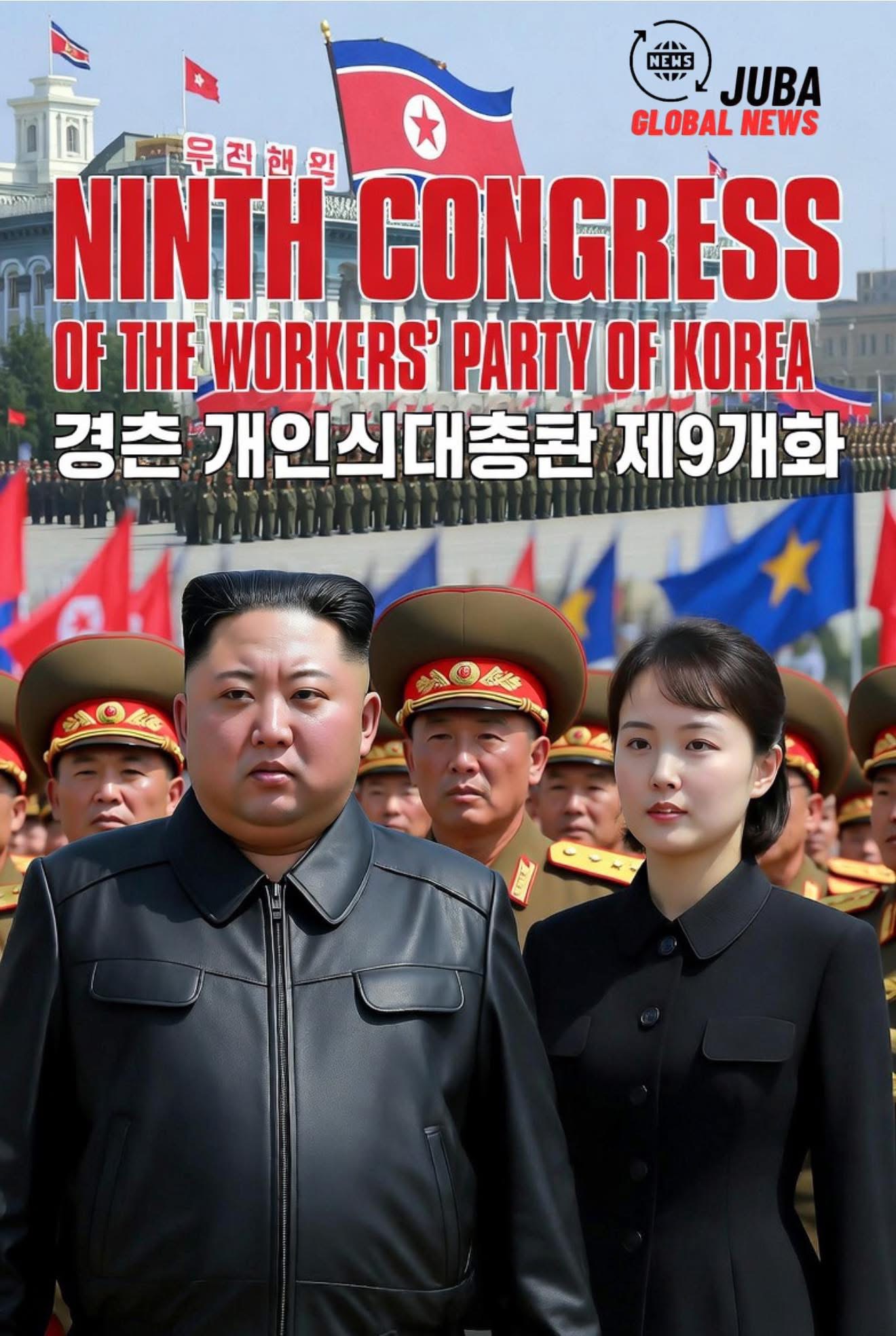
The Ninth Congress of the Workers’ Party of Korea (WPK), held in late February 2026 in Pyongyang, concluded with North Korean leader Kim Jong-un reaffirming his unchallenged authority while providing fresh visual and symbolic clues about the future of the Kim dynasty. State media coverage and expert analysis from South Korea and international observers indicate that Kim’s teenage daughter, Kim Ju-ae (also referred to in some reports as Kim Ju-hae), has been positioned more prominently than ever, fueling intense speculation that she is being groomed as the eventual successor to lead the reclusive nuclear-armed state.
The congress, the first full party gathering since 2021 and one of the regime’s most significant political events held roughly every five years, focused on reaffirming Kim’s leadership, reviewing economic and military progress, and setting priorities for the next period—including nuclear ambitions, foreign policy, and domestic stability. Kim was re-elected as General Secretary of the WPK, solidifying his grip on power. However, it was the repeated appearances of his daughter alongside him that captured global attention and dominated succession discussions.
Kim Ju-ae’s Rising Visibility
Photographs released by the Korean Central News Agency (KCNA) showed Kim Ju-ae standing prominently next to her father during key moments, including a major military parade marking the congress’s close. In one widely circulated image, father and daughter wore matching black leather jackets—a deliberate symbolic choice, analysts say, signaling continuity and endorsement. Ju-ae, believed to be around 13–14 years old, stood at the center of the podium with senior military officials, applauding troops in a display that state media described in glowing terms, referring to her as the “most beloved child” of the leader.
South Korea’s National Intelligence Service (NIS) briefed lawmakers earlier in February that Ju-ae had advanced from a “training” phase to the “designation stage” of succession. NIS officials noted evidence of her voicing opinions on state policies and receiving briefings from generals, suggesting she is being integrated into high-level decision-making. Reports also emerged that she holds an acting role as “missile general director” within the Missile Administration (the body overseeing North Korea’s nuclear and missile forces), though Jang Chang-ha remains the official director. Intelligence suggests she receives reports and issues directives, preparing her for control over the military—a critical pillar of regime power.
Her public debut began in late 2022 at a missile launch site, followed by appearances at military parades, nuclear tests, New Year’s visits to the Kumsusan Palace of the Sun (the mausoleum honoring her grandfather and great-grandfather), and even a trip to Beijing. These outings have escalated in frequency and prominence, with state media increasingly portraying her as a beloved figure in the “Paektu bloodline”—the mythical lineage tying the Kim family to Mount Paektu, a sacred symbol of legitimacy.
Challenges and Uncertainties
Despite the signals, experts remain divided on whether Ju-ae will ultimately inherit power. North Korea’s deeply patriarchal, Neo-Confucian political culture poses a structural barrier: the regime has never had a female supreme leader, and traditional gender norms could block her path despite Kim Jong-un’s apparent preference. Some analysts argue she serves as a “human shield” or placeholder while the regime prepares another successor—possibly an older son kept out of the public eye or another relative. Others note that Kim’s own rushed succession after his father’s death in 2011 may have influenced his decision to groom Ju-ae early, ensuring a smoother transition.
The congress itself did not formally announce any succession plan—North Korea rarely makes such matters explicit in public forums. Instead, symbolism, protocol, and controlled media imagery convey messages internally. Ju-ae’s prominent role at the parade and her matching attire with her father are seen as deliberate signals to the elite and public that she is the favored heir.
Broader Implications for North Korea and the Region
If Ju-ae does ascend, it would mark the first female leader in the Kim dynasty and one of the few women to hold supreme power in a major authoritarian state. Her youth (still in her early teens) raises questions about regency arrangements or interim power-sharing with figures like Kim’s powerful sister Kim Yo-jong, who has long been viewed as a potential regent or alternative successor.
For the international community, any confirmed transition would have significant ramifications for North Korea’s nuclear program, relations with the U.S., South Korea, China, and Russia, and regional stability. Kim Jong-un, now in his early 40s and reportedly in variable health, has accelerated weapons development in recent years, testing advanced missiles and hypersonic systems. A smooth handover could stabilize the regime; disruption or internal power struggles could lead to unpredictability.
As North Korea enters what may be the final phase of planning for its fourth-generation leadership, the Ninth Party Congress has provided the clearest public indications yet that Kim Ju-ae is central to those plans. While definitive confirmation remains elusive in the opaque world of Pyongyang politics, the regime’s careful orchestration of her visibility leaves little doubt that succession preparations are well underway.
(Compiled from reports by The Guardian, BBC, NBC News, Reuters, Associated Press, Chosun Ilbo, Korea JoongAng Daily, and South Korean intelligence briefings as of February 27, 2026. North Korean affairs remain highly secretive; developments should be monitored through official KCNA releases and regional intelligence assessments.)
