

Venezuela Passes Amnesty Bill: Potential Release of Hundreds of Political Prisoners Marks Shift Amid U.S. Pressure
By: Juba Global News Network | JubaGlobal.com February 20, 2026 In a significant development that signals a potential turning point in Venezuela’s long-sta
By: Juba Global News Network | JubaGlobal.com
February 20, 2026
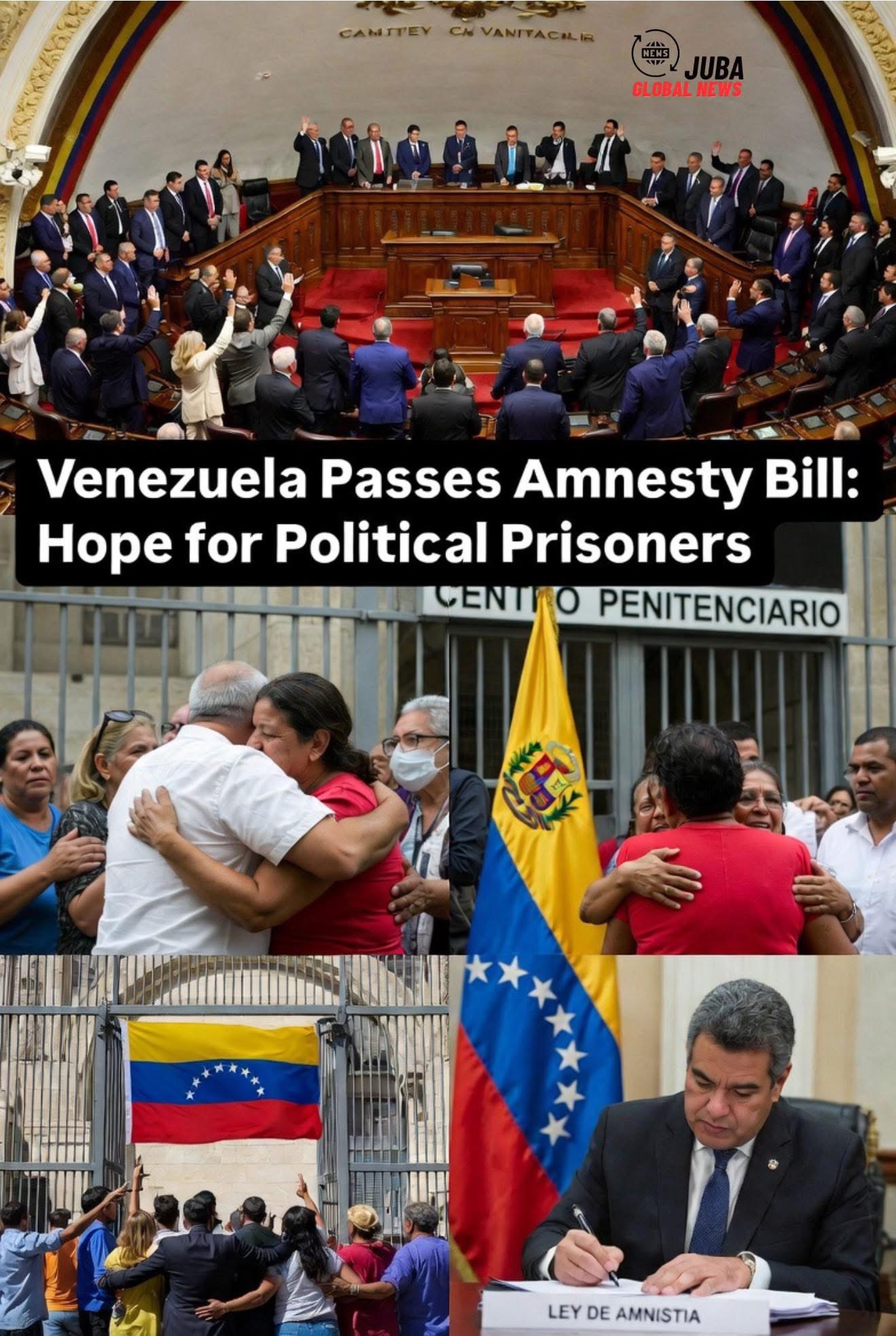
In a significant development that signals a potential turning point in Venezuela’s long-standing political repression, the country’s National Assembly unanimously approved an amnesty bill on February 19, 2026, which was swiftly signed into law by Acting President Delcy Rodríguez. The legislation could lead to the release of hundreds of individuals—politicians, activists, lawyers, journalists, students, and human rights defenders—detained or prosecuted for politically motivated reasons over the past 27 years.
The bill, proposed by Rodríguez late last month, grants general and full amnesty for crimes or offenses committed during specific periods of political conflict since 1999—the start of Hugo Chávez’s presidency. It covers involvement in protests, demonstrations, elections, and related “violent actions” during key episodes, including the 2002 brief coup attempt against Chávez, oil strikes, and major protest waves in 2004, 2007, 2009, 2013, 2014, 2017, 2019, 2023, 2024, and 2025.
This move comes in the wake of dramatic changes in Venezuela: the U.S.-led removal of former President Nicolás Maduro in early January 2026, Rodríguez’s ascension as interim leader, and ongoing efforts to normalize relations with Washington. Human rights groups and opposition figures have long accused the Maduro government of holding political prisoners while Caracas consistently denied the existence of such detentions, insisting those imprisoned had committed common crimes.
Scope and Immediate Impact
Prisoners’ rights organization Foro Penal estimates that more than 600 people remain in custody for political reasons as of mid-February 2026. Since January 8, approximately 448 individuals have already been released under separate measures, often amid U.S. diplomatic pressure tied to sanctions relief, oil trade normalization, and broader reconciliation talks.
The new amnesty law is expected to accelerate this process, potentially benefiting opposition members targeted during crackdowns on protests against disputed elections (notably 2018 and 2024), human rights defenders, journalists, and exiled figures facing pending prosecutions. It also drops cases against political refugees abroad and ends ongoing trials for covered offenses.
However, the legislation includes notable limitations:
- It excludes individuals prosecuted or convicted for promoting military action against the state, which could bar high-profile opposition leaders like Nobel Peace Prize nominee María Corina Machado (accused by authorities of calling for foreign intervention).
- Nearly 200 military personnel accused of rebellion or treason are explicitly left out.
- Amnesty applies only to specified historical periods, not all detentions.
Some freed dissidents, including opposition politician Juan Pablo Guanipa (released from house arrest shortly after the bill’s passage), have criticized the law as imperfect or “unjust” due to these carve-outs and judicial oversight requirements that may delay or complicate implementation.
Reactions and Broader Implications
The unanimous passage in the National Assembly—following consultations with opposition lawmakers—reflects a rare moment of cross-faction agreement, though critics from rights groups and some opposition sectors view it as insufficient or politically motivated. Foro Penal and others have called for transparent, swift application without bureaucratic hurdles, warning that selective enforcement could undermine trust.
Acting President Rodríguez framed the law as essential for national reconciliation and peaceful coexistence after decades of division. Supporters argue it acknowledges past abuses implicitly (by covering political motivations) and creates space for rebuilding democratic institutions amid international scrutiny.
The U.S. administration, under President Trump, has welcomed the step as progress toward accountability and stability, linking it to eased sanctions and renewed economic ties. European allies and organizations like the UN have urged full implementation and independent monitoring to ensure genuine relief for victims of repression.
As families gather outside prisons awaiting releases, the amnesty bill represents cautious hope in a nation long divided by authoritarian rule, economic collapse, and mass migration. Whether it delivers meaningful freedom for hundreds—or remains limited by exclusions and delays—will shape perceptions of Venezuela’s fragile transition in the months ahead.
Juba Global News Network will continue tracking implementation, releases, and reactions as this historic measure unfolds.
(Images: Venezuelan National Assembly session with lawmakers voting on the amnesty bill; Relatives of political prisoners embracing outside a detention center in Caracas; Acting President Delcy Rodríguez signing the amnesty law; Symbolic open prison gates with Venezuelan flag and people reuniting)
