

Ongoing Global Conflicts: Balochistan Operation Ends with Heavy Casualties Amid Escalating Separatist Violence
By: Juba Global News Network | JubaGlobal.com A major Pakistani counterterrorism operation in Balochistan province concluded in early February 2026 after a
By: Juba Global News Network | JubaGlobal.com
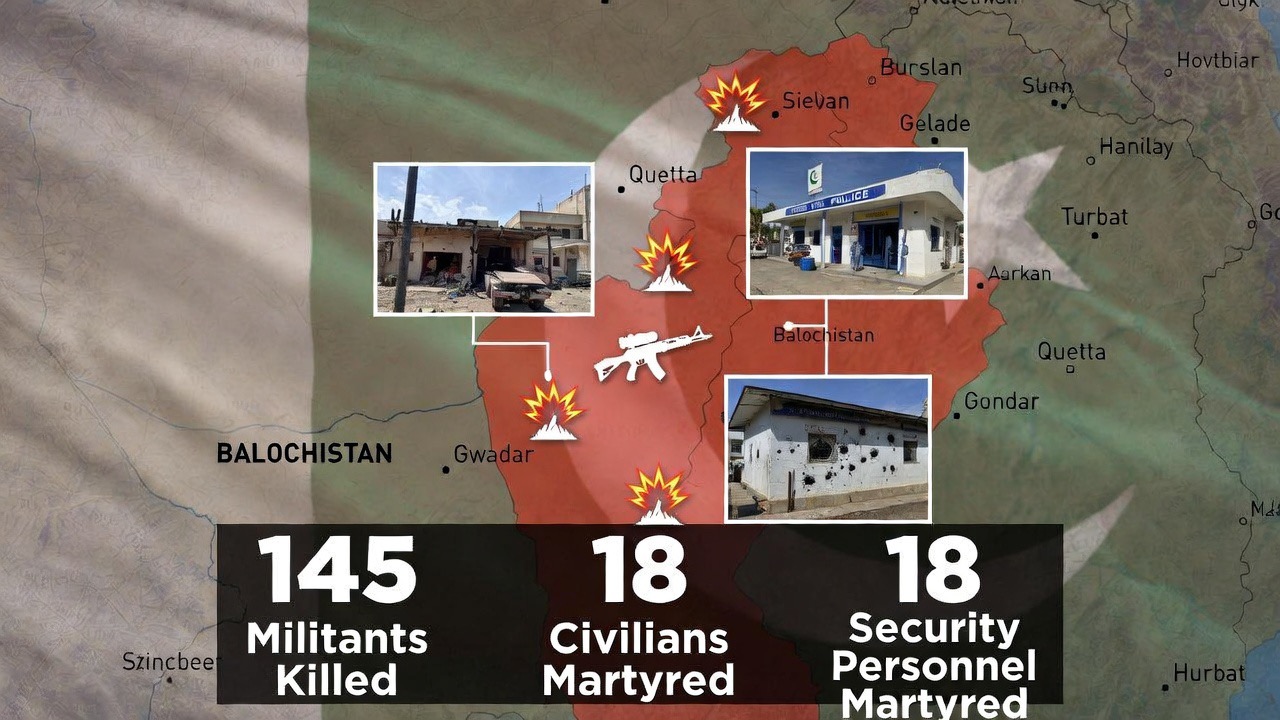
A major Pakistani counterterrorism operation in Balochistan province concluded in early February 2026 after a brutal 40-hour-plus engagement that left hundreds dead, marking one of the deadliest flare-ups in the region’s long-running insurgency. The operation, launched in response to a wave of coordinated attacks by the banned Baloch Liberation Army (BLA) on January 31, 2026, resulted in significant casualties on all sides: Pakistani authorities reported killing at least 145 militants (with some tallies reaching 177–216 over extended clashes), while 17–22 security personnel and 31–36 civilians lost their lives, many in the initial militant assaults.
The violence highlighted the persistent instability in Pakistan’s largest but least-developed province, where separatist grievances, resource exploitation claims, and allegations of foreign interference continue to fuel a decades-old conflict.
The Trigger: Coordinated BLA Attacks on January 31
The escalation began on January 31, 2026, when BLA militants carried out near-simultaneous strikes across multiple districts in Balochistan, targeting police stations, government offices, banks, prisons, paramilitary facilities, and civilian areas. Reports described suicide bombings, gun battles, and fidayeen-style assaults hitting over a dozen locations, including fortified zones in Quetta and border-adjacent districts like Washuk and Kech.
The BLA claimed responsibility, dubbing the operation “Herof Phase II” and asserting it inflicted heavy losses on Pakistani forces (claiming over 80–145 security personnel killed and some captured, figures strongly disputed by Islamabad). Pakistani officials condemned the attacks as “heinous and cowardly,” noting high civilian tolls—including women and children—in strikes on public sites and residential zones.
Initial reports indicated 15–18 security personnel and 18–31 civilians killed in the opening assaults, with militants briefly seizing control of certain buildings before security forces responded.
The Counter-Operation: Swift and Intense Response
Pakistan’s military, police, and counterterrorism units launched immediate large-scale operations, backed by intelligence-led raids, drones, and helicopters. Provincial Chief Minister Sarfraz Bugti announced that pre-emptive actions had begun a day earlier based on intelligence warnings of planned attacks.
Over the following 40 hours (and extending into subsequent days), clashes raged in rugged terrain and urban pockets. Authorities described the response as decisive:
• 92 militants killed on the first major day of fighting.
• An additional 41 reported earlier in pre-operations.
• Total militant deaths reaching 145 (per initial official statements), climbing to 177–197 in follow-up reports, and up to 216 in some military tallies.
The operation was one of the highest militant death tolls in decades in Balochistan, with officials labeling the BLA as “Fitna al-Hindustan” (a government term alleging Indian backing, vehemently denied by New Delhi and the BLA).
Security forces imposed restrictions: curfews, bans on public gatherings, face-covering prohibitions, and movement controls to prevent further attacks and aid mop-up efforts.
Casualty Breakdown and Human Cost
Official Pakistani figures (as reported across sources like the military, Interior Ministry, and provincial government):
• Militants/Insurgents killed: 145–216 (highest claims from army sources; BLA admitted only 18 losses).
• Security personnel killed: 17–22 (including police, Frontier Corps, Navy members, and counterterrorism units).
• Civilians killed: 31–36 (including women and children; many died in militant-initiated blasts or crossfire).
The UN Security Council condemned the attacks on February 4, 2026, calling them a grave threat to peace and urging international cooperation to hold perpetrators accountable. The BLA’s tactics drew widespread criticism for targeting civilians, while Pakistan accused external sponsors of fueling the insurgency.
Broader Context: Roots of the Baloch Insurgency
Balochistan’s unrest dates to the 1940s, rooted in demands for greater autonomy or independence, perceived exploitation of natural resources (gas, minerals), and human rights concerns over enforced disappearances and military operations. The BLA, designated a terrorist group by Pakistan, the U.S., and others, has escalated attacks in recent years, including train hijackings and suicide bombings.
The 2026 violence reflects intensified separatist activity amid economic grievances and regional geopolitics (e.g., CPEC projects, border tensions with Iran and Afghanistan). Pakistan maintains the insurgency is externally fueled, while rights groups highlight state heavy-handedness as a driver of alienation.
As operations wind down, reconstruction efforts begin in affected areas, but analysts warn the cycle of attack-and-retaliation persists without addressing underlying political and developmental issues.
Juba Global News Network continues to monitor the situation in Balochistan and its implications for regional stability.
