

Venezuelan Opposition Leader María Corina Machado Presents Nobel Peace Prize Medal to President Trump in Historic White House Gesture
By: Juba Global News Network | JubaGlobal.com Published: January 16, 2026 In a moment laden with symbolism and political weight, Venezuelan opposition lead
By: Juba Global News Network | JubaGlobal.com
Published: January 16, 2026
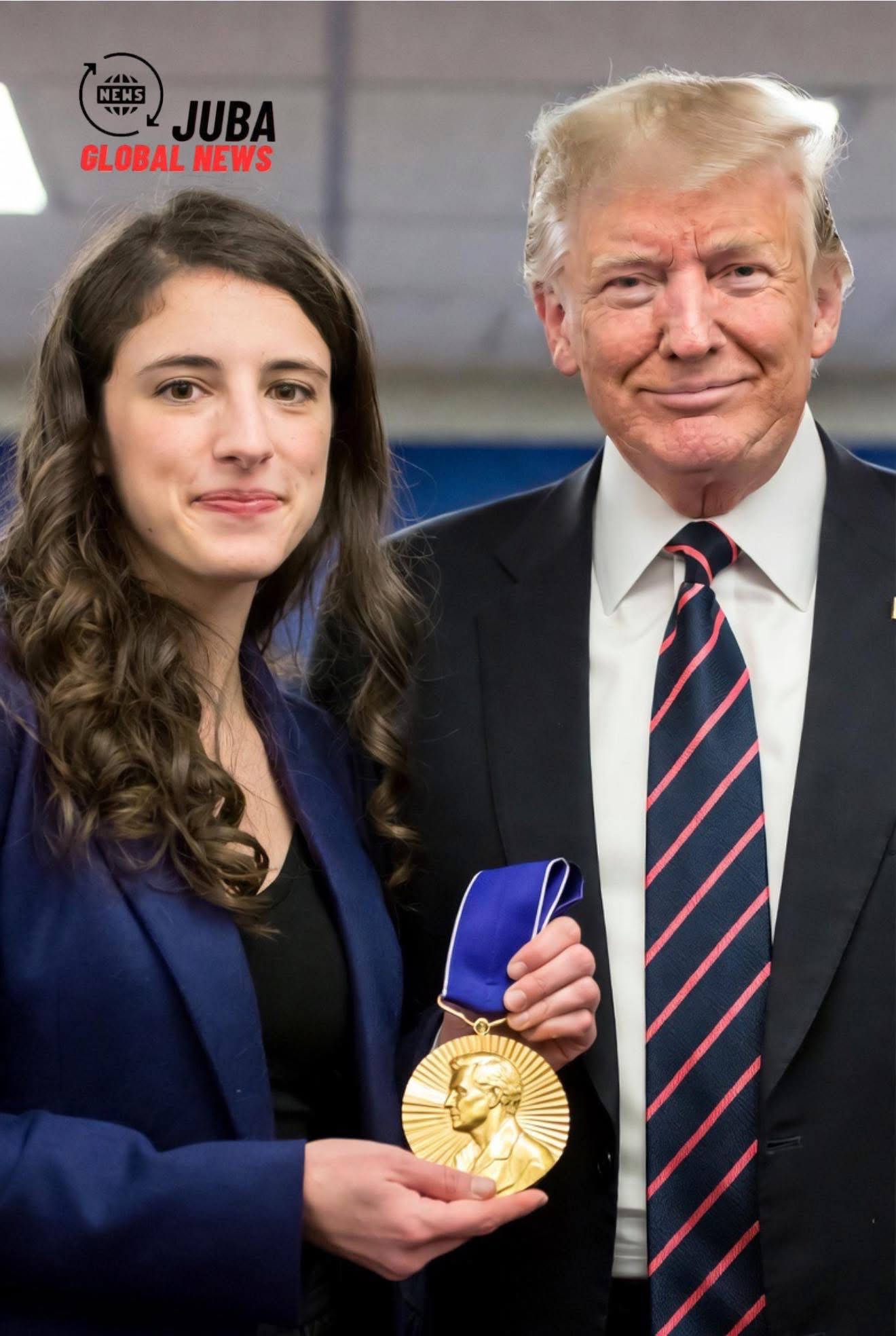
In a moment laden with symbolism and political weight, Venezuelan opposition leader María Corina Machado met with President Donald Trump at the White House on January 15, 2026, and presented him with her recently awarded Nobel Peace Prize medal. The ceremony, held in the Oval Office, marked one of the most visible acts of international solidarity between Venezuelan democrats and the incoming Trump administration, signaling a potential shift in U.S. policy toward Venezuela’s ongoing political and humanitarian crisis.
Machado, widely regarded as Venezuela’s most prominent opposition figure, was awarded the 2025 Nobel Peace Prize in December for her “unwavering commitment to non-violent democratic struggle” and her role in galvanizing global attention to the Maduro regime’s repression. The Norwegian Nobel Committee cited her leadership in the 2024 presidential election campaign—where she was barred from running by the government—and her continued advocacy for free and fair elections despite years of exile threats, imprisonment risks, and personal persecution.
The medal presentation came just days after Machado’s return to Caracas following a period of underground activity and international lobbying. Speaking at the White House podium, Machado described the act as “a symbol of hope transferred from the Venezuelan people to the leader of the free world.” She stated, “This medal belongs not to me, but to every Venezuelan who has suffered, fought, and dreamed of freedom. Today, I entrust it to President Trump as a reminder that the United States remains the indispensable ally in our struggle.”
President Trump, in turn, accepted the medal with visible emotion, calling it “one of the greatest honors of my life.” He praised Machado as “a courageous warrior for democracy” and reiterated his administration’s commitment to supporting regime change in Caracas. “We will not stand by while dictators starve their people and crush their spirit,” Trump declared. “María Corina has shown the world what real courage looks like, and America will stand with her and the Venezuelan people until freedom is restored.”
The gesture carries deep symbolic significance. Machado’s decision to hand over the physical Nobel medal—rather than merely referencing it—underscores the desperation of the Venezuelan opposition and the hope that U.S. pressure can accelerate the fall of Nicolás Maduro’s government. Analysts note that the act echoes historical precedents, such as Soviet dissidents presenting symbolic items to Western leaders during the Cold War, but with a modern twist: Machado is positioning the Nobel as a diplomatic tool to rally international support at a critical juncture.
Background on the Crisis
Venezuela has been in political and economic turmoil since Maduro’s disputed 2018 reelection and the subsequent 2024 election, which independent observers—including the Carter Center, the Organization of American States, and the European Union—declared fraudulent. Machado, who won the opposition primary with over 90% of the vote in October 2023, was barred from candidacy by the Supreme Court on politically motivated charges of corruption and “disloyalty.” Despite the ban, she campaigned through proxies and maintained a public presence, rallying millions in street protests that were met with violent repression.
The humanitarian fallout has been catastrophic. The United Nations estimates that over 7.7 million Venezuelans have fled the country since 2015, creating one of the largest refugee crises in modern history. Hyperinflation, food shortages, and collapsed public services have left millions in poverty. Machado has consistently framed the crisis not only as an economic failure but as a deliberate policy of state terrorism designed to maintain power.
The Nobel Prize itself was controversial. Critics in Russia, China, and allied governments accused the committee of politicization, while supporters hailed it as a long-overdue recognition of non-violent resistance in Latin America. The award ceremony in Oslo on December 10, 2025, saw Machado accept the prize virtually from a secure location, delivering a powerful speech that called for “global democratic solidarity” and directly addressed President Trump: “Your leadership will be decisive in the final chapter of our liberation.”
The White House Meeting: Details and Implications
The January 15 meeting was arranged through backchannels involving U.S. diplomats, Venezuelan exile networks, and intermediaries in Colombia and Brazil. Machado traveled under heavy security, with reports indicating U.S. military aircraft facilitated parts of her journey. The meeting lasted approximately 90 minutes and included discussions on sanctions, oil policy, and potential U.S. support for a transitional government.
Trump administration officials confirmed that the president reiterated plans to intensify “maximum pressure” on Maduro, including secondary sanctions on countries purchasing Venezuelan oil and potential designation of the Maduro regime as a foreign terrorist organization. The president also floated the idea of recognizing a “government in exile” led by opposition figures, though no formal announcement was made.
Reactions poured in swiftly. In Venezuela, regime-controlled media labeled the event “treasonous” and accused Machado of “selling out national sovereignty.” Pro-government supporters staged small protests in Caracas, while opposition strongholds saw spontaneous celebrations. Internationally, the European Union welcomed the gesture as a “powerful symbol,” while Brazil’s President Lula da Silva expressed concern over “escalating foreign interference.”
Oil and Economic Dimensions
The timing of the meeting coincides with the U.S. finalization of the first $500 million sale of Venezuelan oil under post-Maduro transition arrangements. Acting President Delcy Rodríguez has signaled openness to foreign investment in the Orinoco Belt, potentially opening doors for U.S. energy companies. Trump’s acceptance of the medal is seen by some as a signal of support for a managed transition that would stabilize global energy markets while weakening Maduro’s financial lifelines.
Human Rights and Diplomatic Outlook
Human rights organizations, including Amnesty International and Human Rights Watch, have praised Machado’s courage but warned that any U.S. intervention must prioritize civilian protection. The Nobel laureate has consistently advocated for negotiated transition rather than military invasion, though she has not ruled out stronger measures if peaceful avenues collapse.
As Venezuela enters 2026, the Machado-Trump encounter may prove a turning point. With Maduro’s grip weakening amid internal military defections and economic collapse, the opposition sees U.S. backing as essential to preventing a prolonged stalemate. Whether the Nobel medal becomes a catalyst for change or a poignant footnote in a continuing tragedy remains to be seen.
Juba Global News Network will continue to cover developments in Venezuela as this historic chapter unfolds.
Sources: Reuters, Associated Press, BBC, The New York Times, El País, Human Rights Watch, United Nations High Commissioner for Refugees, Norwegian Nobel Committee official statements, and White House press releases.
