

Nigeria’s Kidnapping Crisis: The Harrowing Abduction and Rescue of 24 Schoolgirls in Kebbi State – A Stark Reminder of Unyielding Insecurity
Birnin Kebbi, Nigeria – December 4, 2025 Just two weeks ago, on the misty dawn of November 17, 2025, the serene routine of the Government Girls Comprehensi
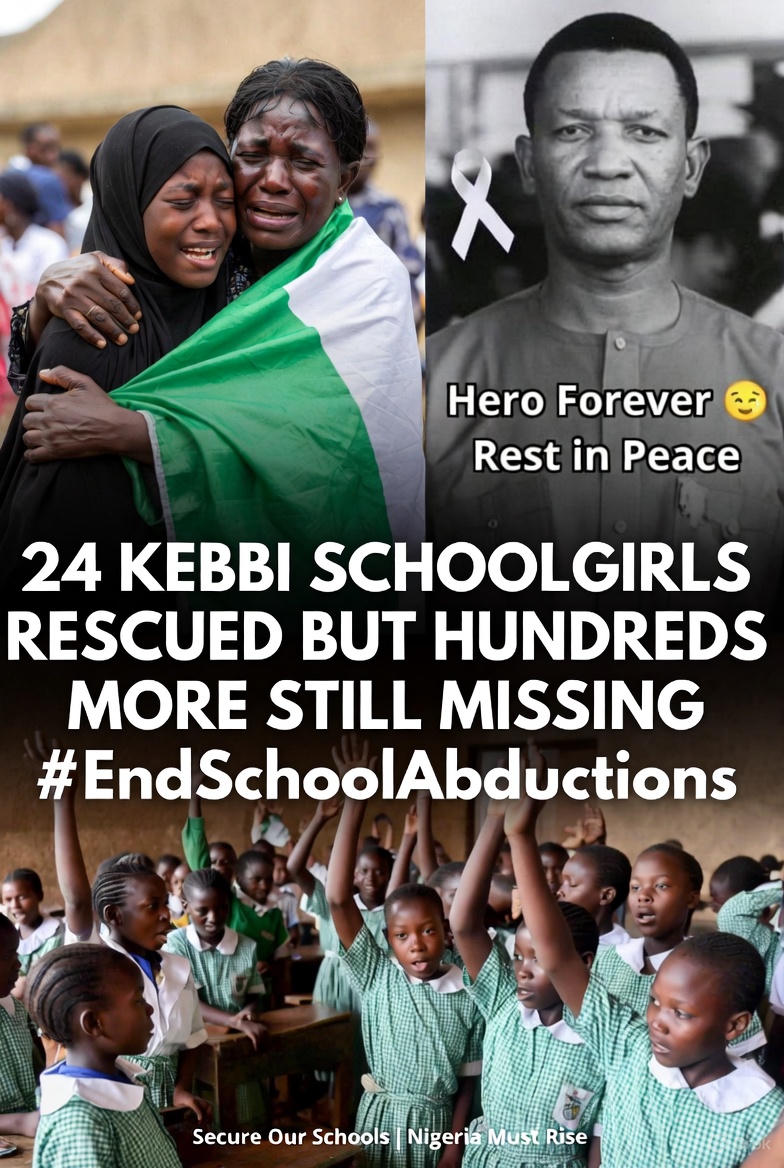
Birnin Kebbi, Nigeria – December 4, 2025
Just two weeks ago, on the misty dawn of November 17, 2025, the serene routine of the Government Girls Comprehensive Secondary School in Maga, Kebbi State, was shattered by the thunderous roar of motorcycle engines and the staccato bursts of automatic gunfire. Armed assailants, estimated at over a dozen and clad in the shadows of predawn darkness, scaled the school’s perimeter fence and stormed the girls’ dormitory. In a brazen act of terror that lasted mere minutes but etched itself into the nation’s collective trauma, they abducted 25 schoolgirls aged 12 to 17, killed the school’s vice principal in cold blood, and wounded another staff member before vanishing into the dense forests bordering Nigeria’s volatile northwest.
The incident, unfolding just days before the end of November, has reignited national outrage over Nigeria’s spiraling kidnapping epidemic. While one girl escaped the clutches of her captors later that same day, and another evaded capture during the chaos, the remaining 24 were held for nine agonizing days. Their release on November 26 – announced triumphantly by President Bola Tinubu as a “successful rescue operation” – brought waves of relief but also a torrent of skepticism. Videos circulating on social media, purportedly from the bandits themselves, mocked the government’s narrative, claiming the girls were freed only after a “peace deal” involving undisclosed concessions. This latest chapter in Kebbi underscores a grim reality: despite billions poured into security, Nigeria’s schoolchildren remain soft targets in a war of attrition waged by emboldened criminal syndicates.
The Raid: A Coordinated Assault on Innocence
Eyewitness accounts paint a picture of calculated brutality. At approximately 4 a.m., the gunmen – locals describe them as “economic terrorists” affiliated with the banditry networks that plague the Sahel – arrived on motorcycles, a tactic honed to evade detection in the rugged terrain of Kebbi South Senatorial District. The school, a modest government institution serving over 200 Muslim girls from low-income families, had only a skeleton security detail after a military detachment withdrew hours earlier. This lapse, later attributed to a staff sergeant’s unauthorized departure from his post, proved fateful.
Vice Principal Hassan Yakubu Makuku, a 52-year-old father of five known for his fierce protectiveness, confronted the intruders as they herded screaming students into the night. Shot at point-blank range while shielding the girls, his death – along with the wounding of a female teacher – served as a chilling warning. “They came like ghosts, rifles blazing,” recounted school principal Musa Rabi Magaji in a BBC interview days later. “Hassan died a hero, but his blood stains our failure to protect these children.”
The abductees, roused from sleep in their simple bunk beds, were bundled onto motorcycles and spirited away toward the forests straddling the borders of Kebbi, Zamfara, and Niger States. One girl, 14-year-old Aisha Bello (names changed for privacy), slipped free during a river crossing, trekking barefoot for hours before collapsing at a village outpost. Another, 13-year-old Fatima Yusuf, hid under her bed during the initial frenzy and alerted authorities via a smuggled phone. Their escapes provided the first glimmers of hope amid the despair.
By midday, the news had exploded across Nigeria’s digital landscape. Hashtags like #BringBackKebbiGirls and #EndSchoolAbductions trended on X (formerly Twitter), amassing over 500,000 posts in 24 hours. 9 Parents, many illiterate farmers from remote hamlets, gathered at the school gates in Maga, a dusty town of 15,000 where poverty and proximity to bandit hideouts form a toxic brew. “My daughters are my future,” wept Abdulkarim Abdullahi, father of two abducted sisters aged 12 and 13. “What ransom can I pay when I can’t even afford their school fees?”
The Manhunt: Forests, Forests, and Fractured Trust
Nigeria’s response was swift but familiar – a cocktail of military mobilization, aerial surveillance, and community pleas that has become the playbook for these crises. Lieutenant General Waidi Shaibu, Chief of Army Staff, descended on Kebbi the following day, berating troops for the security lapse and vowing, “We must find these children. Success is not optional.” 34 Over 500 soldiers, bolstered by local hunters and vigilantes, combed the sprawling forests – a labyrinth of acacia groves and seasonal rivers that bandits have long used as sanctuaries. The Nigerian Air Force deployed drones and helicopters for real-time intelligence, while the Department of State Services (DSS) intercepted bandit communications hinting at ransom demands starting at ₦500 million (about $300,000).
Yet, cracks in the official story emerged almost immediately. Social media erupted with unverified claims of negotiations, fueled by a grainy video released by alleged bandits on November 26, showing the girls in good health but surrounded by armed men who derided the “rescue” as fiction. 14 “We let them go because of our agreement,” a masked figure taunted in Hausa, alluding to a “peace deal” – a euphemism for the backchannel talks that critics say perpetuate the cycle of violence. Presidential spokesman Bayo Onanuga countered that it was a “tactical rescue,” but refused details, citing operational security. 33
The Defense Headquarters escalated scrutiny, summoning soldiers to Abuja for questioning over the sergeant’s dereliction – a rare admission of internal rot. 0 Civil society groups, including the National Democratic Youth Council (NDYC), seized the moment to demand a Special Presidential Task Force on Banditry, arguing that ad-hoc responses treat symptoms, not the disease. 5
Echoes of Chibok: A Decade of Trauma
This Kebbi ordeal is no isolated tragedy; it is the latest verse in a dirge that began over a decade ago. On April 14, 2014, Boko Haram insurgents snatched 276 girls from their dorms in Chibok, Borno State, igniting the global #BringBackOurGirls campaign. Over 1,500 students have been abducted since, with schools evolving from sanctuaries of learning to high-value targets for ransom-hungry gangs. 27 The northwest, once a breadbasket of millet and sorghum, now bleeds from banditry: resource wars over grazing lands, exacerbated by climate change and arms proliferation from Libya’s post-Gaddafi chaos.
In Kebbi, a state of 5 million where 70% live below the poverty line, the crisis intersects with jihadist spillovers from neighboring Niger and farmer-herder clashes. “These are not ideologues like Boko Haram; they are opportunists monetizing fear,” explains security analyst Kabiru Adamu of SBM Intelligence. “A single abduction can net millions, funding more arms and recruits.” This year alone, over 200 abductions have scarred the north, per Amnesty International, with unreported cases in remote areas pushing the toll higher. 26
The Kebbi raid’s timing – shortly after a military pullout – has fueled conspiracy theories, from staged operations to elite complicity. Opposition leader Atiku Abubakar decried the release as “no victory,” blasting the government’s “soft-handed” approach that emboldens criminals. 8 Even as the girls reunited with families in tearful scenes broadcast nationwide, the pall of doubt lingered. Media personality Rufai Oseni questioned on Arise TV: “We lock up agitators for life, but chat with kidnappers and set them free? Where’s the justice?” 6
The Aftermath: Joy Tempered by Justice Denied
November 26 dawned with jubilation in Birnin Kebbi. The 24 girls, medically cleared and draped in green national flags, were airlifted to the state capital for a heroes’ welcome by Governor Nasir Idris. President Tinubu, canceling a G20 trip to South Africa, hailed the “brave security forces” and ordered a “full security cordon” over forests in Kebbi, Niger, and Kwara States, with Air Force overwatch. 10 “More boots on the ground,” he pledged, echoing vows from past administrations.
For the families, the reunion was bittersweet. Aisha Bello, the escapee, spoke haltingly of her ordeal: blindfolds, meager rations of garri and water, and threats of marriage to bandit fighters. Psychological scars run deep; UNICEF has dispatched counselors, warning of PTSD in up to 80% of survivors. Schools across the north shuttered temporarily, with enrollment dipping 15% in vulnerable zones, per Education Minister Tunji Alausa.
Yet, the bandits’ taunt video – viewed millions of times – has amplified calls for systemic overhaul. The Senate is fast-tracking a bill to classify kidnapping as terrorism, punishable by death, while civil society decries the “industry” of abductions disrupting education and entrenching poverty. 3 UN Special Envoy Gordon Brown urged global aid: “Schools must not be plucked for criminal profit.” 9
A Nation at the Brink: Pathways to Prevention
As December unfolds, Kebbi’s fields lie fallow under a pall of fear. The abductions, happening mere days ago, expose the fragility of Nigeria’s social fabric: a youth bulge (60% under 25) starved of opportunity, fueling recruitment into gangs; porous borders awash in small arms; and a security apparatus outmaneuvered by asymmetric warfare.
Experts advocate multifaceted solutions: community policing with drone tech, economic palliatives like youth grants in bandit-prone areas, and regional pacts with ECOWAS to seal Sahel smuggling routes. “Rescues are pyrrhic victories,” says Adamu. “Prevention demands addressing root causes – inequality, unemployment, and governance deficits.”
In Maga, Vice Principal Makuku’s widow tends a makeshift memorial at the school gate, her husband’s photo adorned with wilted hibiscus. “He died believing in a safer Nigeria,” she says. The Kebbi girls’ story – from terror to tentative triumph – compels the nation to ask: How many more dorms must fall before resolve hardens into reform?
Nigeria’s kidnapping crisis is not abstract statistics; it is the stolen futures of its daughters. As President Tinubu’s cordons tighten, the true test lies not in fleeting rescues, but in forging a dawn where no child fears the classroom. The clock ticks – for the 300 still missing from Niger State, and the countless yet to be targeted. Justice delayed is justice denied; in the northwest’s shadowed forests, the bandits wait, rifles cocked, for the next vulnerability to exploit.
